
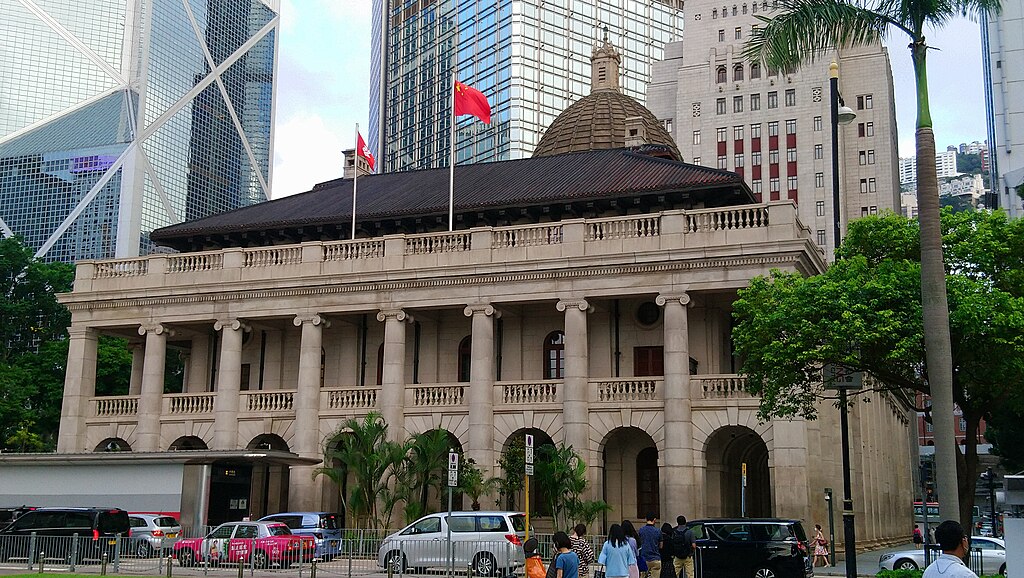
The Hong Kong Court of Final Appeal on Wednesday unanimously upheld a law prohibiting public advocacy for an election boycott.
The court held that the law is a justified infringement on the right to free speech. Chief Justice Andrew Cheung found that the law serves a legitimate aim of protecting the legitimacy of elections by ensuring broad participation and protecting electoral integrity from misleading or demagogic campaigns. The court also found that the encroachment on free speech is limited to the election period and that judges have discretion to impose sentences according to the seriousness of the conduct.
The court also held that the law complies with international human rights standards. Cheung found common messages between the UN general comments on the right to vote and freedom of expression and the Strasbourg jurisprudence of Teslenko and Others v. Russia, namely that freedom of expression is a qualified right and that any legislation limiting such right is subject to strict scrutiny. Accordingly, the court held that restrictions on election boycott campaigns can serve a legitimate aim and are constitutionally permissible if proportionate.
In its General Comment No. 34 on freedoms of opinion and expression, the UN Human Rights Committee said:
It may be legitimate to restrict freedom of expression in order to protect the right to vote under article 25 … Such restrictions must be construed with care: while it may be permissible to protect voters from forms of expression that constitute intimidation or coercion, such restrictions must not impede political debate, including, for example, calls for the boycotting of a non-compulsory vote.
At issue is Section 27A of the Elections (Corrupt and Illegal Conduct) Ordinance. It criminalizes any public activities that incite another person not to vote, or cast an invalid vote, during election periods. The provision is part of the city’s electoral system reform in 2021 that aims at ensuring “patriots administering Hong Kong” and guaranteeing residents’ right to vote and stand for election. The reform came after China’s National People’s Congress decided that a new democratic system was necessary to uphold the principle of “One Country, Two Systems,” allowing the city to have economic and legal systems distinct from Mainland China, within China’s sovereignty.
The case, HKSAR v So Tsun Fung, concerns a defendant reposting on his social media a post that called on the public to cast blank ballots in the election to signal dissatisfaction with the government. All lower courts found him guilty and rejected his constitutional challenge to the law.

