
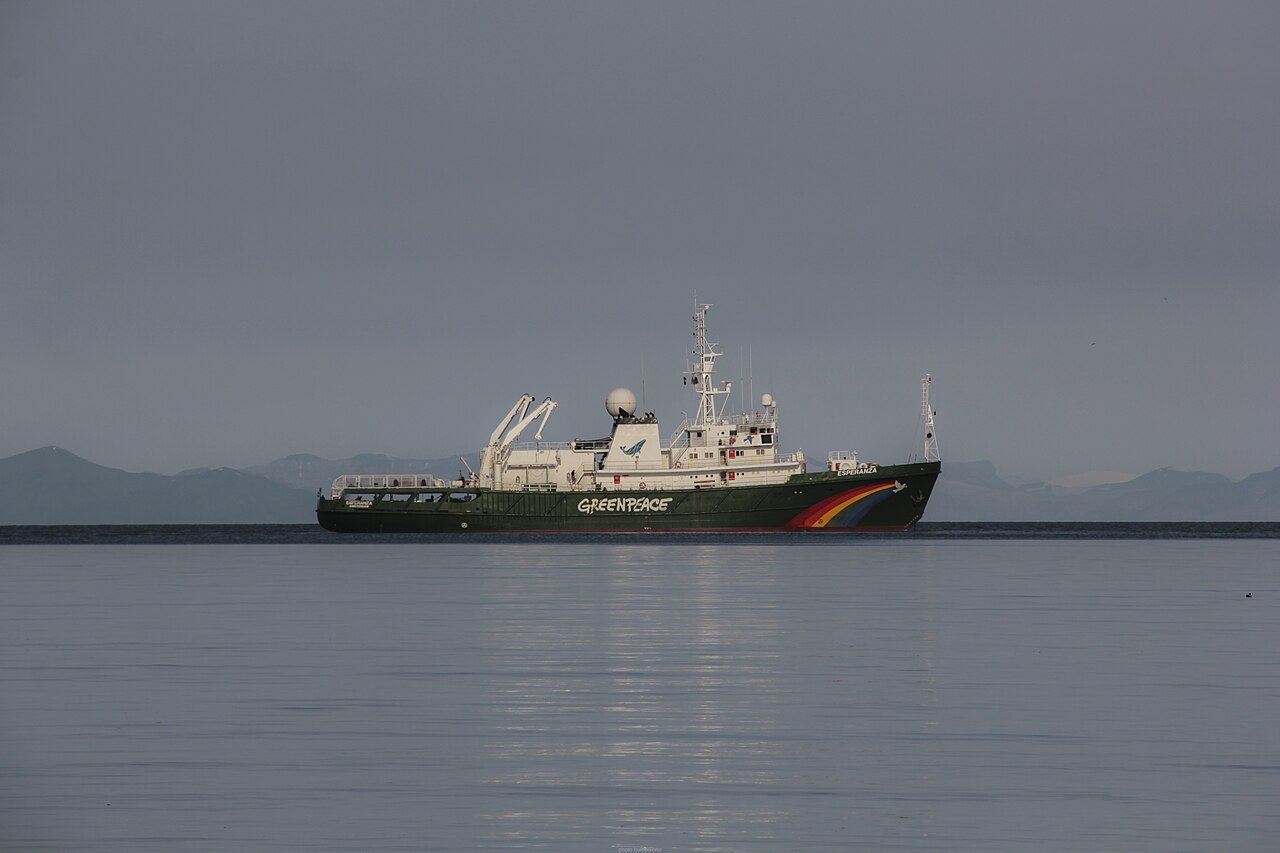
The Amsterdam District Court on Wednesday allowed Greenpeace International to proceed with its anti-SLAPP lawsuit against Energy Transfer in the Netherlands.
Energy Transfer, one of the largest energy companies in North America with business operations in the Netherlands, attempted to halt a lawsuit initiated by Greenpeace International, an environmental group headquartered in the Netherlands. The court found that employees of the organization, being compelled to defend two US lawsuits from the Netherlands, are unable to carry out their mandate in the country. The court also found that Greenpeace has taken the lead from its Dutch headquarters in protests against the Dakota Access Pipeline, which Energy Transfer said caused its financial damage in its US lawsuits. They constitute incidental circumstances where the Dutch court can assume jurisdiction to adjudicate Greenpeace’s counter-claim against the energy company. Consequently, the court rejected the company’s attempt to halt the Dutch case.
Following the ruling, Energy Transfer has six weeks to file its response to Greenpeace’s claim. The environmental organization argued that Energy Transfer acted unlawfully by initiating two SLAPPs–strategic lawsuits against public participation–in the US. The organization claimed in the Dutch lawsuit that Energy Transfer has falsely accused it of making false statements, having extremist objectives, and committing crimes.
In response to the ruling, Mads Christensen, executive director of Greenpeace International, said:
People are tired of billionaires and their polluting corporations behaving like the law does not apply to them. Greenpeace International is holding this Big Oil bully accountable for repeated attempts at silencing our speech. Energy Transfer is clearly desperate to avoid this case, but Kelcy Warren’s pipeline company will have to answer for its actions here in the Netherlands.
The company has also attempted to halt the Dutch lawsuit by applying for an anti-suit injunction in North Dakota. While the North Dakota Supreme Court granted a narrow injunction, preventing Greenpeace International from claiming the US lawsuits lacked legal foundation in Dutch courts, the court did not enjoin the organization from suing Energy Transfer altogether.
In February, a North Dakota state trial court entered a final judgment against Greenpeace of USD $345 million for its protest against the Dakota Access Pipeline, one year after a jury returned its verdict. Greenpeace warned that the verdict could bring a chilling effect on public advocates exercising their freedom of speech and peaceful protest. The group filed a motion for a new trial in March, arguing that seven out of nine jurors had clear biases due to fossil fuel industry ties or preexisting negative views of the organization, among other grounds.
In 2024, the EU adopted a directive to prevent people engaging in public participation from facing manifestly unfounded claims or abusive court proceedings with cross-border implications. The directive requires EU member states to introduce laws that favor public advocates. However, the directive does not apply to this case because it has not yet been national law and has no retroactive effect on the US lawsuits filed in 2017 and 2019.

