
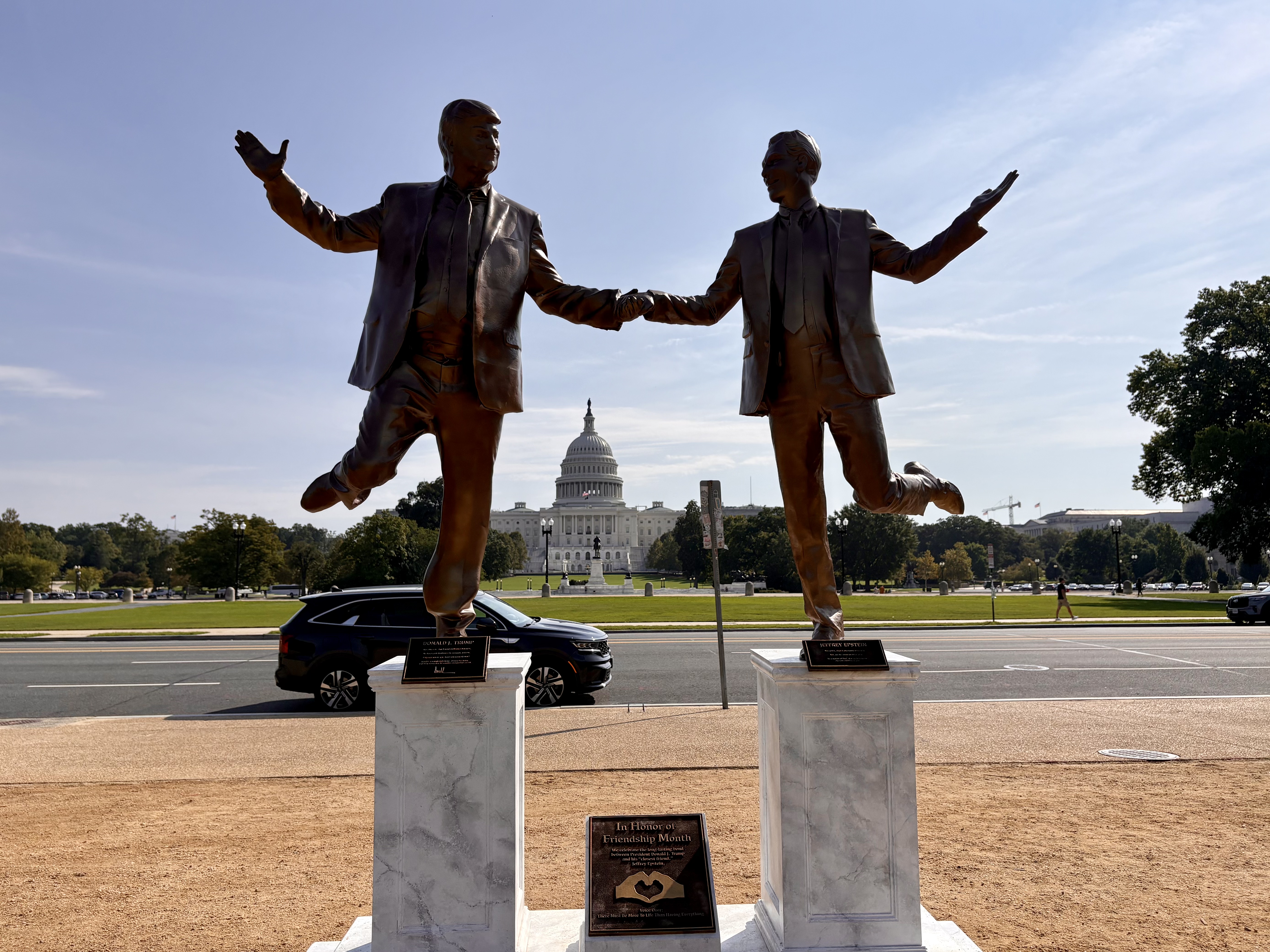
A federal judge on Monday dismissed President Donald Trump’s defamation lawsuit against the Wall Street Journal and its parent company over an article linking him to convicted sex offender Jeffrey Epstein, ruling that Trump failed to adequately allege the newspaper acted with “actual malice” when it published the story.
US District Judge Darrin P. Gayles dismissed the complaint without prejudice, giving Trump until April 27 to file an amended version. The ruling does not address whether the article was true or whether its statements were defamatory, questions the judge said are for another day.
Trump filed the lawsuit in July 2025 against two of the newspaper’s reporters and several affiliated and parent companies. The complaint centered on a January 2025 article describing a letter bearing Trump’s name in a leather-bound birthday album that Ghislaine Maxwell compiled for Epstein’s 50th birthday in 2003. The letter included a drawing of a nude woman and text styled as an imaginary conversation between Trump and Epstein. Trump denied writing the letter and called it “a fake thing” before the Journal published the story.
But Judge Gayles found that Trump’s allegations of malice amounted to little more than a “formulaic recitation” of legal elements, the kind of conclusory assertions that courts have consistently held insufficient under federal pleading standards. The judge noted that the article itself showed the Journal contacted Trump, Justice Department officials, and the FBI before publication, undermining any claim that the newspaper deliberately avoided the truth. The judge also pointed out that the article included Trump’s denial, allowing readers to draw their own conclusions, a factor courts have treated as cutting against a finding of actual malice.
As a public figure, Trump faces a high legal bar established by the Supreme Court’s landmark 1964 decision in New York Times Co. v. Sullivan. He must show the Journal published the article knowing it was false or with reckless disregard for whether it was false, a subjective standard that looks at whether the publisher actually entertained serious doubts about the story’s accuracy. The ruling also rejected the Journal’s attempt to have the court consider the birthday album and the letter itself as evidence at this early stage. After Trump filed suit, a House committee subpoenaed the Epstein estate and released documents that included a page matching the article’s description of the letter. But because Trump disputes the authenticity of those documents, the judge declined to treat them as established facts.
Trump’s separate claim for defamation per quod was also dismissed for failing to allege any specific financial losses. The defendants had sought attorneys’ fees under Florida’s anti-SLAPP statute, which targets meritless lawsuits aimed at chilling free speech. The judge denied that request without prejudice, saying the court had not yet reached the merits of Trump’s claims.

