
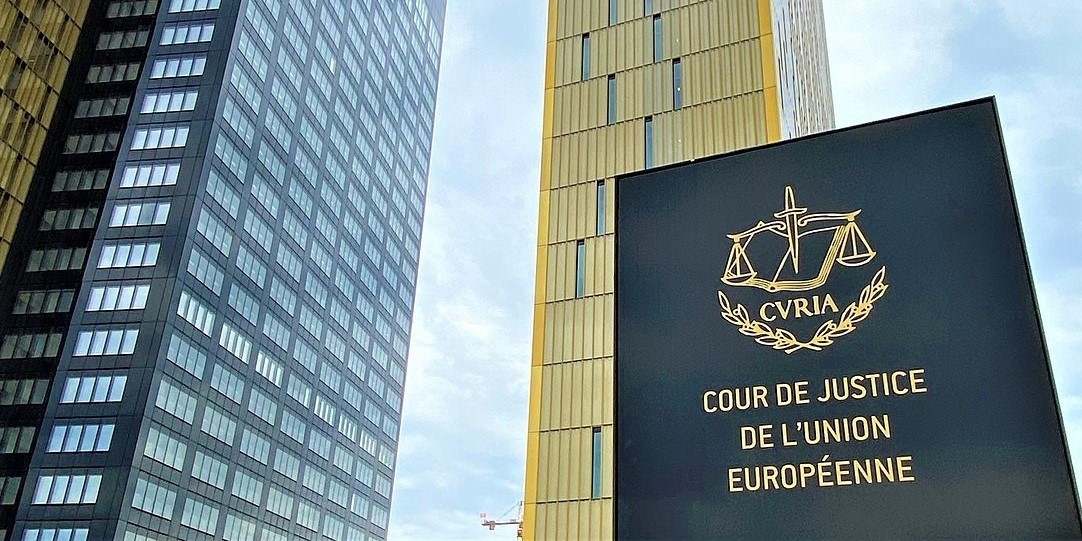
The European Union’s second-highest court strengthened air passengers’ rights in the event of flight delays in a ruling released Wednesday, clarifying when travelers are entitled to financial compensation under EU law.
In its judgment, the General Court of the EU concluded:
The autonomous decision of the operating air carrier to wait for the passengers of a flight who have not yet cleared security, due to shortcomings in the security checks, is capable of breaking the direct causal link between the extraordinary circumstance of those shortcomings and the delay of at least three hours in the arrival of a subsequent flight.
The court dismissed the airline’s arguments that certain operational and technical disruptions should automatically exempt carriers from paying compensation. In its reasoning, the court emphasized that technical problems inherent in the normal exercise of an airline’s activity do not constitute extraordinary circumstances. Only events such as severe weather, political instability, or security risks may justify an exemption, provided the airline can show it took all reasonable steps to avoid the delay.
The ruling follows a challenge brought by two passengers who sued their airline after their flight was delayed by more than three hours. The airline said the delay was caused by an extraordinary circumstance, specifically, staff shortages at another airport. As a result, the airline reorganized its aircraft schedule, which then disrupted the later flight. A German court asked the General Court of the EU to interpret the rules.
The decision interprets and reinforces Regulation 261/2004. This EU law sets common rules on compensation and assistance to passengers in cases of denied boarding, cancellation, and long delays. Under the regulation, passengers can receive between €250 and €600, depending on flight distance, if they arrive at their final destination three hours or more after the scheduled arrival time.
The decision also reinforces the Sturgeon ruling as a key precedent for delays and cancellations. The Sturgeon case clarified that passengers whose flights are delayed by three hours or more are entitled to compensation, thus putting long delays on the same footing as cancellations unless extraordinary circumstances apply.

