
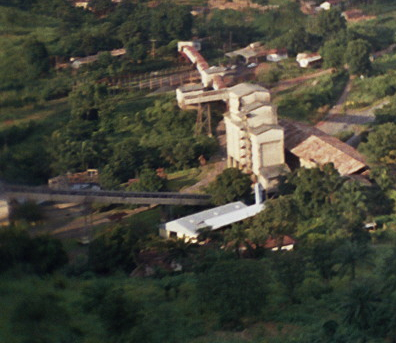
The Enugu High Court in Nigeria ruled Thursday that the former British colonial administration was liable for a 1949 labor dispute that caused 21 worker deaths.
Justice Anthony Onovo awarded each victim’s family £20 million in compensation, which he stated would be an “effective remedy and compensation for the violations of the right to life.” In his ruling, he stated: “These defenseless coal miners were asking for improved working conditions; they were not embarking on any violent action against the authorities, yet they were shot and killed.”
His ruling also stipulated that post-judgement interest will accumulate at 10 percent annually until compensation is fully paid by the UK government. Additionally, he required the UK government to issue a formal “unreserved written apology.” Justice Onovo ordered that these written apologies be sent to the victims’ families and published in national newspapers in both Nigeria and the United Kingdom.
In 1949, at the Iva Valley Coal Mine, miners were protesting harsh working conditions and a racial pay disparity, and used methods such as slow-downs as a form of pressure. However, when workers occupied the mine to avoid being locked out, the colonial police intervened. On November 18, 1949, police fired on the miners, leaving 21 dead and 51 others injured.
The British Government has yet to respond. However, this situation draws strong parallels with a similar decision in 1965. In the Burmah Oil case during World War II, British forces destroyed Burmah Oil’s installations in Burma (today Myanmar). Burmah Oil sued the UK government for compensation, and the House of Lords ruled in Burmah Oil’s favor.
The UK parliament passed the War Damages Act 1965, which retroactively overturned the House of Lords’ decision and declared that no compensation was payable for war-related destruction.
While there are stark differences between the two cases, it is possible that the British government will not pay reparations for the deaths of the 21 coal miners, arguing that the matter falls under the War Damages Act 1965.

