
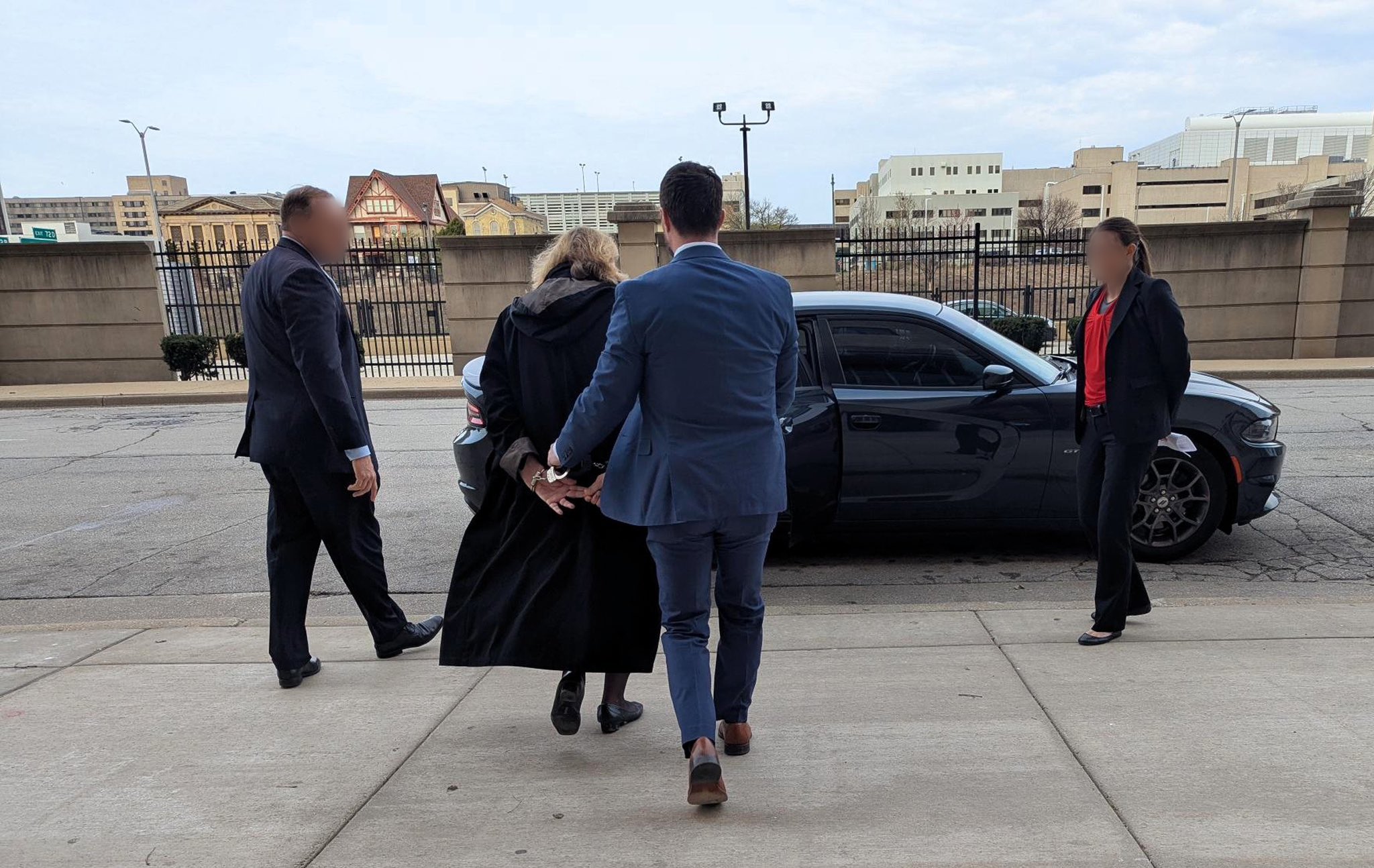
Wisconsin judge Hannah Dugan submitted a letter of resignation to Governor Tony Evers on Saturday following her conviction of obstructing Immigration and Customs Enforcement (ICE) agents.
In her letter, Dugan stated:
As you know, I am the subject of unprecedented federal legal proceedings, which are far from concluded but which present immense and complex challenges that threaten the independence of our judiciary. I am pursuing this fight for myself and for our independent judiciary. However, the Wisconsin citizens that I cherish deserve to start the year with a judge on the bench in Milwaukee County Bench 31 rather than have the fate of that court rest in a partisan fight in the state legislatures.
Article XIII,3(2) of the Wisconsin constitution bars any person convicted of a felony within a United States court from any office of trust, profit, or honor unless they are pardoned of their conviction.
The charges arose from an April incident at the Milwaukee County Courthouse. According to the criminal complaint, after learning of ICE’s presence, Dugan confronted agents in the public hallway and directed them to the chief judge’s office. She then expedited the case of Eduardo Flores-Ruiz and directed the defendant through a non-public “jury door” rather than the main courtroom exit.
ICE agents ultimately arrested Flores-Ruiz after a foot chase outside the courthouse. Courtroom audio recordings allegedly recorded Dugan saying that she would “take the heat” for her actions. The Wisconsin Supreme Court temporarily suspended Dugan following her arrest.
A federal jury on December 18, 2025, found Dugan guilty of obstructing a federal proceeding under 18 U.S.C. § 1505 but not guilty of concealing an individual from arrest under 18 U.S.C. § 1071. Following Dugan’s conviction, state Republicans called for her resignation. Assembly Speaker Robin Vos and Assembly Majority Leader Tyler August threatened to begin impeachment proceedings if Dugan did not resign.
Despite calls for her resignation, it is unclear if Dugan’s resignation was necessary. Howard Schweber, legal expert and professor emeritus at the University of Wisconsin-Madison, told Wisconsin Public Radio that it was not clear if Dugan needed to step down immediately after her conviction. He noted that Dugan still has the opportunity to appeal her conviction, which would remove the legal challenge to her serving in public office.

