
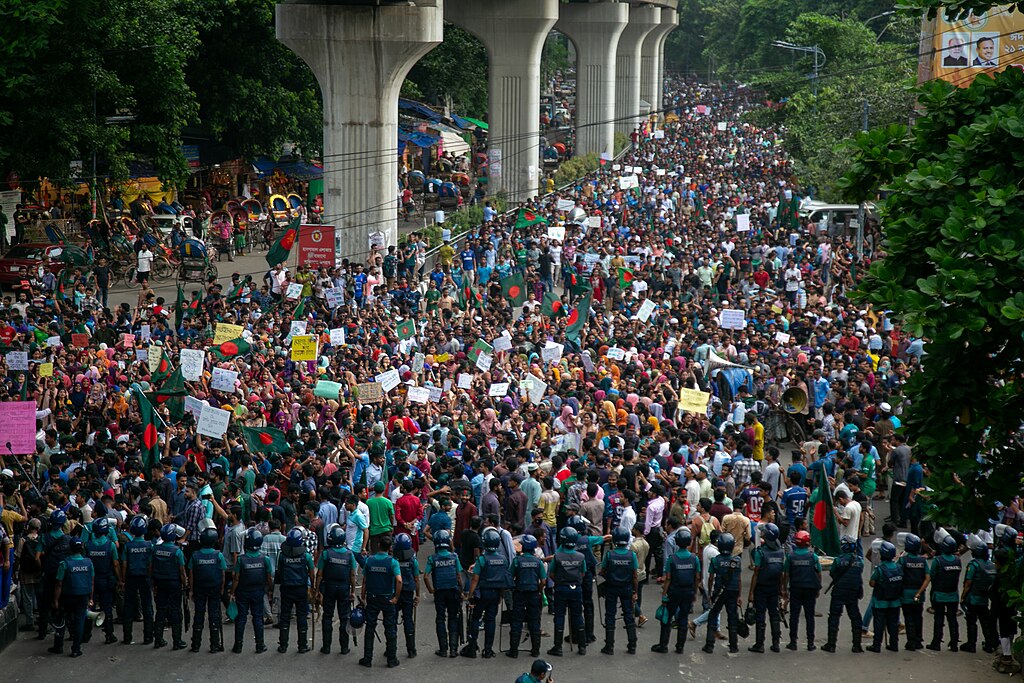
A UN expert on Friday hailed the forensic analysis of 114 unidentified bodies of people killed during the July 2024 protests in Bangladesh as a “fundamental step” toward achieving “justice and accountability.”
UN Special Rapporteur on extrajudicial, summary or arbitrary executions Morris Tidball-Binz, who visited Dhaka in July to provide technical advice on forensic investigations to Bangladesh authorities, said:
In addition to helping to respond to victims’ and families’ needs for truth, justice and accountability, this investigation is a unique opportunity to strengthen the country’s medico-legal and forensic capacity in line with standards such as the Minnesota Protocol—as Bangladesh both needs and deserves
The Minnesota Protocol sets out the procedural obligations of states to investigate suspicious deaths. In particular, the protocol characterizes the identification of human remains as a “major priority,” which requires both ante-mortem and post-mortem data collection. Since there was a long gap between the protestors’ deaths and the identification process, it is unclear whether the bodies were in an advanced state of decomposition. The protocol, however, states that the bodies “should be professionally assessed as being capable of being recognized by visual inspection.”
The Criminal Investigation Department began the exhumation and forensic analysis of the 114 bodies on December 7, when they matched the people who were killed during the 2024 demonstrations. The forensic examination, including DNA analysis, has been conducted in a temporary mortuary, with the process expected to be completed in several days.
In July 2024, mass student protests took place in Bangladesh against the reinstatement of the 30 percent quota system by the High Court. The quota reserved 30 percent of government positions for war veterans and their children, which the protestors claimed as favouring supporters of the ruling party. The government initially revoked the quota in response to the 2018 student protests.
The government responded to the protests by imposing curfews and a “shoot-on-sight order for mobs of violators,” with more than 300 people killed and 20,000 injured. Following this, the Supreme Court later ruled that the quota be reduced from 30 percent to 5 percent.
The protests led to the resignation of former Prime Minister Sheikh Hasina in August, who fled to India. Last month, the International Crimes Tribunal in Dhaka sentenced Hasina and her interior minister to death for committing crimes against humanity by suppressing the 2024 student protests. The tribunal also issued an arrest warrant against Hasina’s son Sajeeb Wazed Joy.
A civil society group in Bangladesh, Manobadhikar Sangskriti Foundation (MSF), highlighted the deteriorating human rights situation under the new administration, which is plagued by economic turmoil, political rivalry, increased killings, enforced disappearances, and discoveries of unidentified bodies. MSF’s director, Saidur Rahman, stated, “Each unidentified corpse represents a family’s silent torment—a story without closure. Yet the absence of serious investigation or justice is corroding public faith in both safety and the rule of law.”

