
 News
NewsAmnesty International on Thursday condemned US authorities’ usage of Palantir and Babel Street Artificial Intelligence-powered surveillance tools to monitor immigrants and conduct indiscriminate targeting of non-citizens at pro-Palestinian protests occurring throughout the country.
Upon reviewing documentation acquired from the Department of Homeland Security (DHS) public records and previously disclosed procurement and privacy assessment documents, Amnesty International revealed that these AI tools have the potential to conduct mass monitoring and assessments of people. This technology is often weaponized against susceptible individuals such as migrants, refugees, and asylum seekers, with human rights concerns about its possible usage in the “Catch and Revoke” initiative, which has led to large-scale deportations and arbitrary detentions across the US.
Erika Guevara-Rosas, the senior director for research, advocacy, policy and campaigns at Amnesty International, commented, “This has led to a pattern of unlawful detentions and mass deportations, creating a climate of fear and exacerbating the ‘chilling effect’ for migrant communities and for international students across schools and campuses.”
The utilization of Babel X by the Customs and Border Protection goes back to the year 2019, when authorities could access an individual’s social media posts, IP addresses, employment history, and IDs generated for mobile app advertising. This was used to pinpoint the location of a person’s device. Unlike obtaining private information from other sources, a person’s social media activity is in the public domain, and this means that authorities are able to bypass legal and procedural safeguards in order to obtain information that they deem sufficient before charging individuals.
The main issue with placing reliance on AI technology in determining if an individual is allied with “terrorist” causes lies in its decision-making faculties that make decisions according to basic keyword searches, and the possibility of errors, which can lead to an individual being unfairly stripped of their livelihood and stability in the US.
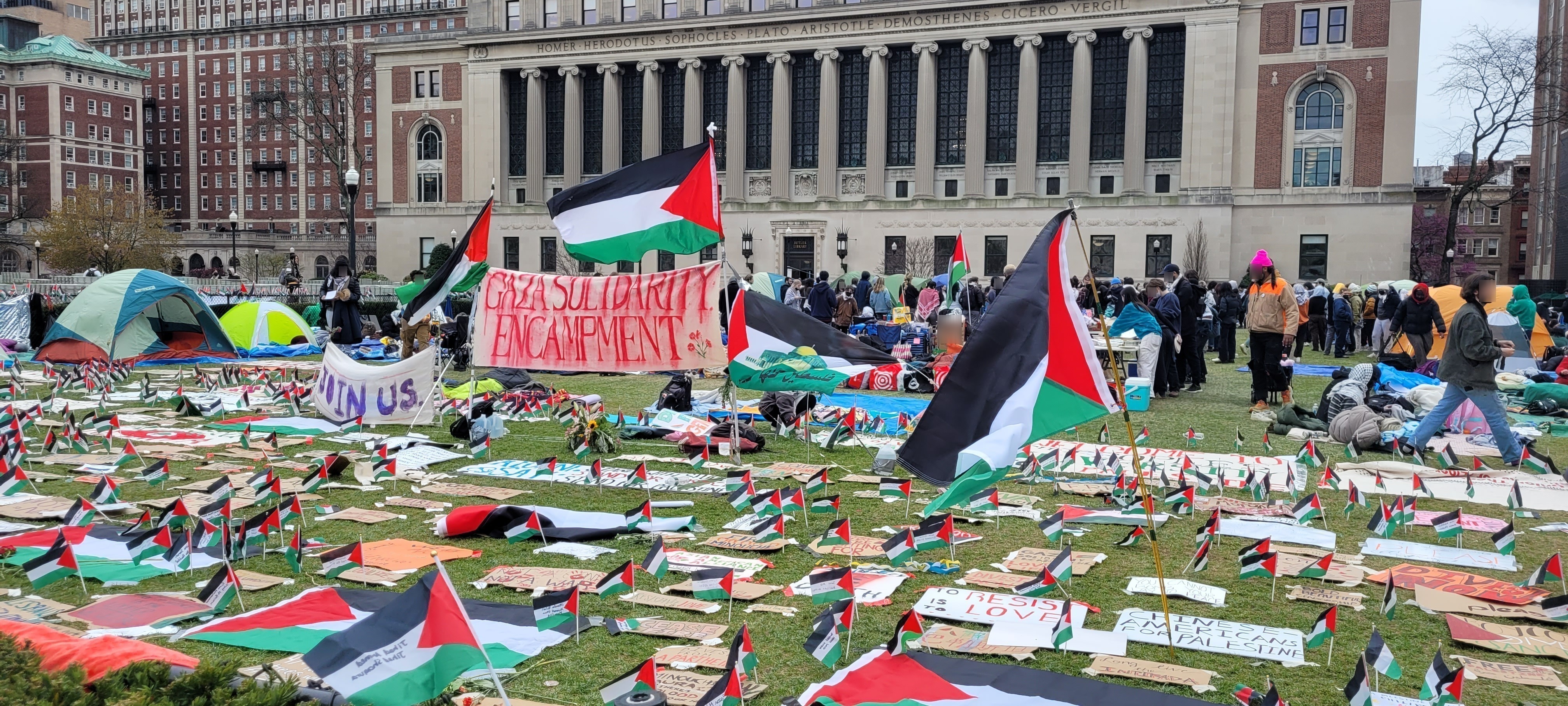
The March 8 arrest of pro-Palestinian activist and Columbia University student Mahmoud Khalil by US Immigration and Customs Enforcement (ICE) was the first, and most prominent instance, where a revocation of his visa and green card had led to more “justified” attempts in curbing support for the pro-Palestinian movement. After his arrest, he was provided with a notice to appear in the Immigration Court, an order that analysts have criticized as being legally unsound since it afforded a wide margin of discretion to Article 237(A)(4)(c)(1) of the Immigration and Nationality Act.
Coupled with the usage of AI detection tools, advocates warn that this sets a dangerous precedent for the erosion of human rights in the US.
