
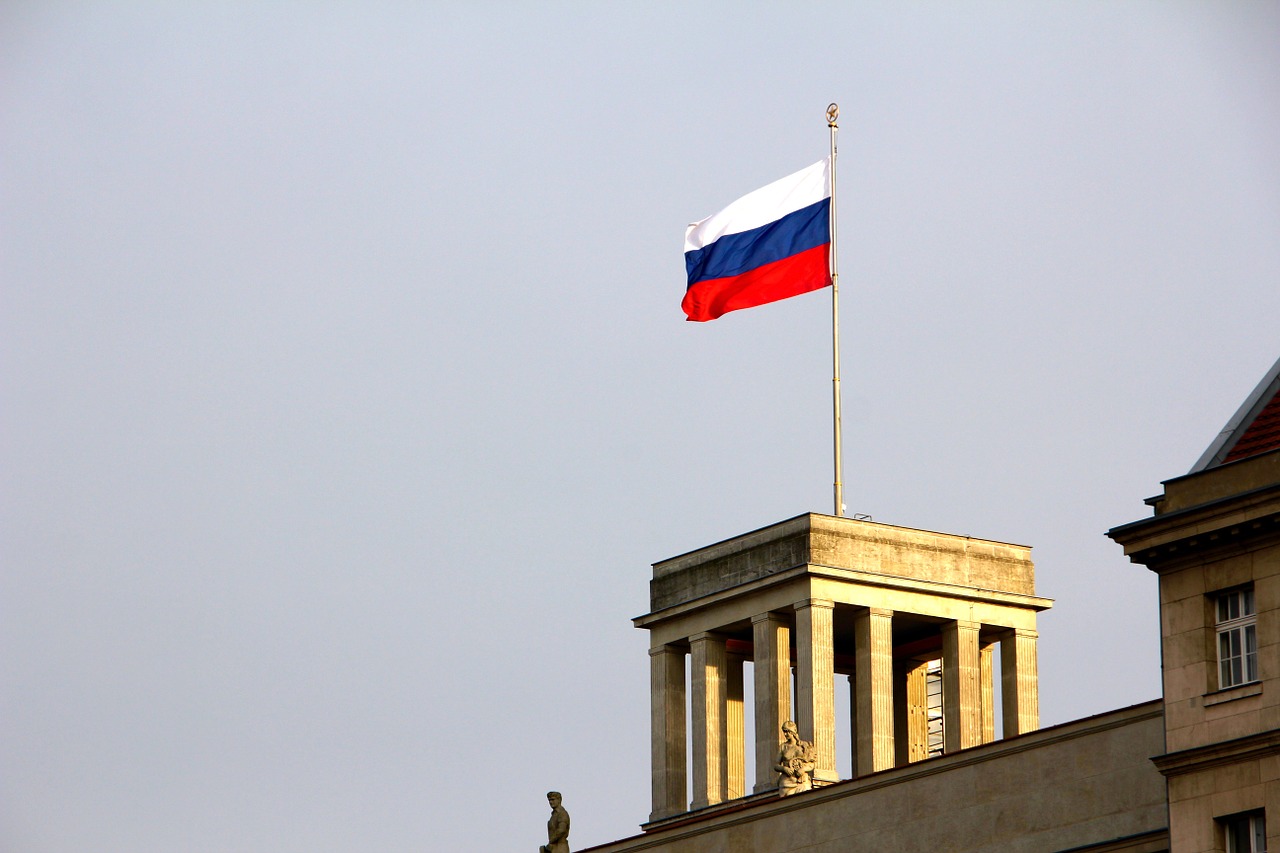
The Russian Ministry of Justice added Reporters Without Borders (Reporters sans frontières, RSF) to its list of international non-governmental organizations (NGOs) deemed “undesirable” in the country on Thursday.
RSF Director General, Thibaut Bruttin, said in a statement responding to Russia’s actions that the Kremlin’s message was to continue to gag voices that exposed its censorship and propaganda.
“But this will not silence us,” Bruttin said. “We will continue to investigate and denounce its war against news and information, and to work to ensure that every Russian responsible for crimes against journalists, in Russia and Ukraine, is identified and prosecuted.”
RSF’s statement also added that being named to the “undesirable” list, without reason, was “an honour,” calling Russia’s failure to explain their decision a recognition of the organization’s work.
RSF, founded in 1985 in Paris, aims to defend press freedom, protect journalists, combat censorship, and advocate for the release of journalists imprisoned for their work.
The Russian Ministry has designated 254 international organizations as “undesirable” under the law. As of recently, the list includes Amnesty International, Poland’s Helsinki Foundation for Human Rights, and German Demokrati-JA eV.
RSF also publishes the World Press Freedom Index annually, which evaluates the media freedom of countries around the globe. Russia is 171st on the list among 180 countries, nine spots lower than in 2024, according to the index.
Russia’s media regulator Roskomnadzor had blocked access to the RSF website in the country in 2024. Since Russia invaded Ukraine, RSF has actively reported on Russia’s censorship and propaganda dissemination, interviewing freed journalists and advocating for the release of imprisoned ones.
In 2015, Vladimir Putin signed a law that classifies foreign NGOs or independent media as “undesirable.” Russian authorities can prosecute these organizations on the grounds of national security, threat to the constitutional order, and defensive capacity, per the law.
The listed organizations are also banned from operating within the country under this law. The term ‘undesirable’ has no specific definition and allows for broad interpretations.
Penalties for those operating with any of the listed organizations include up to six years imprisonment, along with fines. Additionally, any organization that cooperates with or funds these organizations can also face administrative prosecution or fines.
