
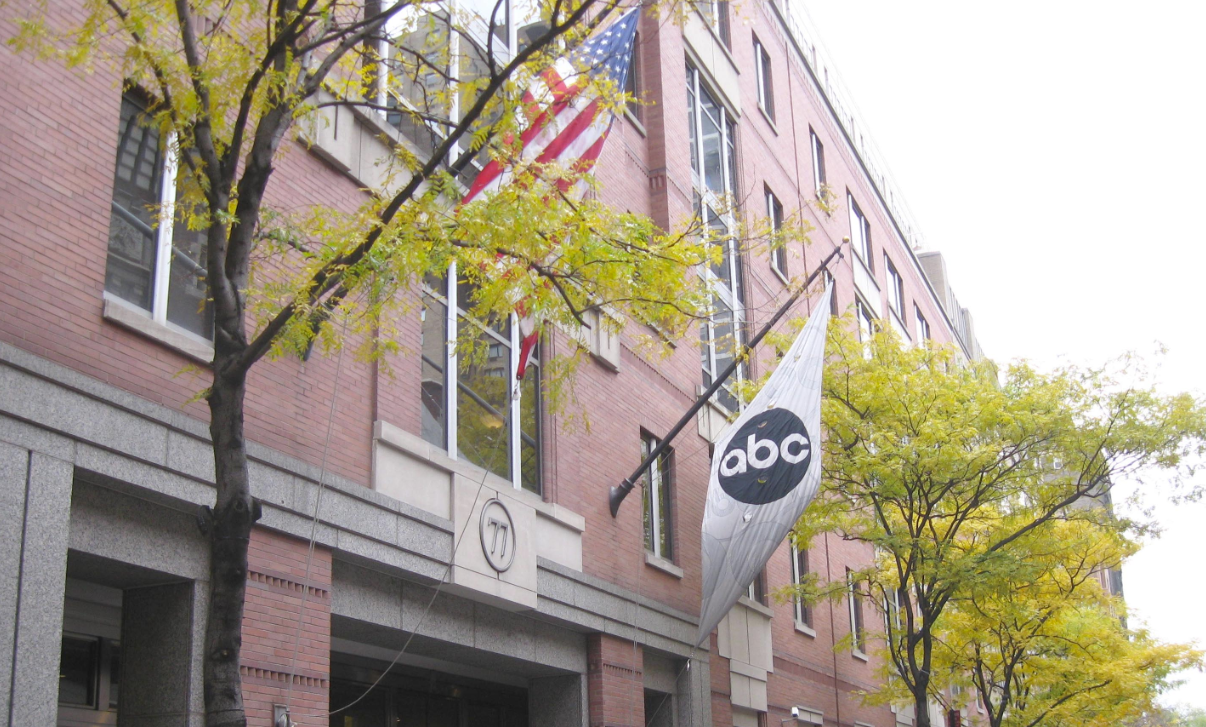
A federal judge on Tuesday heard arguments on the attempt by the American Broadcasting Company (ABC) to block the early review by the Federal Communications Commission (FCC) of its stations’ broadcast licenses, but did not issue an immediate ruling.
During a two-hour hearing, Judge Loren AliKhan for the US District Court for the District of Columbia challenged the government to justify the unusual licensing requirements that the FCC seeks to impose on ABC-owned television stations. Counsel for ABC argued that the FCC’s threats are currently undermining the company’s editorial decisions, while the government characterized the matter as a routine regulatory inquiry.
In August, ABC filed a federal lawsuit against the US Federal Communications Commission (FCC) alleging unconstitutional retaliation against the company’s protected speech. The complaint names Disney and eight ABC-owned television stations as the plaintiffs. The lawsuit challenges an April FCC directive which requires that the stations seek license renewal years ahead of schedule. The FCC points to possible violations of the Communications Act of 1934 with respect to employment practices. The FCC has noted ongoing concern that Disney’s diversity, equity and inclusion (DEI) initiatives amount to unlawful discrimination under the FCC’s equal employment opportunity rules, which bar broadcast licensees from discriminating in employment on the basis of race, color, religion, national origin, and sex.
ABC’s lawsuit cites National Rifle Association of America v. Vullo, a 2024 Supreme Court case holding that officials cannot use the threat of regulatory sanctions to suppress disfavored speech. ABC points to public statements by President Donald Trump and FCC Chairman Brendan Carr threatening the stations’ licenses based on their programming. The complaint also argues that FCC demands for internal editorial communications conflict with the 1979 Supreme Court holding in Herbert v. Lando, which held that the government cannot examine the editorial process to serve a general intent such as “the public interest.” Interestingly, Herbert also ruled against the press, allowing a defamation plaintiff to question 60 Minutes journalists about their editorial decisions.
The lawsuit also raises statutory arguments under 47 USC § 307 and § 326. § 307(d) states that the FCC cannot grant a license renewal more than 30 days before its expiration. § 326 forbids the FCC from censoring free speech. Together, the statutes suggest that the FCC may be overstepping its authority by demanding renewal applications it cannot lawfully grant, while using its investigation to influence the stations’ programming in violation of a statutory ban on censorship. The lawsuit states:
The Commission’s true target is not the Stations’ employment practices or their carriage of a single presidential address; it is the content of Plaintiffs’ programming—and thus their speech. Because the Commission cannot regulate that content directly, it has used its review of the Stations’ licenses as an instrument to the same end.
Typically, challenges to FCC action go directly to the federal courts of appeals under 47 USC § 402. ABC argues that its claims fall outside of this review scheme under Thunder Basin Coal Co. v. Reich and Axon Enterprise v. FTC, which allow district courts to hear structural or constitutional claims that agency review cannot meaningfully address.
Judge AliKhan has not publicly stated when a ruling will be issued on ABC’s temporary restraining order and request for preliminary injunction. The FCC has separately moved to dismiss the lawsuit under arguments that it would undermine the agency’s discrimination investigation, and that any impacts on ABC’s right to speech are “self-inflicted.”

