
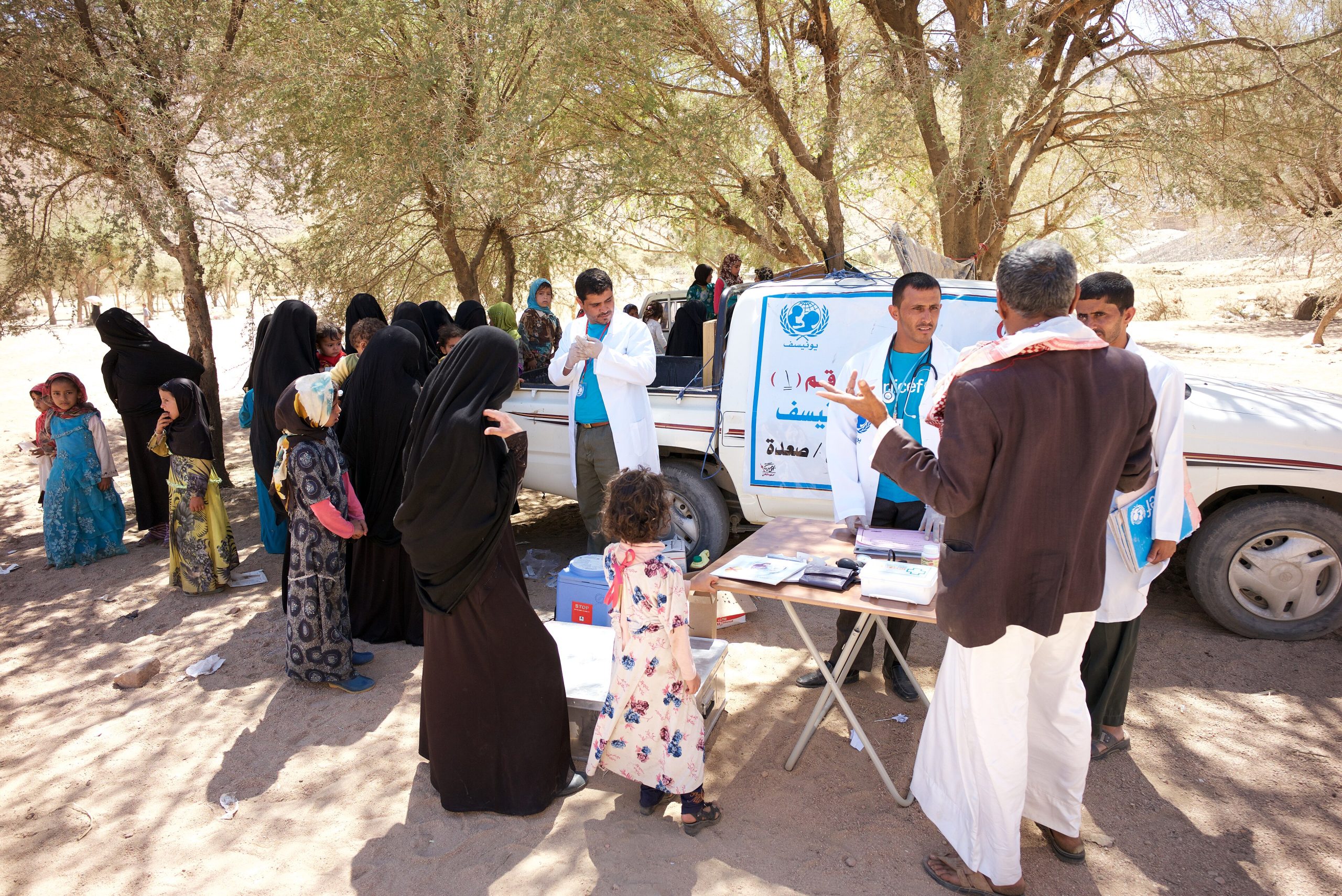
The UN World Food Programme (WFP) on Wednesday warned that the intensifying conflict in Yemen has cut off life-saving aid to approximately 800,000 people due to severely restricted access to the city of Taizz and other conflict zones.
We are critically concerned about the escalating conflict, but even more so about the growing number of people we can no longer reach because of it… Many of the families affected have been displaced multiple times and were already struggling to afford even basic food items. This is the kind of situation that can rapidly spiral into a humanitarian catastrophe if assistance cannot move safely and reach those who need it most.
Taizz, one of Yemen’s largest cities, has been housing masses of displaced families and individuals since the beginning of the crisis between the Saudi-supported government troops and Iran-backed Houthi rebels. The latest WFP monitoring shows its local markets are running out of food, and wheat flour stocks are depleting. WFP and global partners cannot reach more than 600,000 people in Taizz who depend on humanitarian assistance. An estimated 800,000 people are now out of reach nationwide.
The loss of access is particularly alarming as districts in Taizz have some of the country’s highest levels of food insecurity. UN and WFP staff remain detained by Houthi authorities. HRW has found these detentions are contributing to the humanitarian crisis, emphasizing that Yemen needs safe and sustained humanitarian access and funding. Both agencies are calling for their immediate release.
In addition to detaining aid workers which has debilitated efforts to provide critical assistance to vulnerable families, the Sana’a Center for Strategic Studies have pointed out that aid workers are often subject to online disinformation campaigns aimed at disparaging their character and painting them as foreign spies.
In 2020, Human Rights Watch (HRW) stated that the Houthis’ obstruction of aid had negatively impacted civilians during numerous public health crises, from the 2017 cholera crisis to the country’s ability to effectively mitigate the COVID-19 pandemic.
WFP estimates needing $268 million to sustain operations—including emergency food assistance, nutrition programs, school meals, resilience activities and critical humanitarian logistics services—through 2027.

