The Delhi Police increased restrictions and heightened security measures on Friday, including the closure of metro stations and disruptions to travel routes, ahead of major protests scheduled for the next day.
Delhi is preparing for a large-scale demonstration to demand the resignation of Chief Election Commissioner Gyanesh Kumar amid irregularities in the Election Commission’s Special Intensive Revision (SIR) of electoral rolls.
The latest wave of protests, led by the Cockroach Janta Party (CJP), student unions and opposition parties, began on October 2. The demand for Kumar‘s resignation arose from controversies surrounding SIR, with the deletion of more than 130 million people from the voters’ list since 2025. The major allegations raised against the SIR exercise include tampering with voter lists leading to the deletion of genuine voters, wrong classifications of citizens, and altering key registration documents such as Form 6.
The Delhi Police have not granted the CJP and All India Students’ Association (AISA) permission for the protest. Police have also announced heightened vigilance at Delhi’s entry points. Several student union members and activists associated with the protests have been detained, placed under house arrest, or intercepted while travelling to Delhi. The city police are also coordinating with cab aggregators, Ola and Uber, to limit the movement towards Lutyens’ Delhi. Bulk food and grocery delivery apps will also be tracked, and hotels have been asked to not make reservations. An Excise Department order has also asked all liquor stores to be shut down till Sunday, citing public order.
A slew of petitioners approached the Supreme Court over the closure of metro stations and the cancellation of long-distance trains to Delhi. Several senior advocates approached the Court, urging for a hearing, after the Delhi High Court declined an urgent hearing. The bench, while hearing, pointed out that “If you want to restrict unruly movement, you can do so. But that does not mean you can bring everything to a halt and leave people without any transport facility. Everybody does not have a car.”
The Supreme Court provided partial relief and asked the Centre not to completely shut down the train services to Delhi and Delhi Metro services ahead of the October 10 protests, ensuring that commuters are not inconvenienced. The bench has ruled that restrictions must be proportionate and minimal rather than complete prohibitions, stating that authorities cannot “use a hammer to kill a fly.” The Apex Court has also pointed out the need for the Centre to designate an alternate location to Jantar Mantar for peaceful protests.
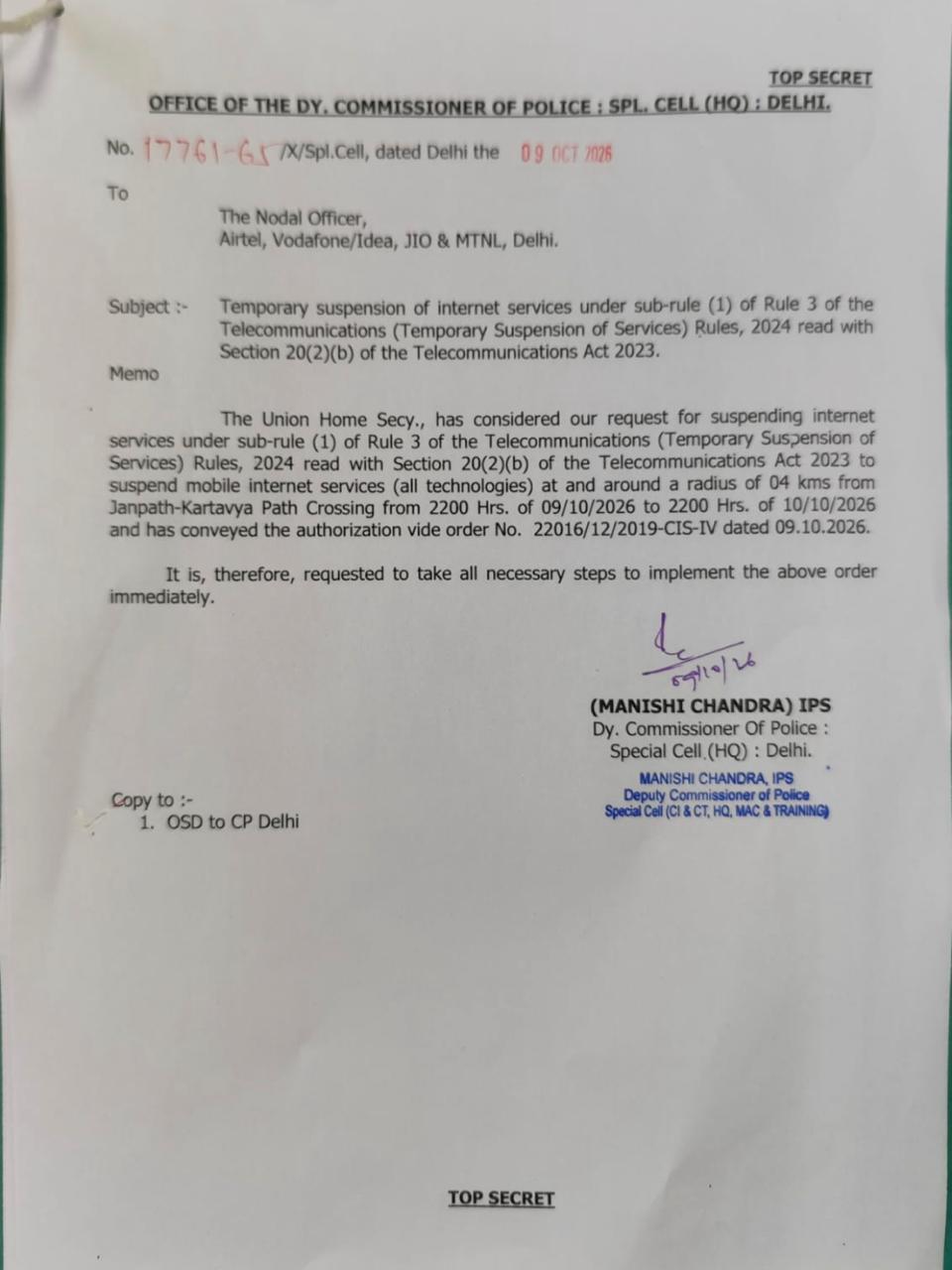
Moreover, a mobile internet shutdown has been ordered in Central Delhi, covering a 4-kilometre radius from the Janpath-Kartavya Path crossing, from 10 P.M on 9th October to 10 P.M on 10th October. Several organisations have condemned this move, especially since the official order was not published by the authorities, and was merely reported by ANI. This order is patently illegal as it disregards the requirements set forth by the 2020 landmark judgement of Anuradha Bhasin, as well as the subsequent Telecommunication (Temporary Suspension of Services) Rules, 2024.
Peaceful protesters must be able to demand accountability from those in power without facing intimidation, arbitrary detention, or sweeping restrictions on their freedoms.
On October 2, approximately 700 protestors, including several leaders and members of student organizations were detained during the Jantar Mantar protests.