
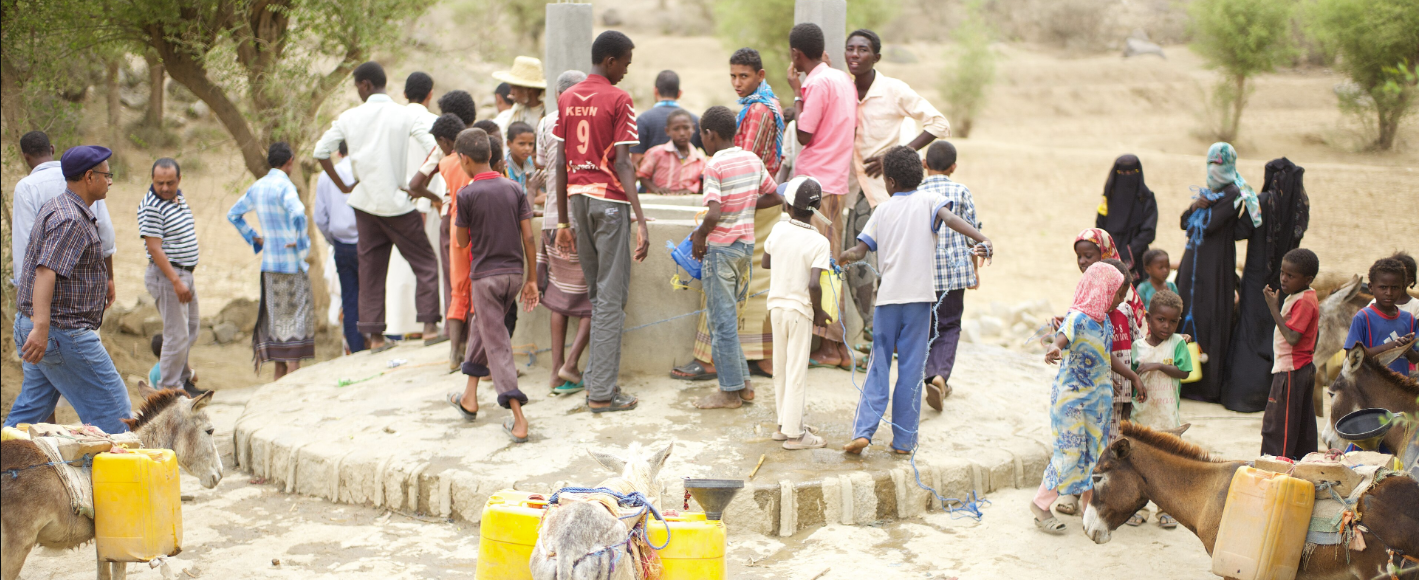
The UN High Commissioner for Refugees (UNHCR) on Tuesday expressed concern that mass displacement and the overall humanitarian crisis in Yemen will intensify as the ongoing conflict escalates.
UNHCR’s Yemen representative Armen Yedgaryan stressed the scale of the disaster at a press briefing in Geneva, stating:
Even before the recent escalation, more than 5.2 million people were internally displaced in Yemen, and the current fighting is deepening an already dire humanitarian crisis in the country. It is estimated that more than 22 million people require humanitarian assistance… We are deeply concerned about the impact of the renewed conflict on civilians, including widespread displacement and suffering.
Fighting continues to expand, and has driven more than 130,000 people to flee since the beginning of September. The center of the crisis is Taiz, a city in southwestern Yemen, accounting for more than 60 percent of the new displacement. However, many families are unable to move from the besieged city to more secure locations due to fighting, roadblocks, or lack of access to fuel and transport.
The UNHCR reports that growing numbers of Yemenis are becoming international refugees, fleeing across the Gulf of Aden to East Africa. More than 3,000 refugees have arrived in Djibouti and hundreds more have reached Somaliland and Puntland, autonomous states in northern Somalia.
Yedgaryan expressed concern about the impacts of the refugee influx on these places, as the number of new refugees arriving in Djibouti has surpassed the total number of Yemenis who have fled there in recent years. Projections show the possibility of more than 10,000 arrivals in the month of October.
The key concern in responding to this crisis is funding. The UNHCR mission in Yemen was only 18 percent funded in 2026. Persons in need were estimated at 194 million, which has now grown by approximately 25 million. Similarly, the Djibouti funding mission for 2026 was only 15 percent met. The International Organization for Migration’s Djibouti Office has been posting updates to social media and requesting additional financial support.
The humanitarian crisis in Yemen has been described by numerous agencies, including UNICEF, as one of the largest in the world. The conflict and attendant economic crisis have completely collapsed basic social services. By the beginning of 2026, roughly half the population faced severe food insecurity, and 40 percent of health facilities were only partially functioning or closed. Many people lack access to safe drinking water and sanitation, resulting in outbreaks of diseases like cholera and diphtheria.
The conflict in Yemen began in 2014, when Iran-backed Houthi rebels took control of the capital, Sanaa. The country has since remained divided between the Houthis in the North, and the Saudi-backed and internationally recognized government in the South.
The conflict de-escalated under a UN-brokered ceasefire in 2022. However, this year has seen a dramatic re-escalation. The Houthis launched attacks on shipping in the Red Sea, to protest Israel’s genocide in Gaza, prompting renewed fighting in which the Houthis have gained more territory. Attacks within the region are ongoing, with the UN describing the fighting as “expanding across multiple front lines.”
UNICEF has recently warned specifically about the displacement of children in Yemen, while Human Rights Watch has condemned the Red Sea attacks as war crimes.

.jpg)