
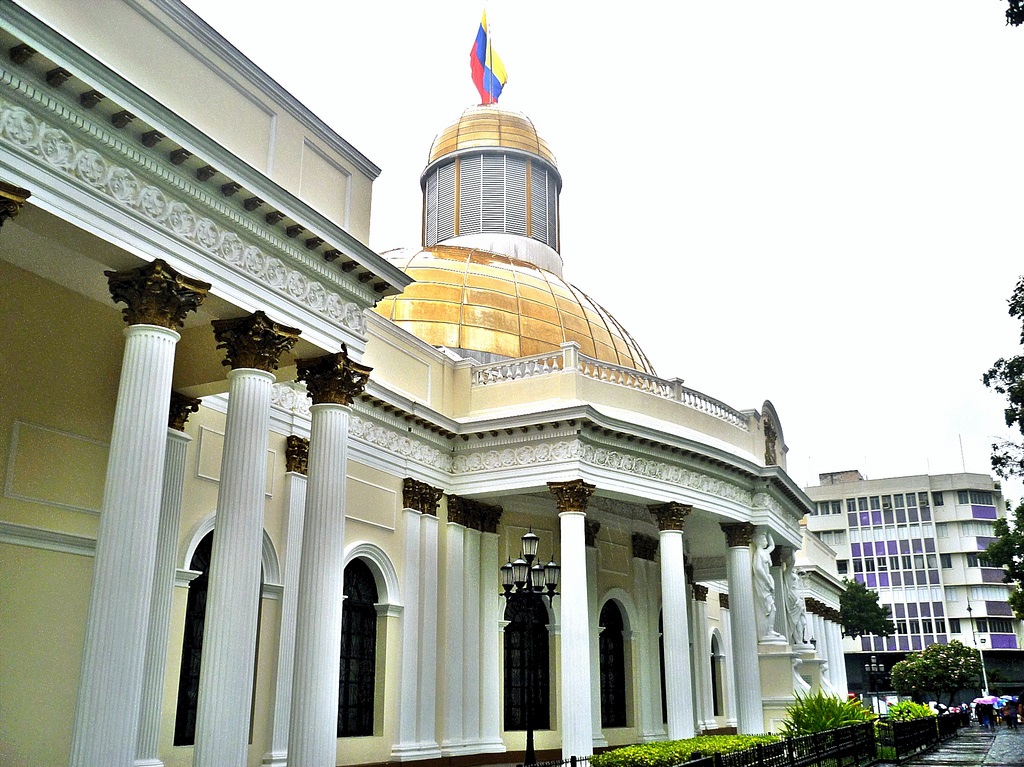
Venezuela’s National Assembly on Tuesday unanimously approved a reform to the Organic Law of the Supreme Tribunal of Justice expanding the Judicial Nominations Committee from 21 to 23 members and granting civil society organizations a majority of seats, in what negotiators described as a concrete step toward rebuilding judicial independence following decades of political control over the courts.
Under the reform, 12 of the committee’s 23 seats will be held by representatives from universities, bar associations, and other non-governmental organizations, with the remaining 11 reserved for lawmakers. The committee, which will operate for two years, is responsible for vetting candidates for appointment to the 32-seat Tribunal Supremo de Justicia (TSJ), the country’s highest court. The reform effectively restarts a judicial selection process that the Assembly had initiated in May but which was later overtaken by August negotiations.
The vote follows commitments made on August 12, when Venezuela’s interim government, backed by the Trump administration, and a faction of the opposition led by former National Assembly president Dinorah Figuera concluded the first round of political talks in Caracas. The parties agreed to renew the entire TSJ, launch a new nominations process, and establish a committee to reform Consejo Nacional Electoral (CNE), the country’s electoral authority, ahead of future elections. National Assembly president Jorge Rodríguez and opposition leader Marco Quiñones of Voluntad Popular appeared jointly at the press conference announcing the agreements.
The reform addresses longstanding concerns about the TSJ’s independence. The International Commission of Jurists warned in June that the previous nominations process was at risk of being co-opted by ruling party supporters and called on authorities to ensure strict compliance with the Venezuelan Constitution and international standards on judicial independence. ICJ Secretary General Santiago Canton said the process represented “a crucial opportunity to advance the reconstruction of the rule of law and public confidence in justice in Venezuela”, but only if conducted with full transparency.
The UN Independent International Fact-Finding Mission on Venezuela has repeatedly documented the lack of judicial independence in the country. In September 2025, the mission reported that Venezuelan authorities continued to commit grave human rights violations linked to political persecution following the contested 2024 presidential elections. The TSJ played a central role in that crisis when it ratified Nicolás Maduro’s disputed reelection in August 2024, a decision the OAS Permanent Council, the European Union, and several Latin American governments condemned as lacking legitimacy. The UN Human Rights Committee and the Inter-American Commission on Human Rights have both found that the Venezuelan judiciary has been used systematically to facilitate arbitrary detention and the persecution of political opponents.
Under Article 264 of the Venezuelan Constitution, TSJ magistrates are appointed by the National Assembly for non-renewable 12-year terms. The constitution requires citizen participation in the selection process and mandates that appointments be made by a two-thirds legislative majority. However, a 2022 reform to the Organic Law reduced the TSJ from 32 to 20 justices in a process the ICJ said lacked transparency, and the terms of justices whose mandates were due to expire between 2026 and 2027 were unconstitutionally extended. The May 2026 reform reversed that reduction, restoring the court to 32 members.
The US State Department has endorsed the dialogue process, calling it a “unique opportunity” for political transition. Opposition negotiators have said they expect the talks to produce a reformed CNE by the end of 2026.

