
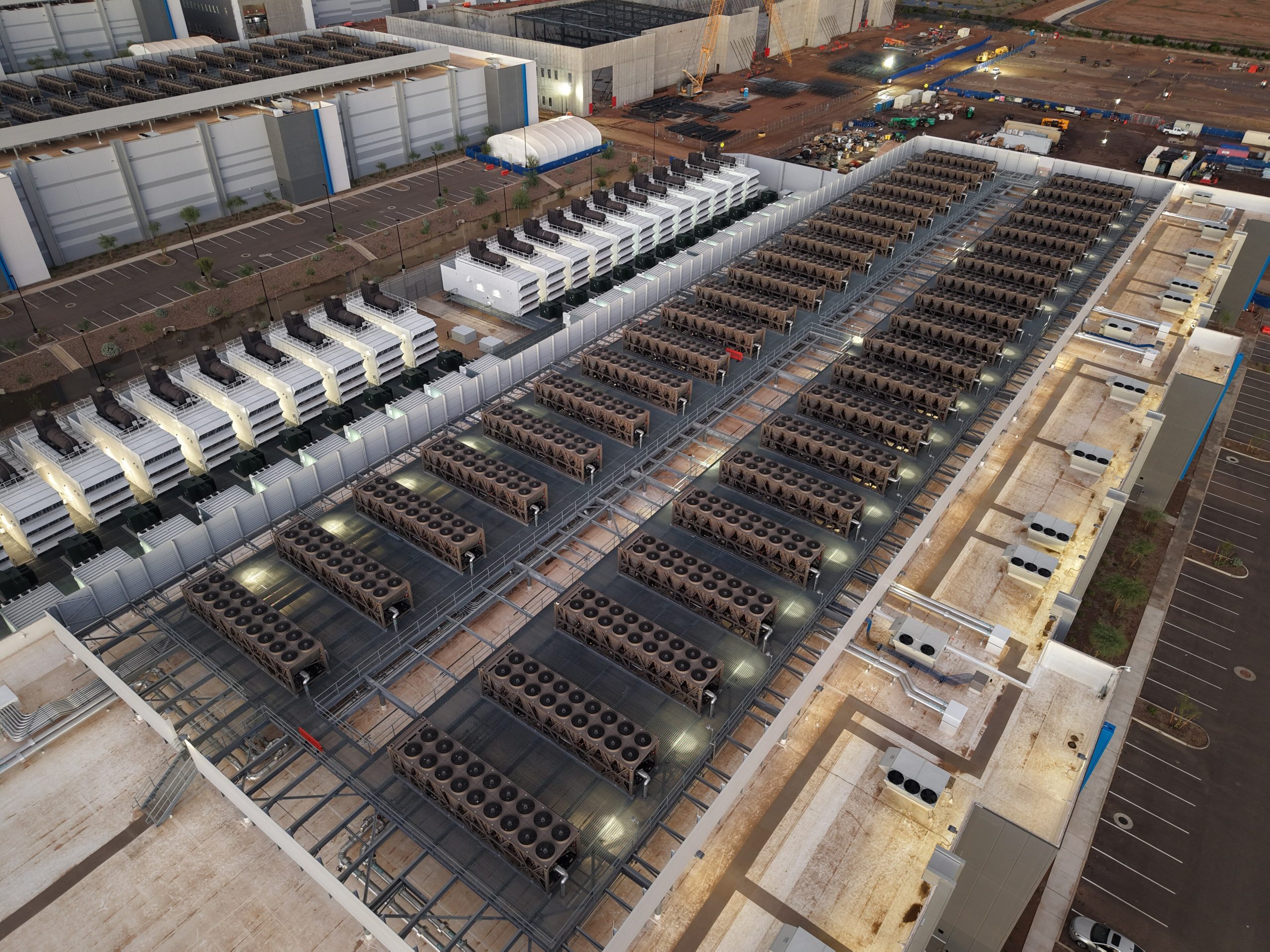
The United Nations Economic Commission for Europe (UNECE) on Tuesday has alerted the public that the use of data-intensive technologies, specifically artificial intelligence (AI) data centers, is growing faster than the current electricity infrastructure can handle.
While a data center facility can be built and connected to the grid within two to five years, expanding transmission lines and other grid infrastructure can take more than 10 years to be updated, due to lengthy planning, approval and construction processes.
Data center construction and AI consumption are expected to almost double by 2030, equaling about three percent of the global energy demand, according to the International Energy Agency (IEA). Additionally, worldwide investments in data centers and their infrastructure are estimated to roughly double by 2050, from around $800 billion per year in 2026 to $1.8 trillion per year in 2050. This has begun to raise concerns about the future reliability and resilience of global energy systems.
This is not the only concern surrounding AI and data centers. Concerns regarding the usage of AI are multifaceted, ranging from the environmental to the economic to civil rights. Researchers such as Dr. Shaolei Ren have noted that AI negatively impacts the water supply, stating that the training of a model such GPT-3 in Microsoft’s data centers could consume around 700,000 liters of clean freshwater.
Large data center facilities can use millions of gallons of drinking water a day to cool hot servers. Moreover, many data centers are built in dry regions, which can threaten locals drinking water and worsens already severe droughts. Furthermore, environmental activist Erin Brockovich argues that data centers release harmful smog-forming pollutants like nitrogen oxides and fine soot.
The placement of data centers along with their environmental impacts have also led to arguments of environmental racism, resource depletion, and the unequal distribution of industrial burdens on marginalized and low-income communities. Economic concerns run along the same vein, with local residents worrying that the high cost of utility bills and environmental damage outweigh the local payoff of purported jobs and tax revenue. Additionally, a report from the Environmental and Energy Study Institute (EESI) found that data centers generate constant, loud noise from cooling fans and heavy equipment, harming nearby residents’ quality of life.
The UN acknowledges that many of these issues are extremely hard to solve, yet the problem of grid expansion remains unresolved. The IEA has proposed three ideas to help ensure that AI deployment and development can benefit the energy sector, rather than impacting electricity systems: (1) Proactive management of data center project pipelines and electricity sector investment can support adequate and reliable electricity for the sector without adversely affecting prices; (2) Approaches that promote electricity system flexibility can help accelerate grid connections and ensure electricity affordability; and (3) Removing barriers to AI adoption in the energy sector can ensure AI is leveraged to enhance energy security and sustainability.
Overall, countries are urged to pursue consistent grid expansion and standardize electricity infrastructure, to prevent continued regulatory uncertainty.

