
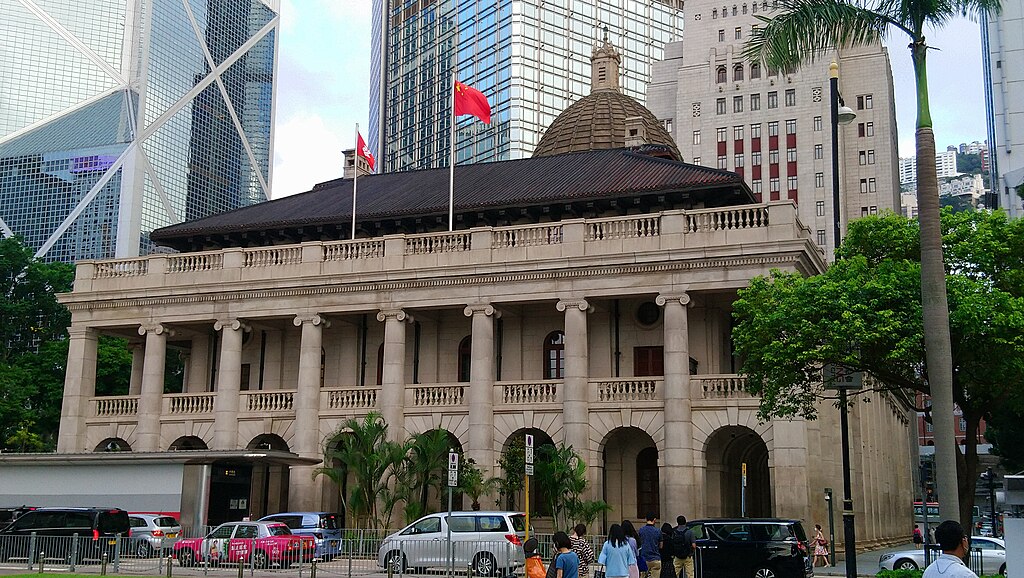
The Hong Kong Court of Appeal on Monday granted leave to 11 applicants to appeal their national security convictions to the city’s apex court. The applicants were among the 45 pro-democracy activists who were convicted of subversion in November 2024 for their alleged roles in the July 2020 unofficial primary election.
The appellate court sided with the applicants, holding that there are points of law of “great and general importance,” warranting consideration by the Hong Kong Court of Final Appeal. The court certified five major issues for the apex court to consider. They mostly involve the criminal elements of subversion under the 2020 China-imposed National Security Law.
In June 2020, China’s Standing Committee of the National People’s Congress (NPCSC) approved the legislation, outlawing acts that it considers a threat to its national security. Among them is subversion, which Article 22 defines as any acts involving force, threat of force, or unlawful means to seriously interfere in the operation of the Chinese and Hong Kong government, with the intent to subvert “state power.” Two major issues the apex court will consider are the definitions of unlawful means and subversive intent.
Both lower courts rejected the defense’s argument that “other unlawful means” must involve a criminal offense. They held that an abuse of the legislator’s constitutional power would constitute an unlawful means under the offense. They also found that a scheme to indiscriminately reject the government’s budget, paralyzing its proper function, is an abuse of power; thus, the scheme was unlawful.
The courts also found that the defendants carried out the scheme with a subversive intent. While Article 52 of the city’s Basic Law provides for a mechanism to prevent a deadlock between the executive and legislative branches, the appellate court held that the intention to trigger the mechanism constitutes the required mental element of the crime.
The apex court will review these rulings.
In July 2020, the city’s pan-democracy camp held a primary election. Known as the “35+ Scheme,” the plan was to secure a legislative majority and indiscriminately reject the government’s budget unless former chief executive Carrie Lam responded to their demands. According to the city’s Basic Law, the chief executive may dissolve the legislature if it rejects the government’s budget. If the new legislature also rejects the budget, the chief executive must resign.
While the Hong Kong Court of Final Appeal possesses the power of final adjudication in the city, Article 65 of the 2020 National Security Law vests the power of its interpretation in the NPCSC. Whether the court will seek an interpretation of the relevant provisions from the NPCSC remains to be seen.

