
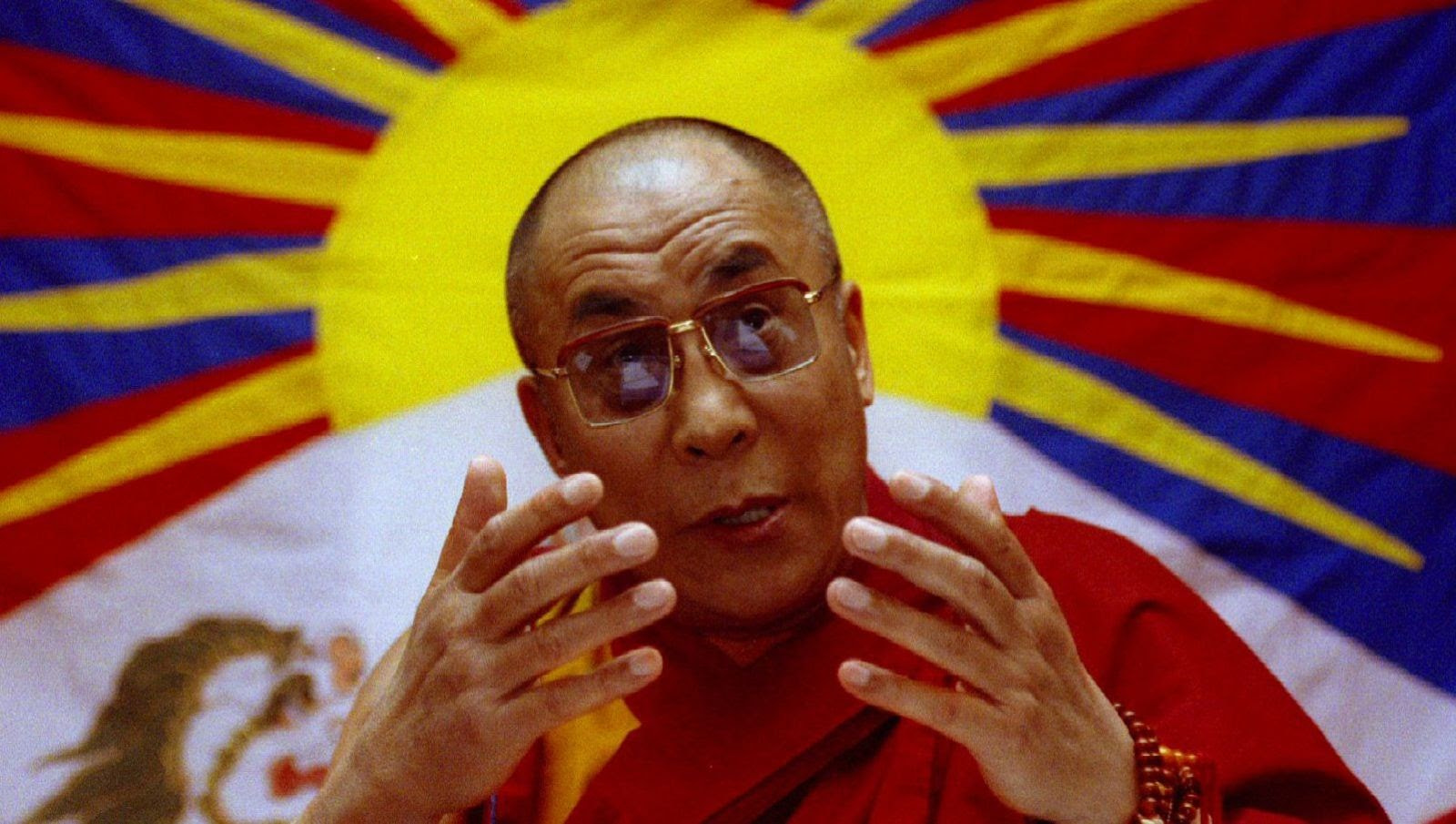
Amnesty International on Wednesday urged Chinese authorities to immediately release a human rights activist who was detained for showing a photograph of the Dalai Lama in a monastery in Tibet, emphasizing that his detention violates fundamental rights to freedom of expression and religion.
Zhang Yi, a prominent pro-democracy activist, was arrested on 28 July for “inciting separatism” contrary to China’s new Law on Promoting Ethnic Unity and Progress, which came into effect on the 1st of July. The law states its aim as promoting “a strong sense of community” among Chinese people. Article 2 of the law highlights that this must be achieved by “upholding” the Chinese Communist Party’s leadership. Other articles aim to establish homogeny in respect of culture, religion, language/written script, and history, with critics arguing that the legislation serves a sweeping legal tool to enforce forced assimilation and eliminate the distinct cultural identities of minority populations.
Notably, Article 63 establishes that the law extends beyond China’s borders; it states that those outside of mainland territory that commit acts contrary to the law or create “ethnic division” are to be pursued in accordance with the law. Rights groups have criticized the government for using a vaguely worded legislation to exercise extraterritorial jurisdiction over diaspora communities, forcing them to live in fear of retaliation from the Chinese government.
Zhang Yi was initially detained on 1 July during a visit to a monastery in Tibet. He had showed a Tibetan worshipper a photograph of the Dalai Lama on his phone, in an attempt to non-verbally communicate that he needed a prayer mat, before being arrested by the police.
Prior to the law’s enactment, multiple rights groups warned of the far-reaching implications of the law, stating that it puts activists at risk of persecution. The organization also criticized the “broad and undefined” nature of prohibiting acts which “undermine ethnic unity or create ethnic division”. It raised concerns around potential arbitrary detentions under the law.
According to rights group Tibet Watch, there have been at least five detentions, including the enforced disappearance of two Tibetan monks, related to expression of cultural or religious identity in Tibet. It warned of a “pattern of oppression” against Tibetans. Tibet has been under Chinese rule since 1951 after the ratification of the Seventeen Point Agreement, however, many legal scholars and rights groups argue that Tibet is “an independent state” under Chinese occupation.
China’s continuous repression of the Tibetan community extends far beyond systematically erasing Tibetan culture from history textbooks and forcing young Tibetan children into state-run, colonial residential schools. The government has also seized political control over the community by detaining and hiding the 11th Panchen Lama, Gedhun Choekyi Nyima since 1995 to control the selection of the next Dalai Lama.
As the second-highest spiritual authority in Tibetan Buddhism, the Panchen Lama holds vital power over the lineage’s future. By replacing the authentic leader with a state-vetted proxy, Beijing has effectively monopolized control over the community and permanently subordinated the religion to Communist Party rule.

.jpeg)