
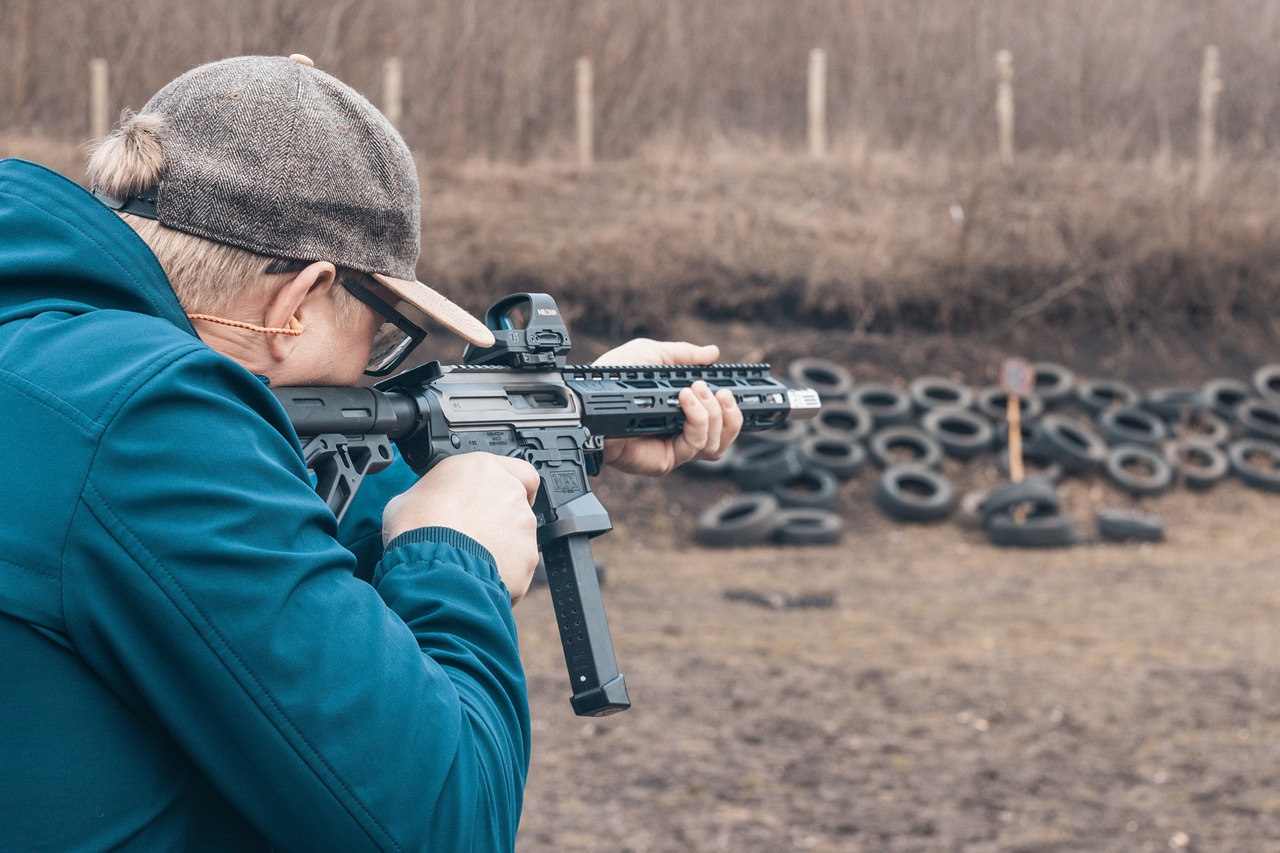
The US Supreme Court on Tuesday granted certiorari to two consolidated cases challenging “assault weapon” bans, setting the stage to potentially reshape firearm regulations across the country.
The court agreed to hear Viramontes v. Cook County out of the Seventh Circuit and Grant v. Higgins out of the Second Circuit, consolidating the cases for a single argument to be heard this fall. Both cases ask the Supreme Court to determine whether assault weapons, most commonly AR-15 style semiautomatic rifles, fall under Second Amendment.
The Viramontes case challenges an ordinance in Cook County, Illinois, banning “assault weapons,” which the law defines as semiautomatic rifles with the capacity to accept large capacity magazines and other potential modifications such as a pistol grip or muzzle brake, in addition to many specifically enumerated firearm models. The Seventh Circuit Court of Appeals affirmed judgment for the county, holding that the plaintiffs failed to overcome the circuit’s 2023 ruling in Bevis v. City of Naperville, where the court found that AR-style rifles are not materially different from M16 rifles used in military capacities, and thus “lie outside the class of Arms to which the individual right applies.”
The Grant case challenges Connecticut’s ban on assault weapons, enacted after the 2012 Sandy Hook school shooting. Connecticut provides a similar definition of “assault weapons” as that found in the Cook County ordinance. The Second Circuit Court of Appeals upheld the law, finding it targeted “unusually dangerous weapons…consistent with our Nation’s historical tradition of regulation of such weapons.”
Petitioners in both cases argue that firearms banned under the respective laws are widely used across the country and thus fall under “common use” protections outlined in District of Columbia v. Heller. Cook County and Connecticut contend that the banned firearms are functionally equivalent to those used in military contexts, and the laws therefore fall under the nation’s “historical tradition of firearm regulation,” as outlined in New York State Rifle & Pistol Association v. Bruen, regardless of the weapons’ popularity.
If the Supreme Court sides with the petitioners, similar firearm restrictions in states such as California, Maryland, Massachusetts, New Jersey, New York and Washington will be significantly impacted. The ruling will come amid an evolving legal landscape. Last week, a state judge in Virginia blocked an assault weapon ban just days before it was set to take effect.
