
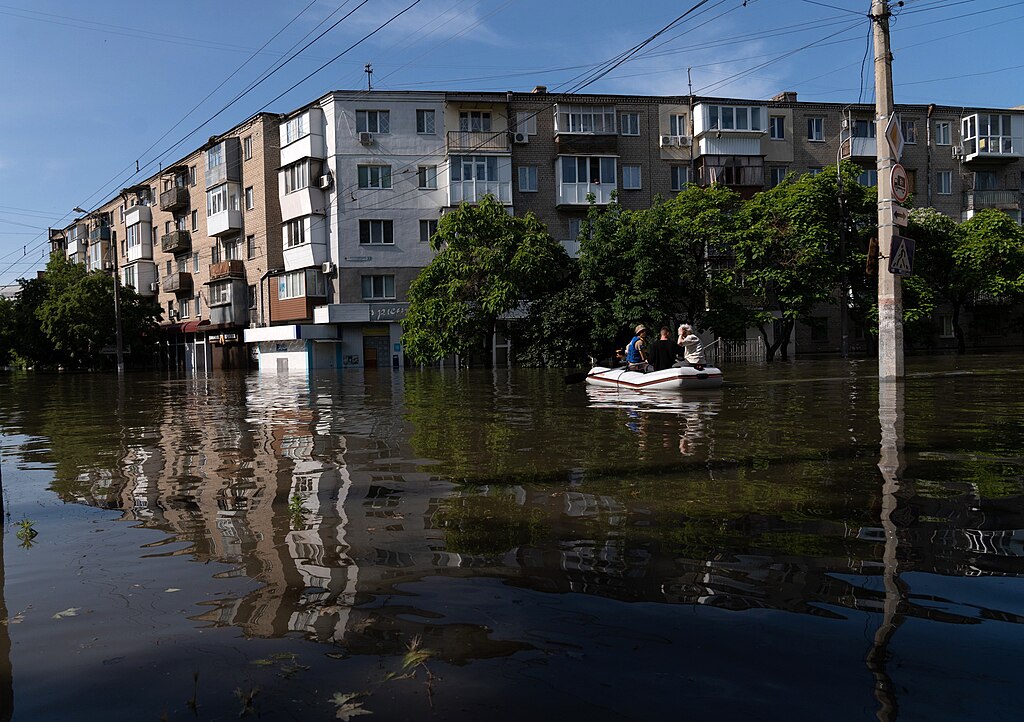
Civilians in Ukraine’s Russian-occupied Kherson region are experiencing a humanitarian crisis and cannot safely evacuate, Human Rights Watch (HRW) warned on Thursday.
HRW stated: “Russian and Ukrainian forces should immediately cease using antipersonnel mines…and take all feasible measures to protect civilians from mines…including by issuing effective warnings, sharing information about contaminated areas, and providing mine risk education.” The organization added that “warring parties are obligated under international humanitarian law to facilitate access for humanitarian assistance to civilians,” and that “Russia, as the occupying power has an obligation to ensure that civilians in occupied territory have access to food, medical care, and other goods and services essential for survival.” However, Russia has been criticized for failing to protect Ukrainian citizens before.
Displaced persons who escaped from Oleshky, which “has been under Russian occupation since February 2022 and is currently on the front line between Russian and Ukrainian forces,” detailed “severe shortages of food and medical care” and “the near-total collapse of public utilities.” They have also risked “unpredictable procedures at Russian checkpoints” and “death or serious injury from ongoing hostilities and landmines while moving around or attempting to leave.”
In addition to Oleshky, the Ministry of Foreign Affairs of Ukraine cautioned that in Hola Prystan, Stara Zburivka, and Nova Zburivka, “basic living conditions are entirely non-existent.” It shared that Ukrainian officials “received more than 220 direct requests for evacuation from these settlements.”
The UN Human Rights Monitoring Mission in Ukraine (HRMMU) confirmed that May 2026 had the most civilian casualties of any month since April 2022. The mission found that at least 275 civilians were killed and 1,763 were injured. HRMMU investigators said that “the use of powerful weapons by Russia in urban areas was the main driver of the high casualty toll.”
HRMMU posted on June 25 that “up to 6,000 civilians, including more than 180 children, remain in these communities.” It also reported a “significant increase” in civilian casualties due to short-range drones, noting “how the threat of drone attack has affected access to basic services, essential aid and emergency support.”
Reportedly, Ukraine and Russia have discussed “a possible local ceasefire, but no agreements have been reached yet.”

.jpg”)