
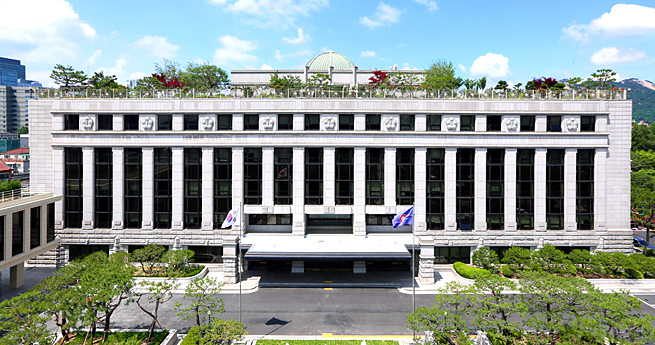
On Thursday, Amnesty International warned that South Korea’s abortion framework did not go far enough to protect women’s reproductive health and rights. Amnesty International’s call for improved protections for women came in response to an appellate decision by the Seoul High Court that acquitted a 26-year-old woman who had been charged with murder, overturning an earlier conviction.
“While we welcome the court’s decision to acquit the woman who sought abortion, the court’s decision to uphold the convictions of medical staff exposes structural loopholes in access to essential healthcare in South Korea,” HeeKyong Cho, Amnesty International Korea’s executive director said in a statement.
The Seoul High Court’s decision acquitted Kwon, the 26-year-old woman charged with murder, determining that she did not know that a doctor would kill the fetus after it emerged alive from her body, and that she had only known that the fetus would be delivered stillborn from her womb. The overturned trial’s ruling, which had sentenced her to prison for three years, suspended for five years, had found that she had been willfully negligent regarding murder. According to prosecutors, the fetus was allegedly born alive through a cesarean operation and later placed in a freezer, killing it. The director of the hospital and the operating surgeon were indicted for delivering the fetus and then killing it, and their sentences were reduced but not overturned. In June 2024, Kwon had documented her experience and hospitalization in a Youtube vlog which then went viral.
“The National Assembly’s failure to amend the abortion law has left pregnant people without clear legal protections and access to essential reproductive healthcare,” Cho said in a statement. Cho also called for the government to remove barriers to accessing safe abortion and amend the Mother and Child Health Act to “prioritize women’s sexual and reproductive health and rights.”
In 2019, South Korea’s Constitutional Court overturned a ban on abortions, ruling that criminalization of abortion was unconstitutional because it violated women’s right to bodily autonomy. The court ordered lawmakers to revise the law by the end of 2020. Though the government has yet to pass replacement legislation defining when abortions are permitted, there are several bills pending in the National Assembly that seek to fill the legal vacuum left by the court’s 2019 ruling.
Amnesty International had also commented on the case when Kwon was initially convicted. In March, Sarah Brooks, Amnesty International’s Deputy Regional Director, said that the ruling had highlighted “the impossible position pregnant people and medical providers are placed in due to the ongoing legal vacuum surrounding abortion in South Korea.” Brooks had raised concerns that the lack of existing regulation may have restricted access to healthcare and pushed pregnant people towards exploitative and unregulated practices.
Abortion legislation also recently come into the public eye when President Lee Jae Myung called for loosened restrictions on the abortion pill mifepristone. Without clear legislation, women seeking abortions often seek smuggled drugs on online forums or underground markets. In 2025, Myung’s government had included the legalization of abortion medication in its five-year national policy agenda.

