
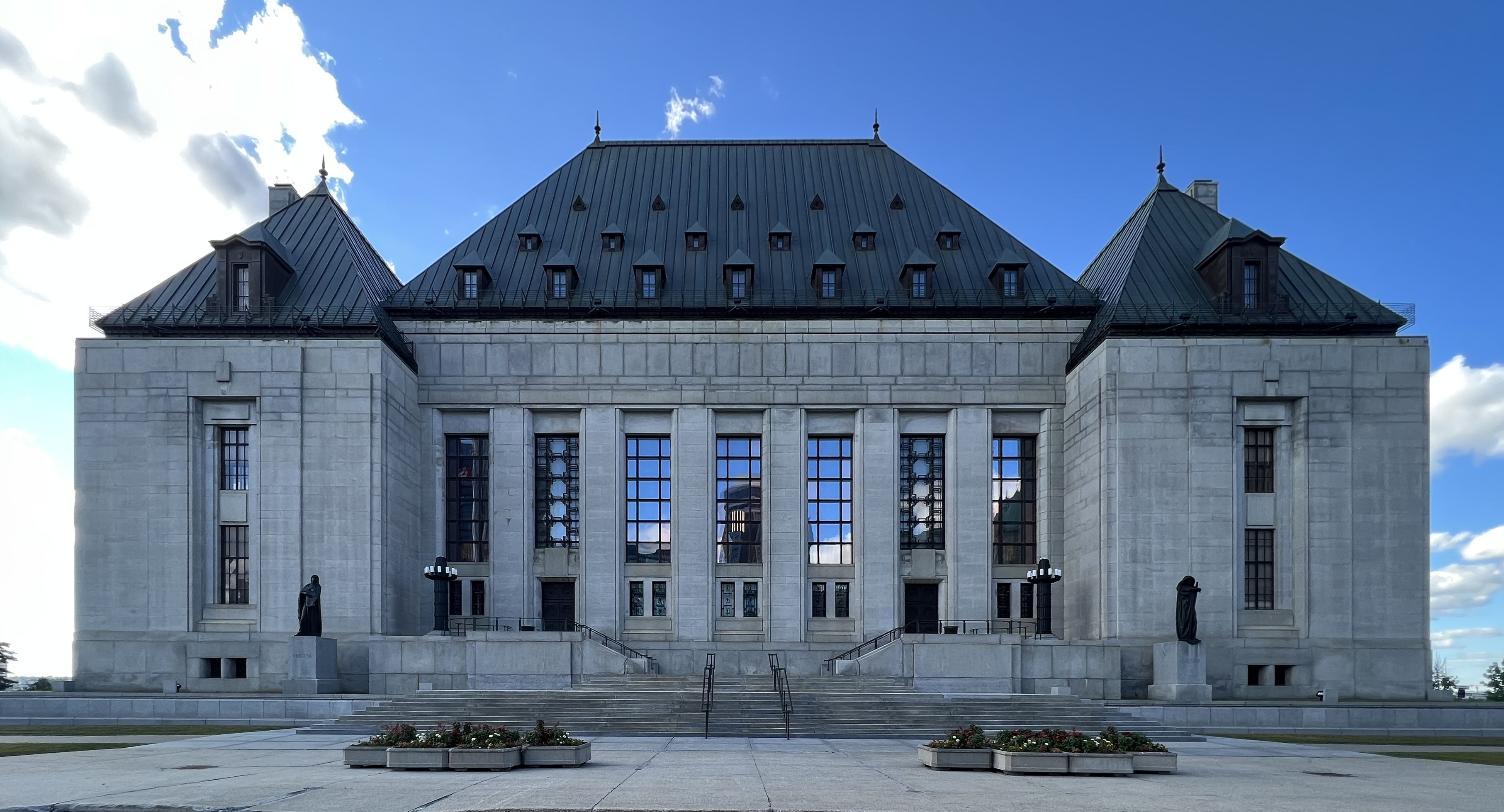
The Supreme Court of Canada on Thursday ruled unanimously that a partial privative clause cannot bar judicial review on questions of fact and law. It held that judicial review of such questions is the courts’ “core supervisory jurisdiction” guaranteed by the Constitution.
Chief Justice Richard Wagner, writing for the bench, held that Canada’s Constitution Act, 1867 guarantees the courts’ ability to review the legality of administrative decisions. He concluded that the legislature acts beyond its authority when it purports to limit courts’ constitutional power to perform a legality review. This is because, according to Wagner, any irrational or unreasonable exercise of public power is unlawful; the Constitution empowers courts to ensure that the government exercises its public power lawfully and within limits.
Notably, Wagner recognized the legislature’s power to prescribe procedures for judicial review. For instance, the legislature can regulate the timelines, fora or standards of judicial review. This power, however, cannot cut into the core supervisory jurisdiction of superior courts.
Sujit Choudhry, counsel for Democracy Watch, welcomed the decision:
In an era where executives around the world have sought to assert broad and unlimited powers that are not reviewable by the courts, the Supreme Court of Canada has resoundingly proclaimed that will not occur in Canada. In clear and unequivocal terms, the Supreme Court has affirmed legal powers, by definition, are limited powers, and that it is the constitutional duty of the provincial superior courts and the federal courts to rule on the legality of executive power.
The case concerns Section 66 of the federal Conflict of Interest Act. Known as a partial privative clause, the provision bars the federal court from reviewing the ethics commissioner’s decisions on the grounds of alleged factual or legal errors. Courts can still review commission decisions if there are alleged jurisdictional errors, procedural errors, or perjured evidence. Thursday’s ruling renders the section of no force and effect.
In May 2021, former ethics commissioner Mario Dion cleared former Prime Minister Justin Trudeau of conflict of interest violations related to his approval of WE Charity as the administrator of the Canada Student Service Grant. It was a temporary program that encouraged students to participate in service activities and support their communities during the COVID-19 pandemic. Democracy Watch, a Canadian advocacy group, argued that Dion failed to consider the personal ties between Trudeau and the Kielburger brothers, who are two of WE Charity’s co-founders.
The advocacy group lodged this judicial review to challenge the conclusion. The lower court threw out the case, holding that the reporting obligation owed by the commissioner to Parliament’s standing committee is an adequate alternative to judicial review. The apex court overturned this ruling.
The Federal Court of Appeal can now review Dion’s conclusion.

