
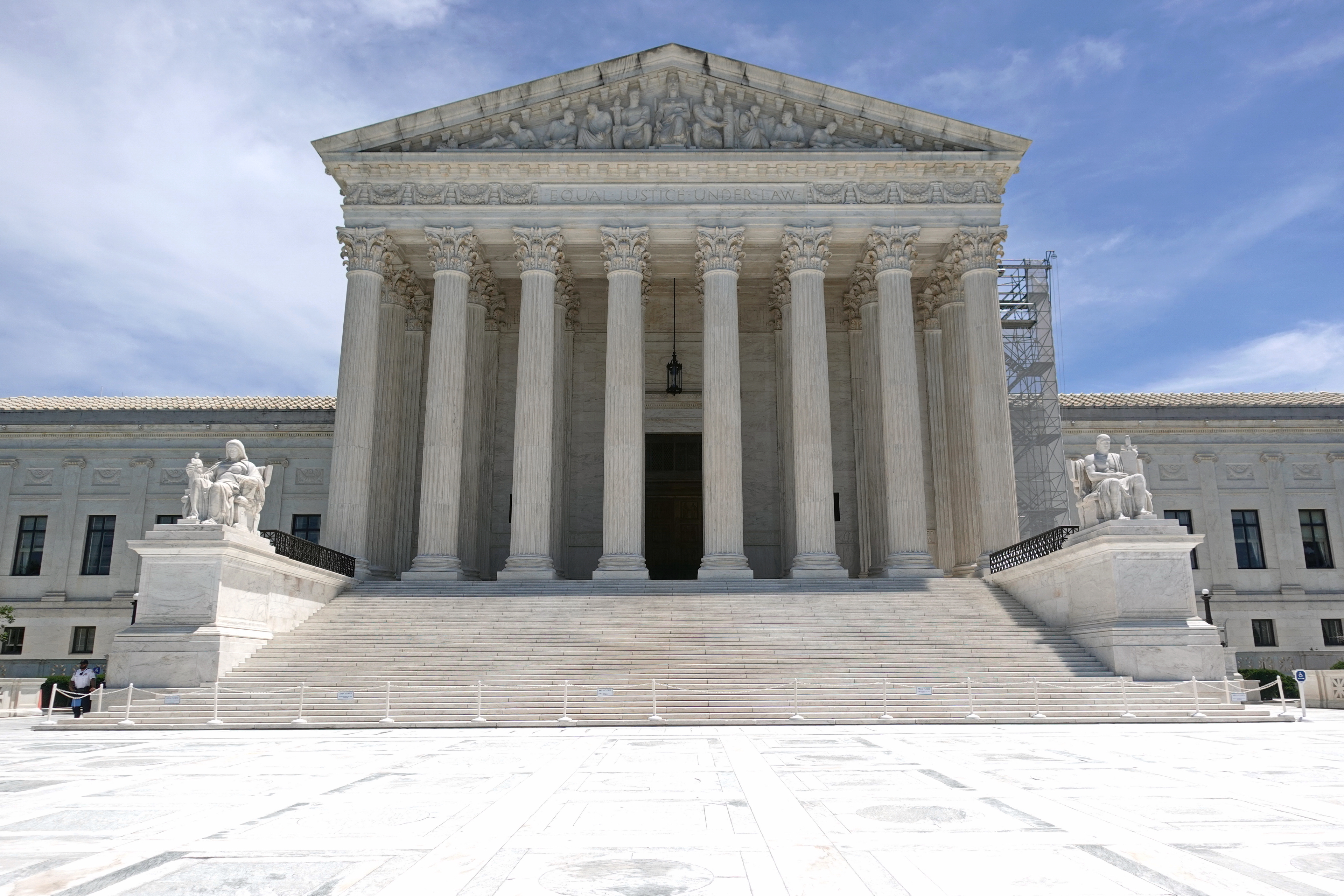
The US Supreme Court on Thursday issued favorable rulings to federal regulators in two separate cases, adding clarity to recent holdings that signaled skepticism towards agency powers.
In FCC v. AT&T, the Supreme Court ruled 8-1 that the Federal Communications Commission (FCC) system for issuing monetary forfeiture orders does not violate the guarantee of a jury trial established in the Seventh Amendment. The case, consolidated with Verizon v. FCC, heard challenges from AT&T and Verizon regarding over $100 million in fines stemming from their mishandling of customer location data. The companies argue that the FCC’s enforcement process denied their Constitutional right to a trial. Thursday’s ruling clarified that the FCC forfeiture orders are not actually binding on their own; instead, prior to monetary collections, the Department of Justice must file a separate lawsuit under 47 U.S. Code § 504, ultimately providing the right to a trial.
In a separate ruling on Thursday, the Supreme Court unanimously decided Sripetch v. SEC, holding that the Securities and Exchange Commission (SEC) does not need to prove that investors suffered actual financial losses before seeking disgorgement. The case involved Ongkaruck Sripetch, a penny-stock trader who ran pump-and-dump schemes across 20 or more companies; Sripetch contested the SEC’s demand for $4.1 million on the argument that his victims were not able to demonstrate quantified financial harm. The Court on Thursday found that forfeiture of illegally obtained profit is an equitable remedy which is measured by the defendant’s gain rather than the victim’s loss, and that traditional common law equitable principles permit courts for such sanctions even when the other party has not suffered measurable financial damage. This decision thereby affirms one of the SEC’s most effective tools for enforcement.
Both rulings on Thursday drew from the 2024 Supreme Court decision in SEC v. Jarkesy, which held that the SEC violated the Seventh Amendment by imposing civil penalties through its internal administrative process that did not involve a jury. That decision prompted challenges to similar enforcement structures at other agencies, with contesting parties arguing that the holding in Jarkesy should be applied broadly. In both of Thursday’s decisions, the Court declined to extend Jarkesy, instead finding that the specific enforcement structures at issue contained sufficient safeguards to pass Constitutional standards.
Thursday’s decisions also come amidst the landscape of the 2024 landmark case Loper Bright Enterprises v. Raimondo, where the Court overruled the longstanding Chevron doctrine and eliminated the presumption that deference should be given to agencies’ interpretations of ambiguous statutes. Viewed as a collective reframing of agency authority, Loper Bright, Jarkesy, and Thursday’s rulings demonstrate an ongoing calibration of the relationship between the Supreme Court and federal agencies which has drawn significant attention in recent years.

