
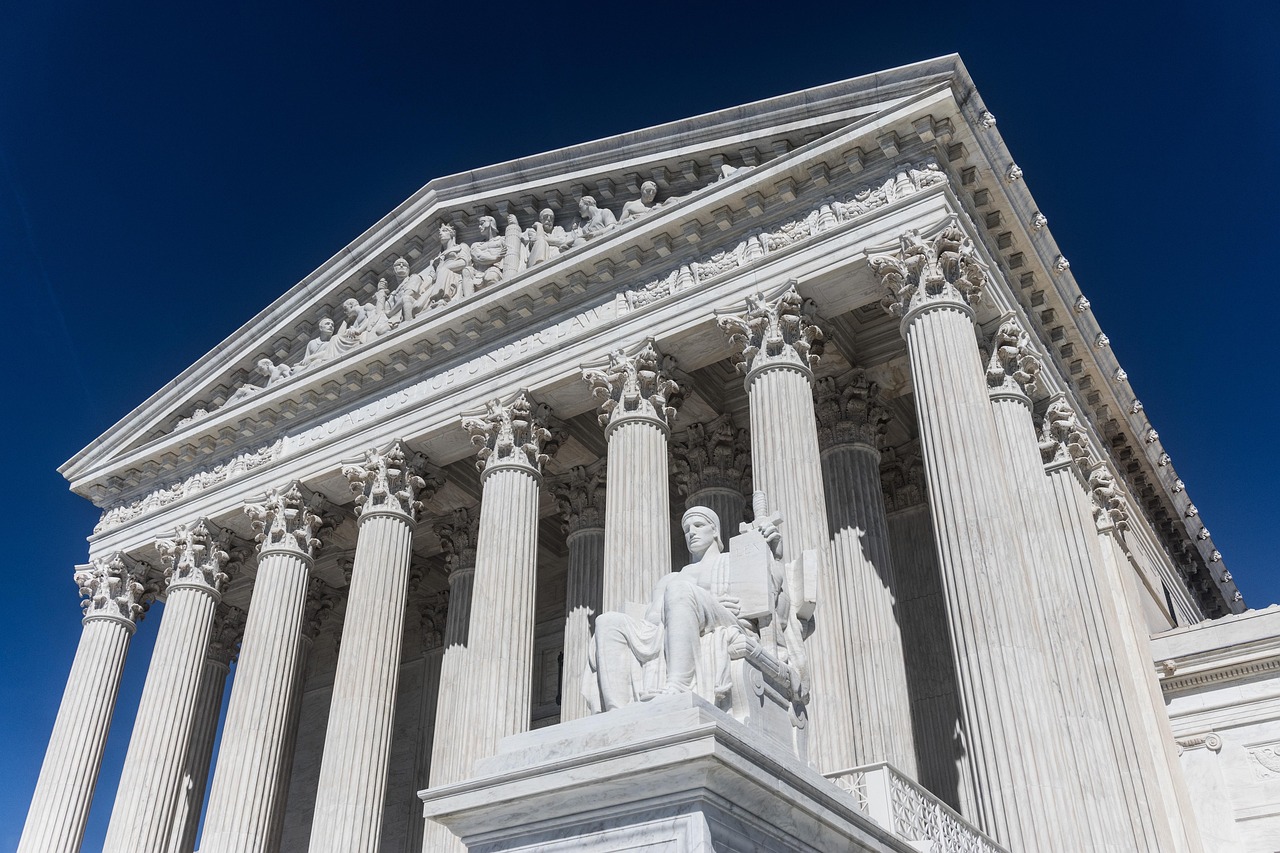
The US Supreme Court issued an unsigned order Tuesday allowing Alabama to use a congressional map that is expected to benefit Republican candidates during the midterms, effectively eliminating a district currently represented by a Black Democrat.
Over the dissent of the three liberal justices, the court released the order despite the fact that Alabama has already held congressional primaries. As a result, Alabama will likely have six GOP members of Congress next year, with only one Democrat.
The order on the court’s emergency docket is the latest instance of the justices dipping into the nationwide flurry of mid-decade redistricting instigated by President Donald Trump’s desire for the GOP to retain control of the House in this November’s midterms. Over the course of several months, the Supreme Court has had a hand in multiple states‘ congressional mapping, most of which have benefited the Republican Party.
Critics argue that Tuesday’s order not only is being released at the eleventh-hour to the GOP’s benefit, but also dilutes Black voices and undermines decades of hard-fought civil rights progress. However, in the unsigned order the court explicitly states that “while federal courts should not impose changes close to an election … states are free to decide for themselves whether last-minute changes to an election are in their best interests.”
In the dissenting opinion, Justice Sonia Sotomayor, joined by Justices Elena Kagan and Ketanji Brown Jackson, wrote that “the Court is squarely faced with a record of the turmoil it has caused and the harm it has wrought. Yet just as Alabama doubled down on racial discrimination, the Court today doubles down on chaos.” Sotomayor wrote that Alabama’s hands were not “clean,” contending that Alabama had failed to comply with prior lower-court rulings and had adopted inconsistent legal positions throughout the litigation.
