
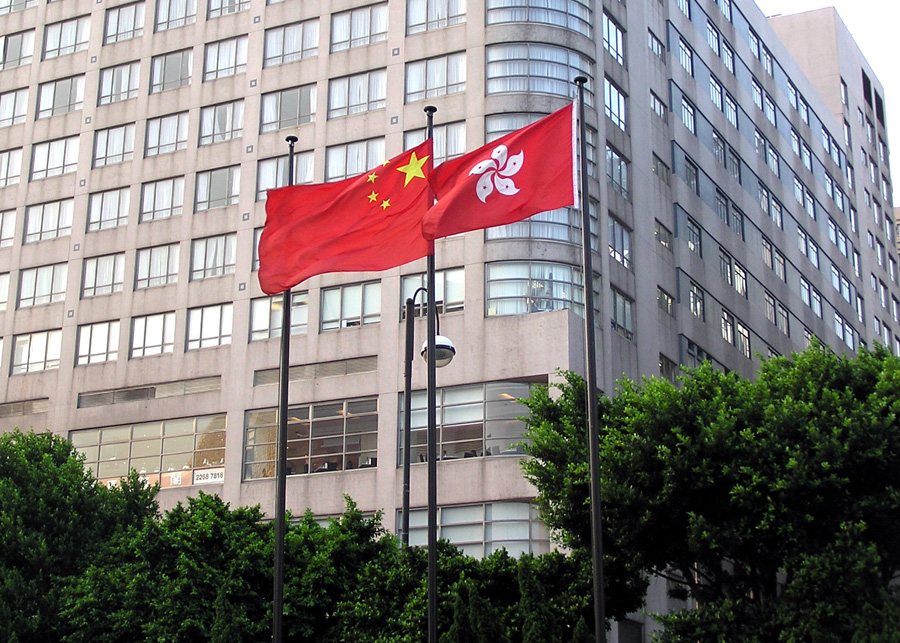
Human Rights Watch (HRW) warned on Monday that Beijing has restructured Hong Kong’s governance in a way that reduces accountability and tightens social control. The new system answers to the Chinese Communist Party leadership rather than Hong Kong’s people, and builds on the existing “draconian” national security regime.
Elaine Pearson, Asia director at HRW, particularly stressed the lack of accountability this new structure brings, saying:
Hong Kong’s highly repressive national security regime and bureaucracy have erased long-protected rights and cast a deeply troubling shadow over its future. As Beijing continues to radically transform Hong Kong, the deadly Tai Po housing complex fire illustrates the tragic consequences of a society that has lost its ability to hold the powerful accountable.
The reshaping has fundamentally changed personnel, institutions, and ideology of the Hong Kong Special Administrative Region (HKSAR). All power now lies within institutions that report to the Chinese president, Xi Jinping. The new Legislative Council is comprised of individuals with deep ties to the Chinese state, including 45 people who hold positions in state-owned enterprises, and numerous former police officers.
The government has also allocated 5 billion Hong Kong dollars (approximately 638 million USD) to national security. There is no public information about how this money is used, and there has been increased secrecy in arrests and other operations.
These changes come six years after the National Security Law was imposed in June 2020. This law has led to the arrests of protestors, activists, and former opposition lawmakers, as well as shutting down numerous pro-democracy news sources. Major pro-democracy figures have also been imprisoned, including Jimmy Lai and Joshua Wong.
HRW emphasized that the response to the Tai Po fire demonstrates how this security apparatus functions to suppress dissent. According to HRW, there was “ample evidence” early on showing government negligence, but critics were silenced and even detained.
Further, the rights group said that the national security framework has led to censorship of art and film, and many businesses have been targeted if they are seen as holding pro-democracy values.
These changes are also now entrenched in the education system. The Education Bureau instituted a curriculum that teaches the “values” of national security and patriotism and seeks to vilify democratic protests in Hong Kong. This new curriculum also means that many aspects of history will not be taught. When these changes were proposed, one anonymous educator raised concerns. “China has historical problems and existing ones. We need to face up to them for the country to progress,” they said.
Pearson says that these far-reaching consequences highlight the false promises of the Chinese government, stating:
The Chinese government dishonestly claims the national security regime targets only a small minority of people, but in reality it has turned the city into a security fortress, leaving people powerless. Foreign governments should keep speaking out about Hong Kong, and not forget that it is the ordinary people who fought so hard for universal suffrage and basic rights who suffer the most.
Other organizations, such as Amnesty International, have joined HRW in expressing ongoing concern over national security enforcement in the HKSAR.

