
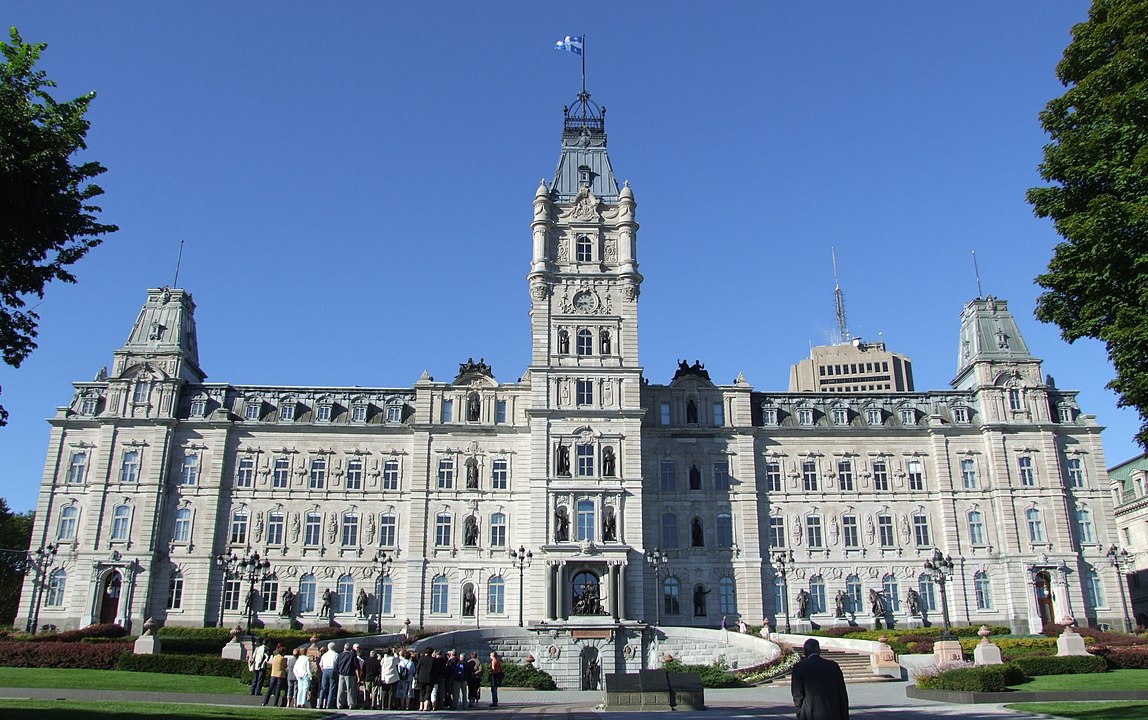
The ruling Coalition Avenir Québec (CAQ) abandoned a bill on Friday that would have created a constitution for the Canadian province, after failing to gather the consent of opposing parties for its adoption before the National Assembly broke for summer.
Québec Minister of Justice Simon Jolin-Barrette stated that he asked for the consent of the opposing parties several times, but they “have always refused.” Jolin-Barrette accused the opposing parties of deliberately and systematically derailing the constitution project, and said that the bill would have been adopted were it not for the lack of time in the session, and “there was nothing in the text [of the bill]—absolutely nothing in the text—that posed a problem.”
Bill 1, titled Loi constitutionnelle de 2025 sur le Québec (i.e. Québec Constitution Bill), was introduced in the Quebec National Assembly in October with an aim to “protect [Québec] culture, territory, heritage, language and fundamental values.” The project explicitly notes autonomy of “Québec nation,” “[d]istinguishing the Québec model from the Canadian multiculturalist vision,” and “parliamentary sovereignty” as important objectives. The bill does not appear to have an English translation on the Québec government website.
Québec Liberal Party, Québec Solidaire, and Parti Québécois together with more than 200 other groups were opposed to the bill; the said opposition primarily stemming from a failure to consult on the part of CAQ.
“Talking. Advocating. Living in Québec.” (TALQ), an advocacy group representing the English-speaking community in Québec, expressed rejoice at the demise of the bill. TALQ leader Eva Ludvig said:
It was never a legitimate constitution. From a flawed process at the outset which ignored the need for broadly based consultation with the population, to the restrictions and hierarchies of rights it sought to impose, to its initial refusal to even acknowledge the 1.3-million-member English-speaking community as an integral part of Quebec, this was part of a divisive government agenda. That agenda includes Bills 96, 21 and 84 among others – all aimed at reducing and restricting our community. In resisting Bill 1, with our presentation in Quebec City and efforts we led within our community, we found we had many concerns in common with other Quebecers, especially those focused on the damage it would do to our democracy, something that worried Quebecers of all political stripes, language groups and backgrounds.
TALQ said it fully expects revival of the Québec Constitution Project and acknowledged the need for the province to have its own constitution, but stressed the need for “a more inclusive process, a better balance between collective and individual rights, and a more complete recognition that Quebec is a diverse society and, in that diversity, lies strength, not weakness.”

