
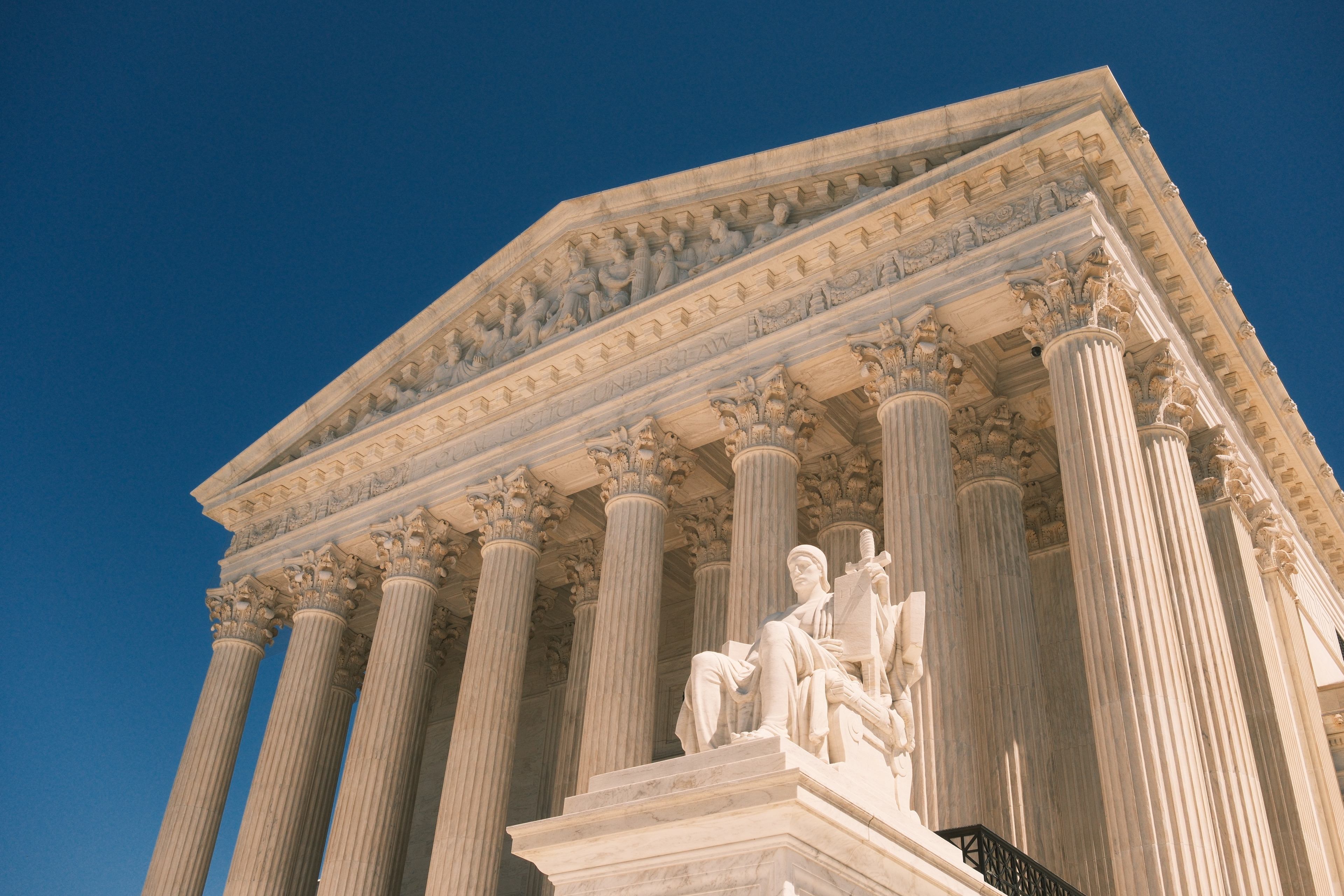
The US Supreme Court on Thursday ruled that a black prisoner on death row in Mississippi was unreasonably denied his right to challenge a prosecutor’s race-neutral justifications for removing black jurors.
Terry Pitchford was 18 years old in 2004 when he robbed a grocery store in Mississippi with an accomplice, a crime that ended with the store’s white owner shot dead, although Pitchford did not fire the fatal shots. Pitchford was convicted of capital murder under Mississippi Code 97-3-19 and sentenced to death. During jury selection in Pitchford’s trial, the prosecution used peremptory challenges against four of the five black prospective jurors, leaving a panel of 11 white jurors and one black juror.
In the 1986 case Batson v. Kentucky, the Supreme Court held that the Constitution’s Equal Protection Clause prevents prosecutors from using peremptory strikes, which are those exercised without a stated reason, to remove jurors because of their race. The court built a three-step process for “Batson challenges.” First, the defense must demonstrate that the strikes appear to be race-based, then the burden shifts to the prosecution to offer a race-neutral explanation for each strike, and finally the trial judge determines whether the explanation is genuine. At this final stage, the defense can offer arguments to refute the prosecution’s explanation.
In Pitchford’s trial, the first two steps went forward, but the third never did. After the prosecutor offered reasons for the four strikes, the trial judge declared each reason race-neutral without giving the defense a chance to make counter-arguments. When the defense tried to argue the issue, the judge cut them off twice, stating that the objection was already “clear in the record.”
On appeal, the Mississippi Supreme Court affirmed Pitchford’s conviction. A federal district court later granted habeas review, finding that the trial court did not complete the third Batson step. The US Court of Appeals for the Fifth Circuit then reversed, leading to the current matter before the Supreme Court.
In Thursday’s 5-4 ruling, the Supreme Court held that the trial court “erroneously omitted Batson’s third step.” Writing for the majority, Justice Brett Kavanaugh noted that “the job of enforcing Batson rests first and foremost with trial judges,” and that here the judge never gave Pitchford’s counsel “a sufficient opportunity to rebut the prosecutor’s proffered race-neutral reasons.” The majority opinion acknowledged that the Antiterrorism and Effective Death Penalty Act (AEDPA) sets a standard for review that is “deferential to the state court,” but emphasized that “deference does not mean abdication.” The Supreme Court reversed the Fifth Circuit decision and remanded the case for further proceedings.
The ruling explains:
In this case, whether due to confusion, oversight, an overly hurried jury selection process, or some other cause, things broke down, and the ordinary trial-court procedure for resolving Batson claims at step three never occurred—notwithstanding the repeated efforts of Pitchford’s counsel to pursue and preserve the Batson objection … In light of the entire record in this case, we agree with the U. S. District Court that the Mississippi Supreme Court unreasonably applied the clearly established Batson precedents and unreasonably determined that Pitchford waived his opportunity to rebut the prosecutor’s asserted race-neutral reasons for the peremptory strikes of four black prospective jurors.
Justice Kavanaugh’s sentiment echoes a note he wrote as a student in the Yale Law Journal, wherein he argued that enforcing Batson against racial discrimination in jury selection was essential to establish fairness in the criminal justice system.
