
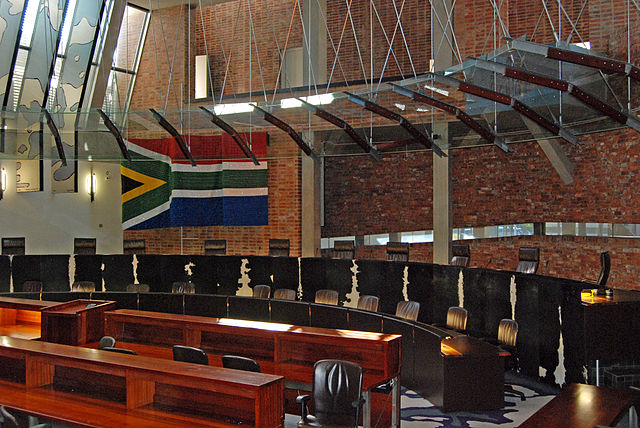
The Constitutional Court (ConCourt), South Africa’s highest court, ruled Tuesday that foreigners cannot reapply for asylum if their application has been rejected.
The ruling came in the case of Director of Home Affairs and Others v Irankunda and Niyonkuru, concerning two Burundi nationals who fled their country and resided in South Africa for four years. They had their asylum visas rejected in 2014. In 2015, when political violence during Burundi’s presidential election caused the deaths of 70 people, they reapplied for asylum, citing the new developments.
While the first-level court accepted the reason as qualifying for asylum, the judge ultimately dismissed the case in 2018, stating that they ought to have appealed the first application for judicial review rather than resubmitting a new one.
The ConCourt affirmed that the Refugee Act does not provide a right to make subsequent asylum applications, and that that interpretation aligns with international and constitutional law. They further emphasized that if it were to be the case, every subsequent application, regardless of its merit, would be treated the same way as a first application. This would require an interview, a full review, and the appeal rights. This would create a never-ending cycle of applications, allowing an unsuccessful asylum applicant to avoid ever being returned to their country of origin.
According to the judges, the ability to endlessly reapply would create “inevitable chaos” and a sudden increase in administrative labor that the immigration framework is not designed to accommodate or regulate, defeating the purpose of application rejections.
The Department of Home Affairs celebrated the win as a an “affirmation of the unprecedented progress we are making in restoring the rule of law and clamping down on abuse in the migration and asylum systems.” This announcement comes in light of the recent protests in South Africa against illegal migrants, where protestors called for mass deportation and stricter enforcement of immigration laws just two weeks prior to the ruling.
