
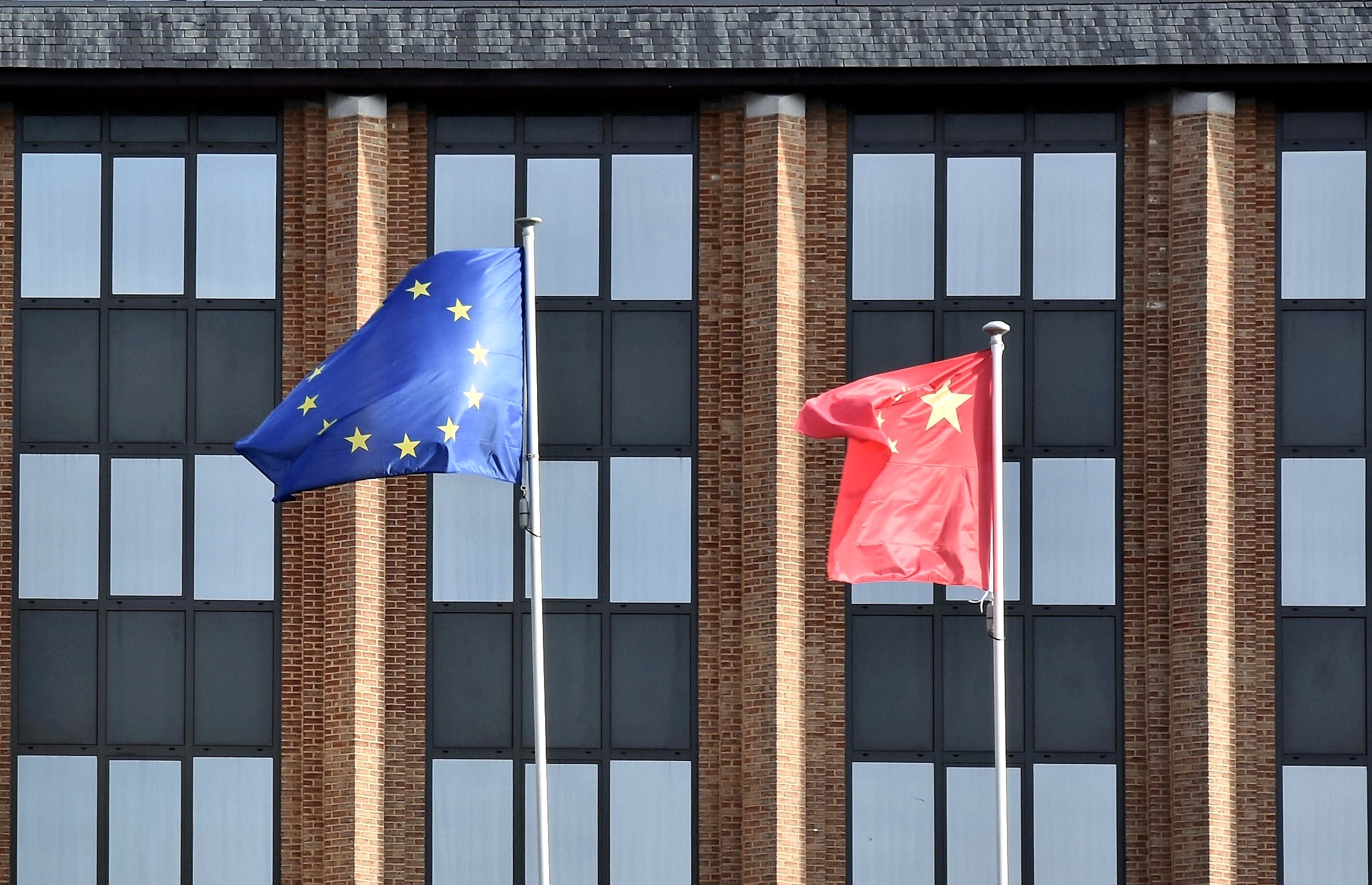
A group of top human rights organizations issued a joint public letter on Wednesday ahead of the highly anticipated EU/China conference, urging the Members of the European Parliament to put human rights at the centre of attention.
The letter calls on the European Union to stop prioritizing business interests over human rights, declaring that Europe’s current economic relationship with China relies on a “low-rights economic model” affecting workers in China. The joint letter also urges MEPs to challenge China’s ‘Ethnic Unity’ law, investigate the fate of 40 deported Uyghurs, support UN investigations into human rights abuses, the release of political prisoners and issue a public statement of support for victims.
The EU Parliamentary delegation to China is the first in eight years and was officially announced in March. It aims to address shared digital and e-commerce challenges and foster fair EU-China competition. The delegation’s first official visit took place from March 31 to April 2, 2026; its agenda focused on the digital economy and discussed several topics, including Confronting Tech Giants such as Alibaba, Temu, and Shein.
The next major sequential meeting was the official Second EU-China Conference, which took place on May 12 in Beijing. During this meeting, the emphasis was on industrial overcapacity and China’s economic and technological support for Russia’s war in Ukraine.
However, although human rights were discussed in the concluded meetings, they were addressed under the broader framework of “Political Relations” rather than as a standalone agenda item. Several organizations expressed concern over this approach, stating in a joint letter that the human rights situation in China has deteriorated since President Xi Jinping assumed office in 2012, citing allegations of arbitrary detention, forced assimilation, forced labour, torture, and transnational repression, as well as limited accountability for such violations.
It is not the first time that these organizations have called on the EU to address human rights issues in China, one such instance being a joint letter published ahead of the July 24–25 EU-China Summit, urging EU leaders to prioritize human rights during discussions with Beijing.
Following criticism from human rights organizations and the recent meetings in Beijing, attention is now turning to the upcoming European Parliament delegation visit to Beijing and Shanghai, where lawmakers are expected to raise concerns over digital trade, detained activists, and controversial ethnic unity policies. At the same time, the European Commission is considering new trade and supply-chain measures aimed at reducing the EU’s dependence on Chinese imports, with a formal decision expected on May 29.

