
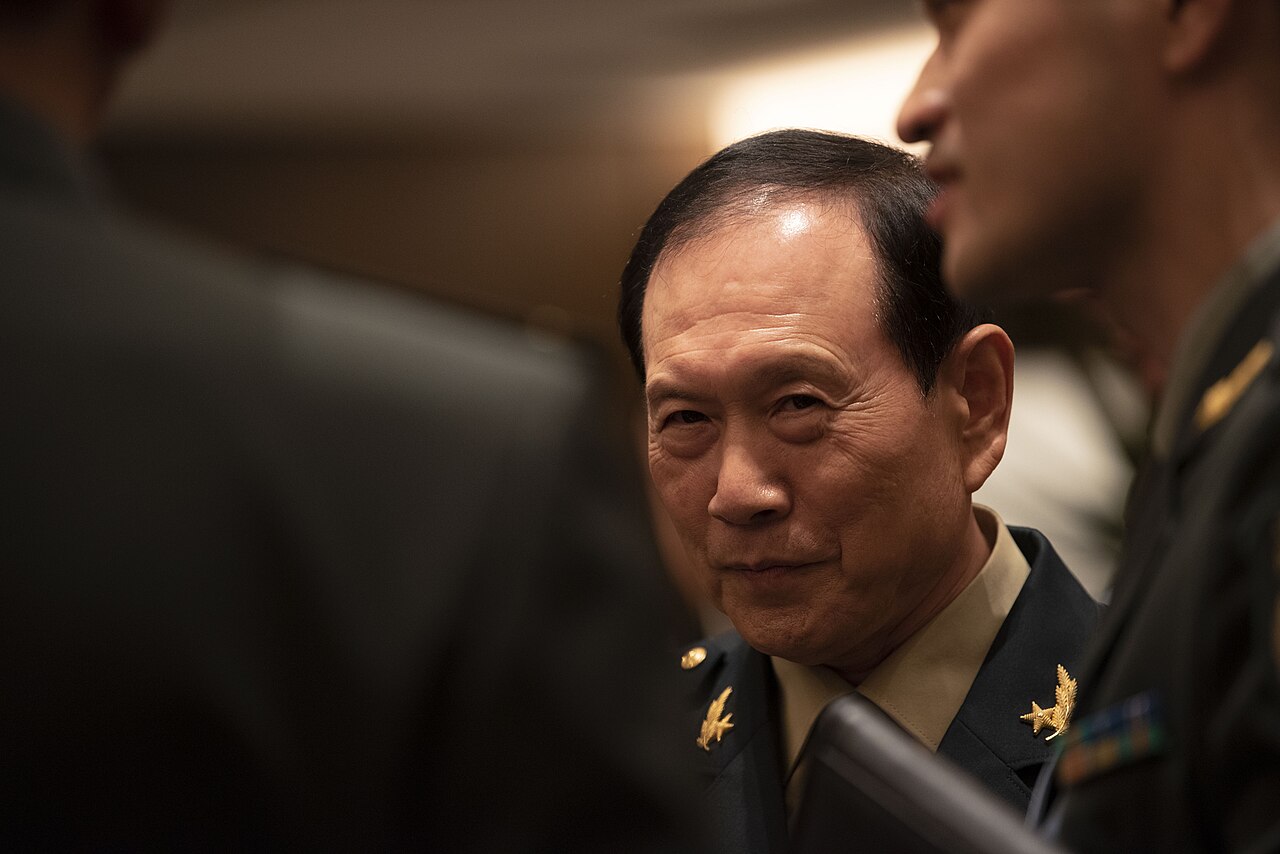
A Chinese military court on Thursday sentenced two former defense ministers to death with a two-year reprieve for corruption, marking the heaviest penalties imposed on senior military officials since President Xi Jinping launched his anti-corruption campaign more than a decade ago.
Wei Fenghe and Li Shangfu were convicted in separate proceedings, according to a statement from the official Xinhua News Agency. The court found Wei guilty of accepting bribes and Li guilty of both accepting and offering bribes, though the statement did not specify the amounts involved. Both men were stripped of their political rights for life and ordered to forfeit all personal property. After the two-year reprieve period, their sentences will be commuted to life imprisonment without the possibility of further commutation or parole.
Under Chinese law, a suspended death sentence, known as sixing huanqi, is the second most severe criminal penalty. Article 50 of China’s Criminal Law provides that a death sentence with a two-year reprieve may be commuted to life imprisonment if the convicted person does not commit an intentional crime during the reprieve period. In practice, suspended death sentences are rarely carried out.
Both Wei and Li were former members of China’s Central Military Commission (CMC) and former state councilors. Wei, 72, served as defense minister from 2018 to 2023. Li, 68, succeeded him but held the position for fewer than eight months before disappearing from public view in 2023. He was formally removed from office in October of that year. Li had faced US travel and financial sanctions over his role in purchasing Russian military hardware while heading the People’s Liberation Army’s Equipment Development Department. The Communist Party expelled both men from its ranks in June 2024.
The sentences represent the latest escalation in Xi’s campaign to purge corruption from the People’s Liberation Army (PLA), with the crackdown now reaching the highest levels of military command. In January, authorities placed Zhang Youxia, China’s highest-ranking general and a Politburo member long considered a close ally of Xi, under investigation for suspected serious discipline violations. Zhang’s removal left the CMC (the body that commands China’s armed forces) with only Xi himself and one other member, down from its usual complement of 11.
The International Institute for Strategic Studies reported earlier this year that the ongoing purges are leaving serious deficiencies in China’s command structure and have likely hampered the readiness of its rapidly modernizing armed forces. A US Department of Defense report issued in December 2024 found that at least 15 high-ranking military officials and defense industry executives were dismissed in the latter half of 2023 alone, disrupting the PLA’s progress toward its stated 2027 modernization goals.
Li’s replacement, Dong Jun, continues to serve as defense minister but was not appointed to the CMC, a break from standard practice that analysts have interpreted as reflecting Xi’s deepened distrust of the defense establishment.

