
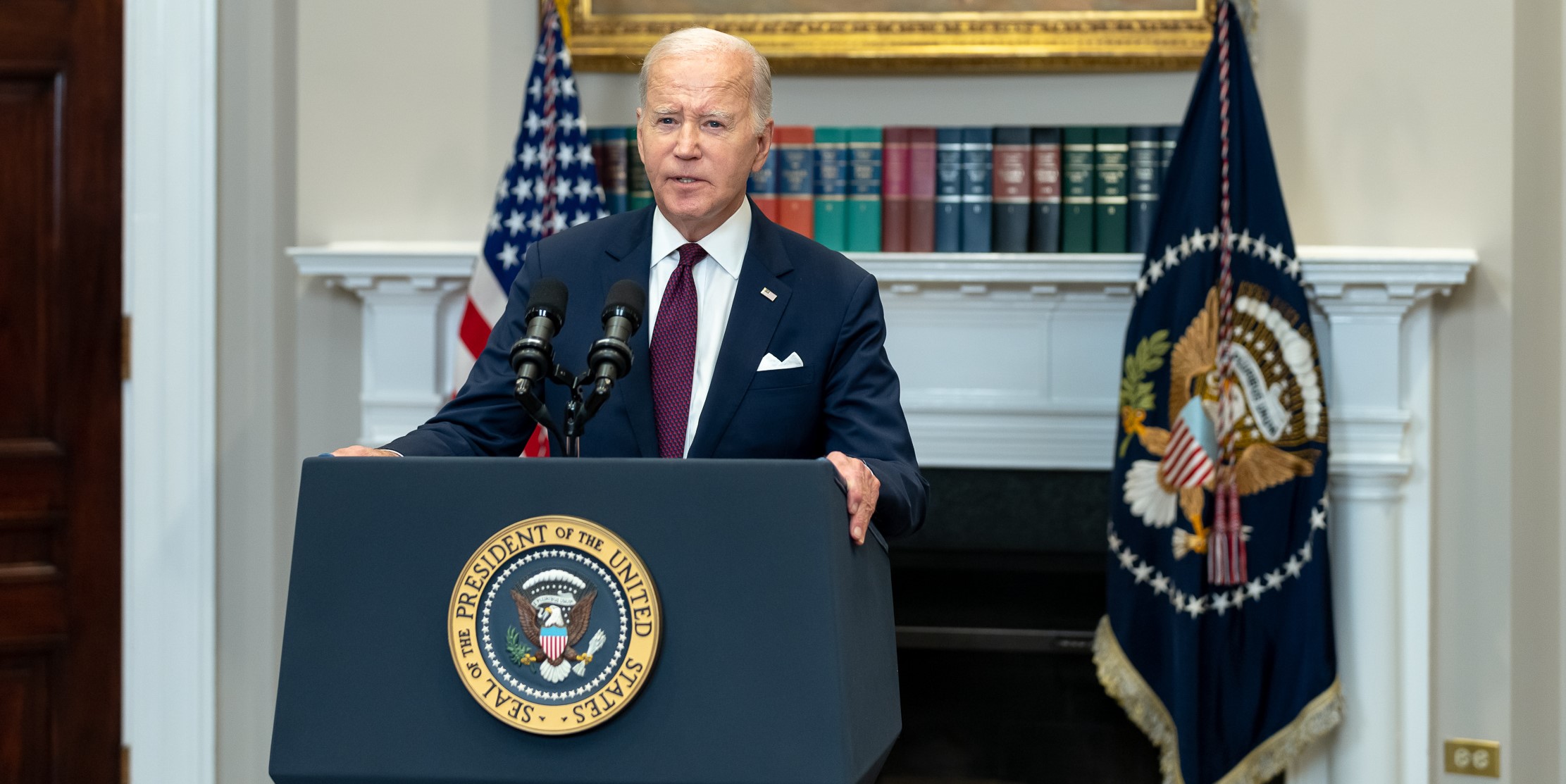
Former president Joe Biden on Tuesday filed suit in the US District Court for the District of Columbia seeking to block the US Department of Justice (DOJ) from releasing audio recordings and transcripts of private interviews he gave to a memoir ghostwriter that were obtained during a special counsel investigation into his handling of classified documents.
Biden is seeking a declaratory judgment that the congressional request is invalid, an order setting aside the DOJ’s decision to release the materials, and preliminary and permanent injunctions barring disclosure. The lawsuit asserts three counts under the Administrative Procedure Act, 5 USC § 706(2)(A), alleging that the DOJ’s decision is arbitrary and capricious, an abuse of discretion, and contrary to law under the Privacy Act, 5 USC § 552a. The act generally prohibits federal agencies from disclosing records about an individual without that person’s written consent. While the act permits disclosure to congressional committees, Biden’s lawyers contend that the exception does not apply because the committee’s request is invalid.
According to the complaint, the DOJ notified Biden in February 2026 of its intention to release the materials, then in March informed his counsel that it had received a request from House Judiciary Committee Chair Jim Jordan for the recordings. Biden’s lawyers argue that the congressional request is outside the scope of the Committee’s constitutional investigative power. The complaint also maintains that the disclosure serves no legitimate legislative purpose, arguing that the conversations predate the Hur investigation by years and “could not possibly shed light on the ‘politicization of the Biden-Garland Department of Justice,'” the committee’s stated purpose for seeking the records.
Biden’s lawyers further argue that an agreement between the White House Counsel’s Office and Hur limited the use of the records to advancing the investigation. It also required advance notice and an opportunity to challenge any disclosure outside the executive branch.
The materials at issue are recordings and transcripts of conversations between Biden and writer Mark Zwonitzer, conducted at Biden’s home between 2016 and 2017 during the drafting of his 2017 memoir Promise Me, Dad: A Year of Hope, Hardship, and Purpose. The DOJ obtained the materials in 2023 as part of former special counsel Robert Hur’s investigation into Biden’s retention of classified records from his time as a senator and vice president. That investigation concluded in February 2024, with Hur’s 345-page report finding that Biden had “willfully retained and disclosed classified materials” but recommending no criminal charges, in part because Biden would likely present to a jury as “a sympathetic, well-meaning, elderly man with a poor memory.”
The new suit follows Biden’s May 12 motion to intervene in the underlying Freedom of Information Act case initiated by the conservative Heritage Foundation. On May 21, the court granted intervention as to Biden’s challenge to disclosure to the Heritage plaintiffs. However, it denied intervention as to his cross-claims regarding disclosure to the House Judiciary Committee, ruling that an intervenor may not “enlarge those issues or compel an alteration of the nature of the proceeding.” That denial prompted Biden’s separate filing.
The dispute revives a long-running fight over the Hur materials. In June 2024, the US House voted to hold then-attorney general Merrick Garland in contempt of Congress after he refused to turn over audio of Biden’s interview with Hur, citing executive privilege asserted by the Biden White House. The DOJ released the full audio of that interview in May 2025. The Zwonitzer recordings and transcripts, however, have remained withheld until the DOJ’s recent reversal.

