
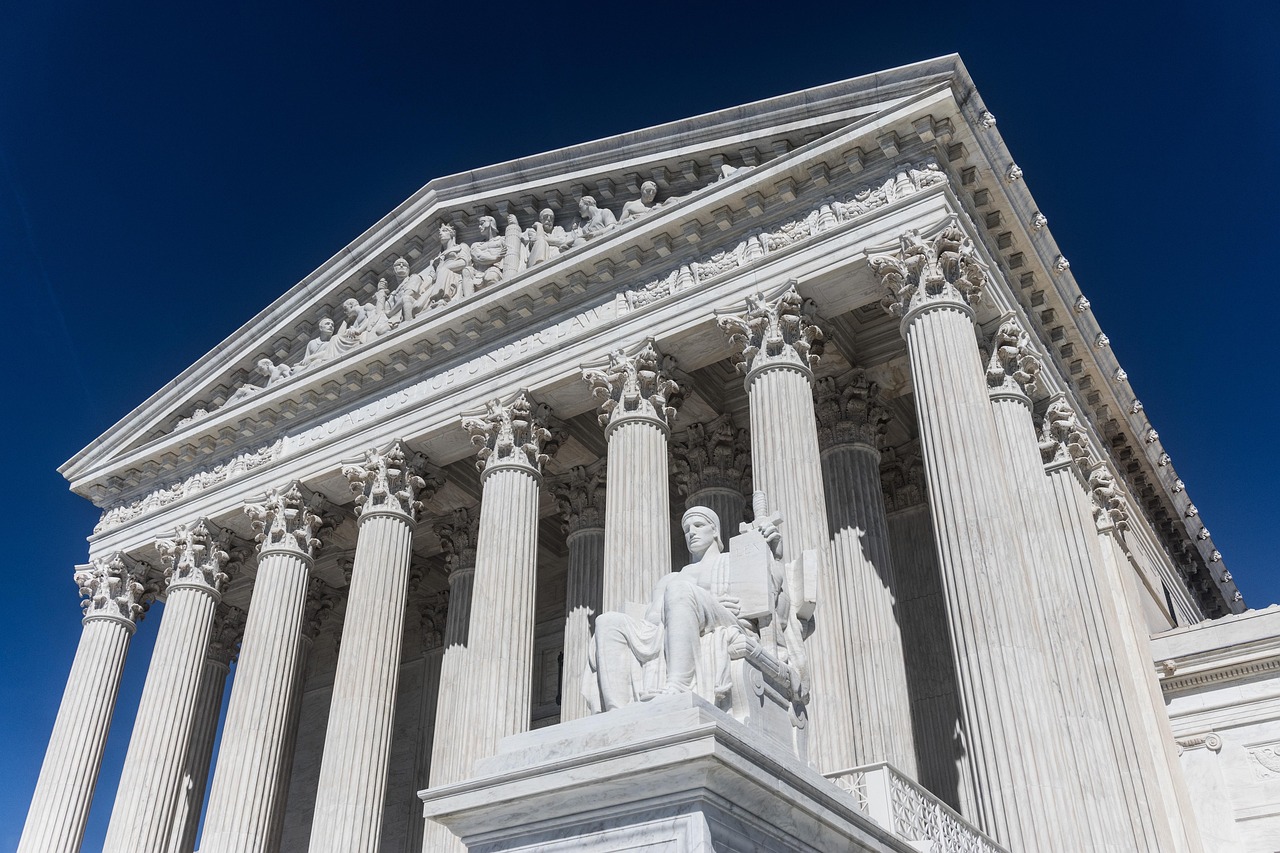
The US Supreme Court on Wednesday heard oral arguments in Barbara v. Trump, a case that could potentially redefine the scope of the Fourteenth Amendment’s Citizenship Clause.
The case involves a policy promulgated by an executive order from President Donald Trump. The policy was intended to restrict the citizenship of children who are US-born but have non-citizen parents. The plaintiffs, who are all US-born, have their citizenship directly impacted by the policy. They are represented by the ACLU on behalf of a birthright citizen named “Barbara,” along with others. The plaintiffs are suing to stop implementation of the policy on the grounds that it is in direct violation of the Constitution.
Counsel for the petitioners, Cecilia Wang, argued that the Citizenship Clause has long been understood to confer near-universal birthright citizenship, regardless of parental immigration status. Wang emphasized that the plain text of the Fourteenth Amendment establishes a clear rule that birth on US soil is sufficient for citizenship, subject only to narrow historical exceptions such as children of foreign diplomats. She further relied on precedent, particularly United States v. Wong Kim Ark, which held that a child born in the US to noncitizen parents was a citizen under the Fourteenth Amendment. The court has repeatedly reaffirmed its holding for over a century. Wang further emphasized that the Fourteenth Amendment was enacted “swiftly to correct the grave error” from Dred Scott v. Sandford and was designed to remove citizenship from political discretion, establishing a clear and durable constitutional rule.
The government, in contrast, argued that the phrase “subject to the jurisdiction thereof” read to exclude certain categories of individuals. Quoting its brief, the government contended that Wong Kim Ark recognized citizenship for children of aliens “enjoying a permanent domicil and residence” in the US, and suggested that the clause does not extend to children of aliens who are not “permitted by the United States to reside here.” The government urged the court to read Wong Kim Ark narrowly and to interpret the Fourteenth Amendment in light of modern immigration realities.
Norman Wong, the great-grandson of Wong Kim Ark, came from San Francisco to hold vigil outside the Supreme Court building during the arguments on Wednesday. He urged the court to uphold Wong Kim Ark. He said the justices should “not reinvent our rights” and should uphold “the way birthright citizenship stood for 128 years of precedents.”
Trump attended the oral argument alongside former Attorney General Pam Bondi and Commerce Secretary Howard Lutnick, marking a rare appearance by a sitting president at Supreme Court proceedings.
A decision is expected by early summer, before the court’s term ends in late June. In the meantime, the executive order remains blocked, and existing rules remain in effect.
