
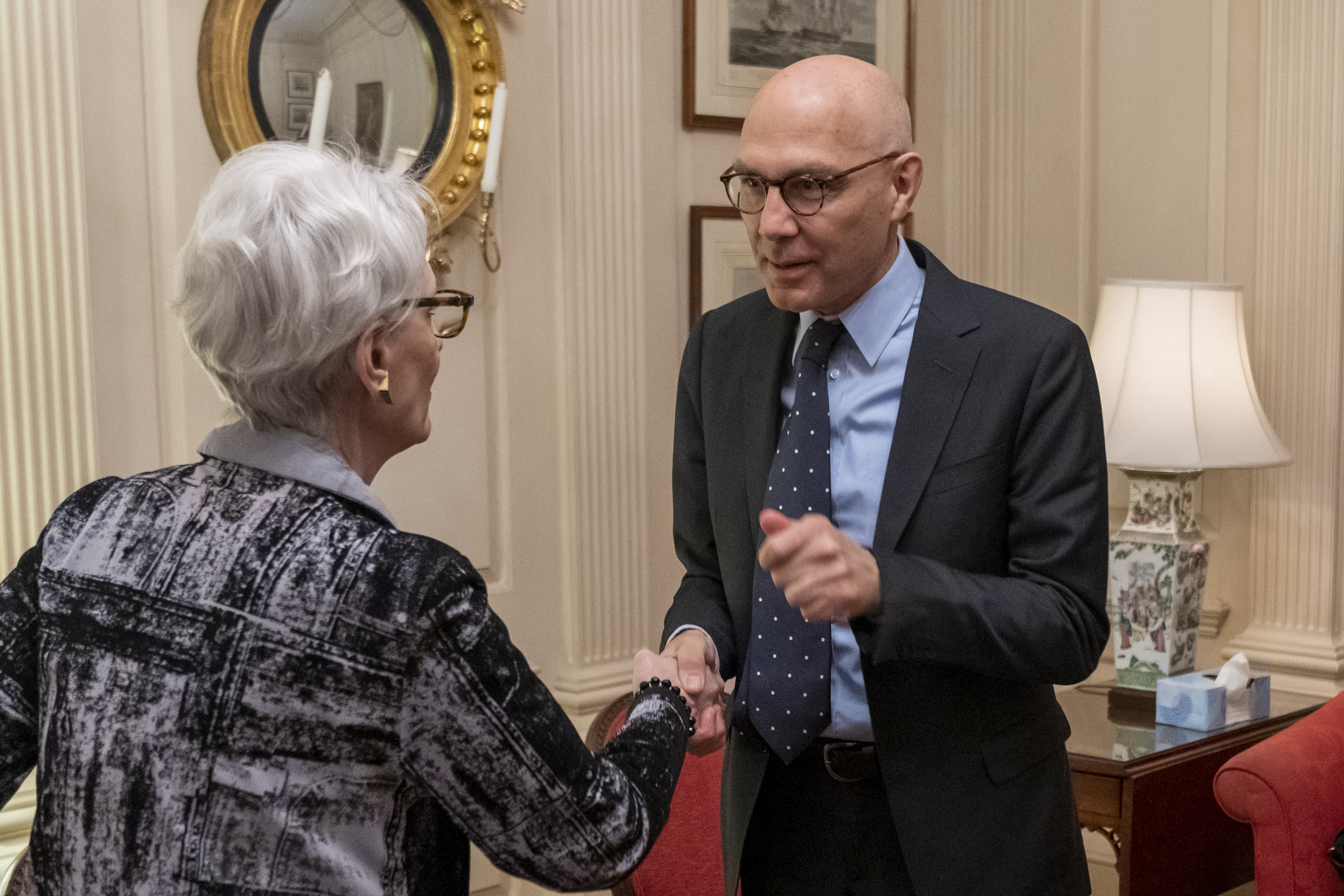
UN Human Rights Chief Volker Türk warned on Wednesday that repression of freedom of expression across the Middle East has deepened significantly since the US-Israeli attacks on Iran commenced at the end of February.
In Iran, approximately 2,345 people have been arrested on charges related to “national security.” Many of these, as well as more arbitrarily arrested during the January protests, are being held in harsh conditions and incommunicado detention. The state has also cut internet access to prevent external sharing of information. Three protesters were publicly hanged in March after being convicted of “waging war against God” based on “confessions” obtained under torture. Many more are at imminent risk of execution.
Türk summarized the increased restrictions on rights, stating:
We are witnessing a sharp securitisation of civic space across the region, with severe restrictions imposed by governments on people exercising their rights to freedom of expression and peaceful assembly. Waves of arrests and broad clampdowns, mostly on vaguely defined accusations, have had a deeply chilling effect on people, many of whom are already living with uncertainty, fear and anxiety.
Diana Eltahawy, Amnesty International’s deputy regional director for the Middle East and North Africa, issued a statement stressing the grave nature of this situation:
It is unconscionable that even as the population is reeling from conflict and mass bereavement amid the ongoing aerial bombardment by Israel and the USA, the authorities of the Islamic Republic of Iran continue to weaponize the death penalty to eradicate dissenting voices and further terrify people.
The wave of repression and arbitrary detentions extends across the region. In Bahrain, activist Sayed Mohammed Al-Mousawi died in custody in March after suspected torture. Human Rights Watch has also decried Bahrain’s blanket ban on protests.
In Qatar and the UAE, authorities have announced hundreds of detentions for sharing information showing the impact of strikes. In Kuwait, authorities imposed a new decree of imprisonment and steep fines for anyone who “undermine[s] the prestige of the military” or works towards eroding public trust in the armed forces. In Jordan, at least four government critics have been arrested. For example, Omar Awad was taken from the streets by security forces without explanation and has been denied contact with his family and lawyers.
In Palestine, Türk warned of similar trends. Israeli authorities have detained 200 Palestinians on the occupied West Bank since the US-Israeli war on Iran began, including for posting on social media, or on suspicion of “incitement.” Rights groups have also reported a rise in direct violence by Israeli forces and settlers. One school principal in Dura, outside Hebron, was physically assaulted and had his home vandalized by Israeli authorities in response to a post he reportedly published supporting Iran. Israel has also recently passed legislation providing for a death penalty to apply selectively to Palestinians for particular crimes.
Türk called on states to respect their obligations under international human rights law related to freedom of expression and assembly, ensuring access to legal counsel, due process, and a fair trial.

