
Human Rights Watch (HRW) reported Tuesday on the Israeli government’s plan for increased settler transfers into the occupied Syrian Golan Heights, calling the decision a “clear statement of intent to commit war crimes.”
The $334 million plan was adopted on April 17, foreseeing full development by 2030. The government purports to make the small town of Katzrin the Golan’s “first city,” by bringing in 3,000 new Israeli settler families. Funds are allocated for infrastructure, housing, public services, and academic facilities.
Hiba Zayadin, senior Syria researcher at HRW, discussed the international legal aspects, declaring:
Israel’s cabinet has put public money behind a war crime in Syria at the same time as it is turbocharging settlement expansion in the West Bank alongside continued impunity for violence against Palestinians there. A permanent population transfer into Syrian territory violates international norms with grave implications for long-displaced Syrians.
Article 49 of the Fourth Geneva Convention prohibits the transfer by an occupying power of any of its own civilian population into territory it occupies. Article 8 of the Rome Statute, which established the International Criminal Court (ICC), defines such transfers as war crimes.
Occupied by Israel in 1967, the Golan Heights has since been declared unilaterally annexed.
HRW has documented serious abuses by Israeli forces during further expansions into southern Syria, beginning in 2024, including holding families at gunpoint, razing homes with bulldozers, and cutting off access to traditional farmlands. The occupation also bars displaced Syrians from returning to their homes, which they have a right to under customary international law.
Zayadin also drew attention to US denial of “the reality that the Golan is occupied Syrian territory.” In 2019, Donald Trump declared that the Golan Heights are part of the State of Israel. No other state nor international body recognizes this declaration.
The UN affirmed the Golan Heights as Syrian in UN Security Council resolution 497, which was adopted unanimously in December 1981. The resolution declares that “the Israeli decision to impose its laws, jurisdiction and administration in the occupied Syrian Golan Heights is null and void and without international effect.” The UN General Assembly has consistently reaffirmed this, including in a December 2025 resolution which called for Israel to withdraw from the territory.
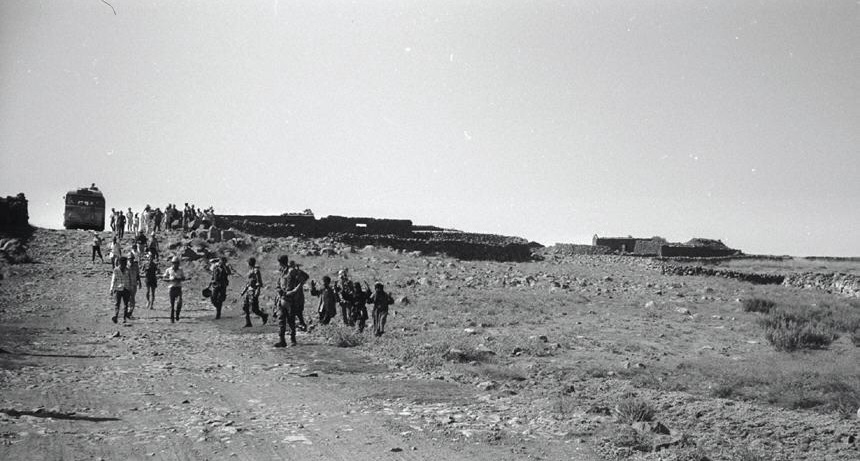
The Golan Heights is fertile land with vital water sources feeding into the Jordan River, located about 40 miles south of Syria’s capital, Damascus. During the Six-Day War in 1967, Israel occupied most of the territory. The UN Secretary General reported in 2025 that there were 35 Israeli settlements, making up a population of over 31,000 Israeli settlers. Prior to 1967, approximately 140,000 Syrians lived in the Golan, while only about 20,000 members of the Druze community now remain. Syria has never ceded the territory, but has had no success in efforts to take it back.
Israel has also enforced similar policies in Occupied Palestinian Territories, including efforts to annex the West Bank. These patterns are also unfolding in Lebanon.

