
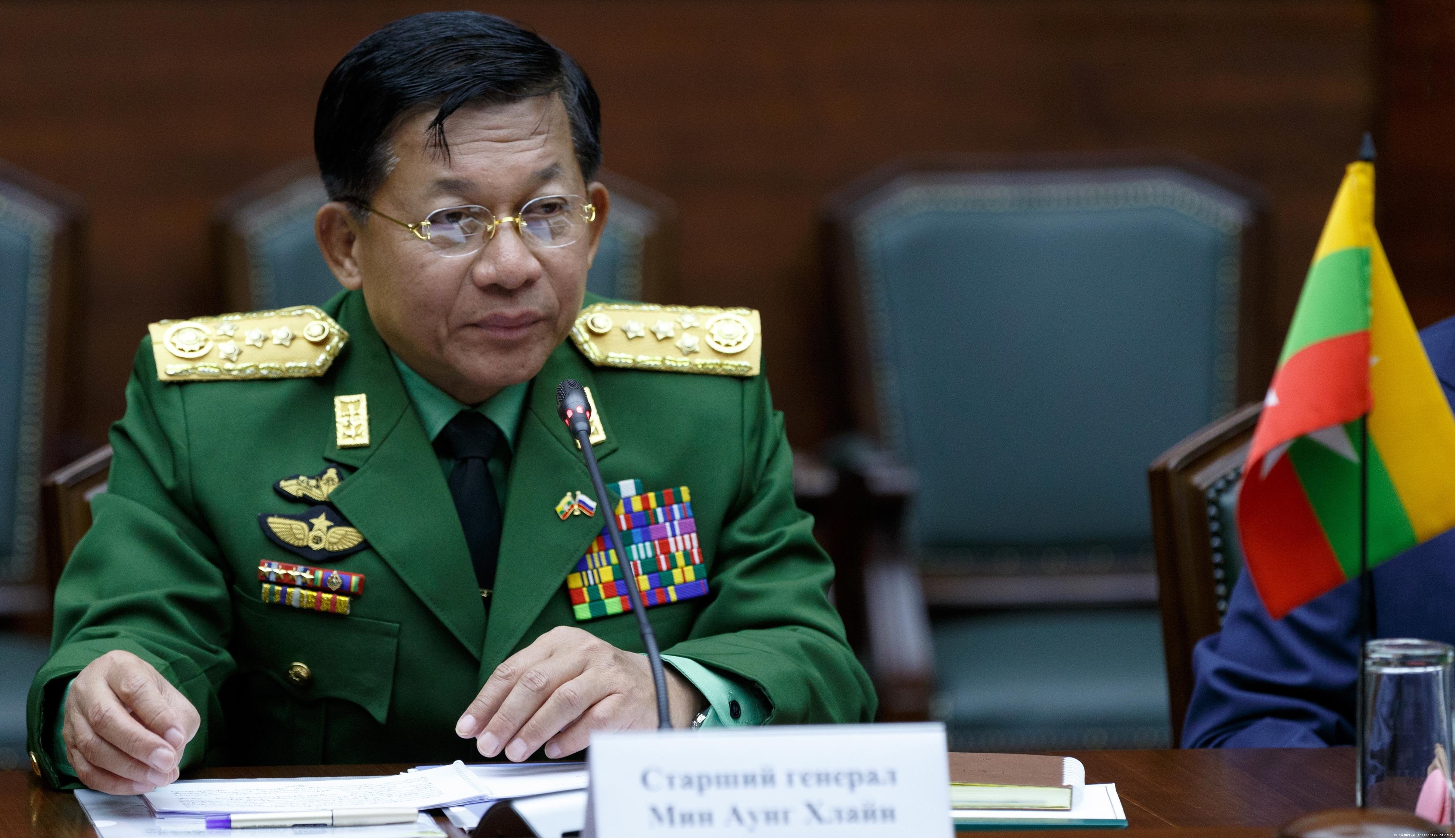
Amnesty International on Friday said that holding the Myanmar presidency must not shield Min Aung Hlaing from accountability for rights abuses, stating that “no individual should have immunity from prosecution for crimes under international law, no matter their position.”
Min Aung Hlaing, the former head of Myanmar’s armed forces, led the 2021 coup that overthrew the elected government. He has since assumed the presidency following an election widely dismissed by observers as fraudulent, conducted in a repressive environment rife with human rights abuses.
Crimes against humanity are defined by the Rome Statute, Article 7 as acts committed as part of a widespread or systematic attack directed against any civilian population. Such crimes are prosecuted by the International Criminal Court, which establishes that official capacity as a head of state or government shall in no case exempt a person from criminal responsibility. This principle means that Min Aung Hlaing’s assumption of the presidency cannot legally shield him from accountability.
The human cost of the military takeover of Myanmar has been severe. Many young activists have faced brutal repression, such as Kyaw Win, who was arrested for taking part in a “flash mob” protest against the coup in 2022 and tortured for a week before being jailed.
“They beat me on my back with an iron rod. They burned me with cigarettes, and slashed my thigh with a knife. Then they stripped my underwear and sexually assaulted me. They interrogated me, but it was never clear what they wanted me to say,” Kyaw Win recounted.
In November 2024, ICC prosecutors sought an arrest warrant for Min Aung Hlaing and other unnamed Myanmar officials for crimes against humanity, specifically deportation and persecution of the Rohingya people in Rakhine State in 2017.
However, the application remains pending, and no arrest warrants for any Myanmar junta official under the ICC’s investigation have been made public. This delay further underscores concerns about whether international mechanisms can effectively hold Myanmar’s military leadership accountable.

