
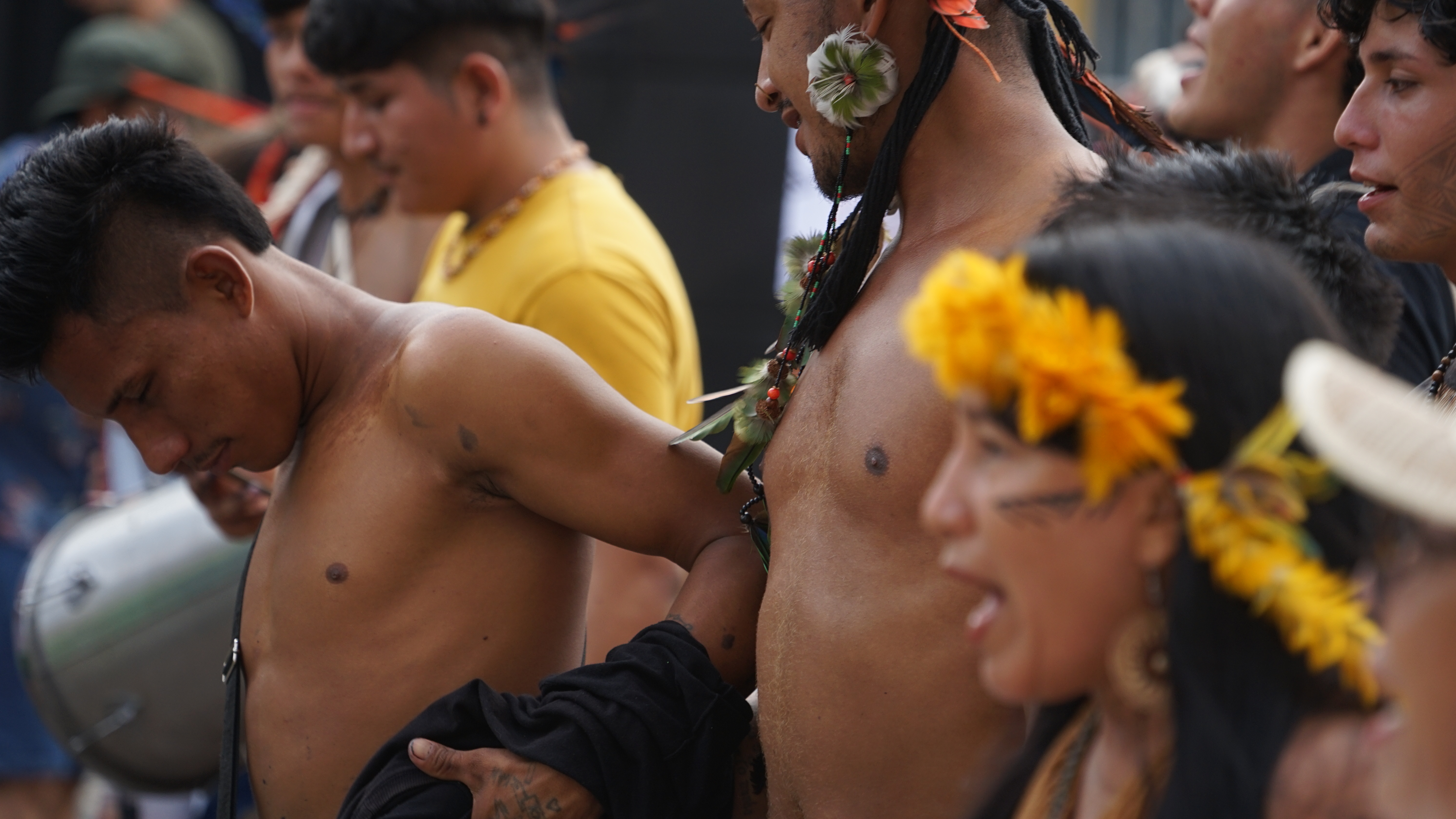
Thousands of Indigenous peoples gathered in Brasília on Tuesday to protest threats to their land rights, marching through Three Powers Plaza, home to Brazil’s Supreme Court, Parliament and Congress.
The week-long protest is an annual event for the Free Land Camp (ATL) movement, mobilized by the Articulation of Indigenous Peoples of Brazil (AIPB). The ATL movement aims to increase awareness of indigenous rights and lobby the Brazilian government. In its 22nd year, ATL has focused on protecting Indigenous land rights as large corporations advance farming and mining projects in the county.
This week the group will focus on violence inflicted on Indigenous peoples during the military dictatorship, six anti-Indigenous proposals in Congress regarding their land rights, and the push for ratification of Indigenous lands. Recently, there were violent attacks against the Pataxo people amid a land dispute with farmers.
Alessandra Korap, leader of the Munduruku, told local journalists that the government makes decisions for Indigenous groups without hearing from them. She said they often pick few Indigenous people to speak for all groups, claiming all agree with waterway, rails, or mining projects.
According to AIPB, 76 Indigenous Lands are ready to be ratified and only await President Luiz Inácio Lula da Silva’s signature. Another 34 lands have already gone through early steps of Brazil’s land recognition process and now wait for a Justice Ministry declaratory ordinance. President Lula promised in 2023 the demarcation of all Indigenous territories still pending regularization by the end of his current term in December.
However, Lula has simultaneously supported oil and other land projects, often taking contradictory stances between the competing political positions. Local journalists have compared Lula to US President Donald Trump for prioritizing Brazilian access to energy and mineral resources, writing:
The scene has been shifting in recent years as large corporations and governments, like authoritarian US president Donald Trump’s, begin to covet so-called rare earths, which are essential to producing electronics, electric vehicles, and high-tech military equipment.
Having only completed 20 ratifications and running for re-election in October, Lula has been pressured by ATL to fulfill his promise to Indigenous group, especially considering continuing dangers posed by climate change.

