
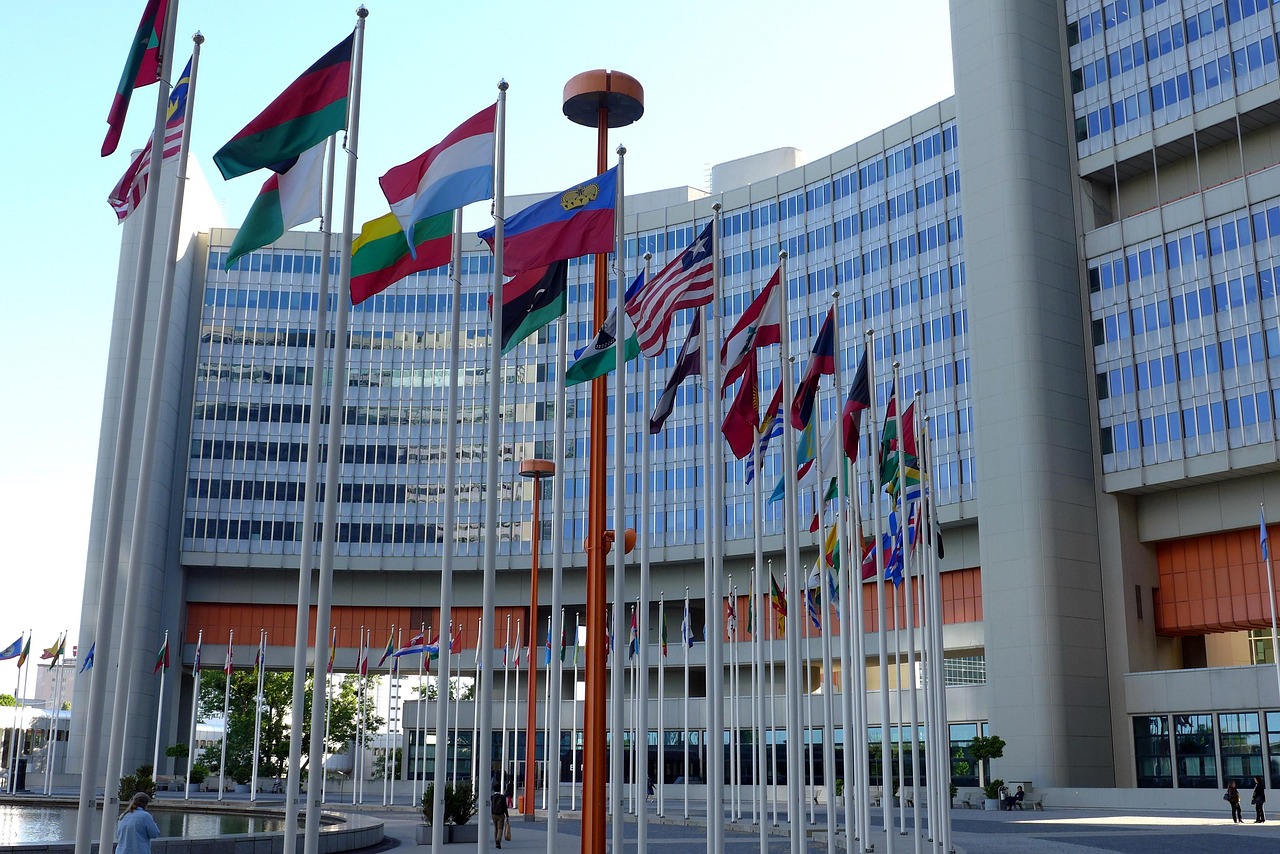
A groundbreaking resolution passed by the United Nations General Assembly has classified the transatlantic slave trade as the gravest crime against humanity, sparking renewed global dialogue on reparations and the lasting consequences of historical slavery. Spearheaded by Ghana and the African Union, the resolution emphasizes the critical need to confront past injustices and their continued effects on African societies and descendants worldwide. This dispatch was co-authored by Halima Abena Kyerewah Adam (Ghana Correspondent, University of Cape Coast Faculty of Law) and Cecile Akoeley Attiogbe Atayi (JURIST Staff, University of Cape Coast Faculty of Law).
UN General Assembly adopted a historic resolution on March 25, declaring the “Trafficking of Enslaved Africans and Racialized Chattel Enslavement of Africans as the Gravest Crime Against Humanity” (A/80/L.48). The resolution was adopted at the 75th plenary meeting of the 80th session-a full house meeting in a year cycle; meeting to commemorate the International Day of Remembrance of the Victims of Slavery and the Transatlantic Slave Trade.
The International Day of Remembrance of the Victims of Slavery and the Transatlantic Slave Trade is a day set aside to annually educate and reflect on slavery. This day was adopted through a UN General Assembly resolution in 2006 and became an annual event from 2008.
The resolution was championed by Ghana and the African Union (AU) to officially recognize the transatlantic slave trade as the gravest crime against humanity and call for reparations. It was adopted by an overwhelming majority of 123 votes in favour, 3 opposing votes from United States (US), Argentina and Israel, and 52 Member States voting in abstention. The abstention included the entire European Union (EU) bloc, Canada, Australia, and Japan.
In Ghanaian President John Dramani Mahama’s 2025 address at the 80th session of the UN General Assembly, he emphasized on the need to demand reparations for the enslavement of over 12.5 million Africans that created wealth for the powerful Western Nations.
International legal instruments such the Universal Declaration of Human Rights (UDHR) defines the prohibition of slavery and the slave trade under Article 4, while the International Criminal Court’s (ICC) Rome Statute classifies enslavement under article 7 as a crime against humanity. Similarly, Customary international law recognizes jus cogens or peremptory norms—norms to which derogation is not permitted, universal, fundamental and inherent in every human’s nature it do not need a formal codification to be recognized as a crime.
The push for reparatory justice began in September 2023 when Ghana’s former president Nana Addo Dankwa Akufo-Addo addressed the 78th session of the United Nations General Assembly at the UN Headquarters in New York. He demanded the payment of reparations for the countries affected by the transatlantic slave trade.
The transatlantic slave trade was a segment of the global slave trade that operated between the 16th and 19th centuries, moving millions of African people across the Atlantic to the Americas. It formed the second stage of the triangular trade, in which European goods such as arms, textiles, and wine were exchanged for enslaved Africans, who were then shipped to the Americas to work on plantations producing sugar, coffee, tobacco, and cotton—commodities that were in turn exported to Europe. The trade began with Portuguese merchants in the late 15th century, who transported Africans to work on Atlantic Island plantations, and later expanded under Spanish, Dutch, French, and British control. By the 18th century, nearly three-fifths of all enslaved Africans were transported, reflecting the rising demand for labor in Caribbean sugar plantations and North American tobacco fields.
The impact on Africa was catastrophic: warlords and tribes were incentivized to capture and sell people, creating widespread violence and instability. The removal of millions of young men and women led to depopulation, economic stagnation, and social disintegration, leaving behind the elderly and dependent populations. Captives endured forced marches of up to 300 miles to coastal ports, with 10–15% dying before reaching ships. The Middle Passage itself was infamous for overcrowded and unsanitary conditions that led to severe illnesses and deaths. Africans were chained in suffocating holds, while between 15–25% died during the voyage. The Zong Massacre of 1781 was another atrocity that highlighted the inhumanity of the slave trade, when the ship’s captain ordered crewmen to throw more than 130 enslaved Africans overboard to fraudulently claim insurance. The slave trade also weakened and fragmented Africa politically, leading to the colonization of African countries.
Although remembrance of the victims of slavery—particularly transatlantic slavery—is commemorated annually, this year’s commemoration under the theme “Justice in Action” marked history. The resolution adopted this year seeks to recognize the profound and lasting impacts of the abhorrent regimes of slavery and colonization, emphasizing that reparation claims represent a concrete step towards remedying historical wrongs against Africans and people of African descent. The question that has stemmed debates is whether a call for reparations is a true step towards justice.
Arguments for reparations by African States as victims are cemented on the fact that the effects of slavery and its consequent, colonization is still felt in present day as seen in the existence of poverty. Whereas the western States being perpetrators continue to thrive on “stolen wealth”.
Critiques may invoke the argument on whether reparations for crime done in the 1800s can be legal in the 21st century based on the principle of intertemporality put forward in the Island of Palmas case. The principle establishes that the legality of an act must be assessed considering laws that existed at the time the act occurred. In contrast, the continuous validity of the act is assessed under evolving legal norms. In essence, because slavery was not illegal under international law at the time it occurred, it would be wrong to demand reparations as not in the interest of justice. However, the counterargument is that the international law principle of jus cogens transcends time: slavery is inherently unlawful, regardless of whether it was normalized in past centuries.
Also, it is arguable that since the circumstances existing at the time of slavery and slave trade have changed over time, reparations may not reflect justice in its truest sense. Colonial powers have since taken on new and different forms, and it would be unjust to hold present day citizens and taxpayers responsible for harm they did not directly participate in. Likewise, descendants of enslaved people who suffered the ills are spread across nations.
Again, concerns of participation of some African rulers in the slave trade raises questions on whether reparations to African State would be just. Albeit, condemning the unfortunate humiliations of the victims of slavery, the minority leader of the Ghana House of Parliament, Honourable Alexander Afenyo Markins stated that reparations are not necessary as the Blackman himself maltreated his fellow given chance to the Whiteman to do same.
Amidst these arguments, it is worth noting that Resolution A/80/L.48 as adopted does not provide means for reparations but opens the door for future voluntary engagements on reparatory justice. While UN General Assembly resolutions are not legally binding, they carry moral and political weight even without enforceable obligations. It becomes more heartbreaking especially with respect to the fact that the resolution does not have the backing of majority of the world’s major superpowers, many of whom participated directly in upholding slavery; the US, EU and others who double as the perpetrators of slavery in order that the achievement can be best realised.
Symbolically, the resolution is historic. It reframes the transatlantic slave trade as the gravest crime against humanity, situates reparations within the discourse of international justice and affirms the dignity of victims and their descendants. Under this year’s theme, “Justice in Action,” the resolution represents a step toward remedying historical wrongs. The Secretary General is expected to submit to the General Assembly at its 82nd session a report on the actions taken by States in implementation of the present resolution.
