
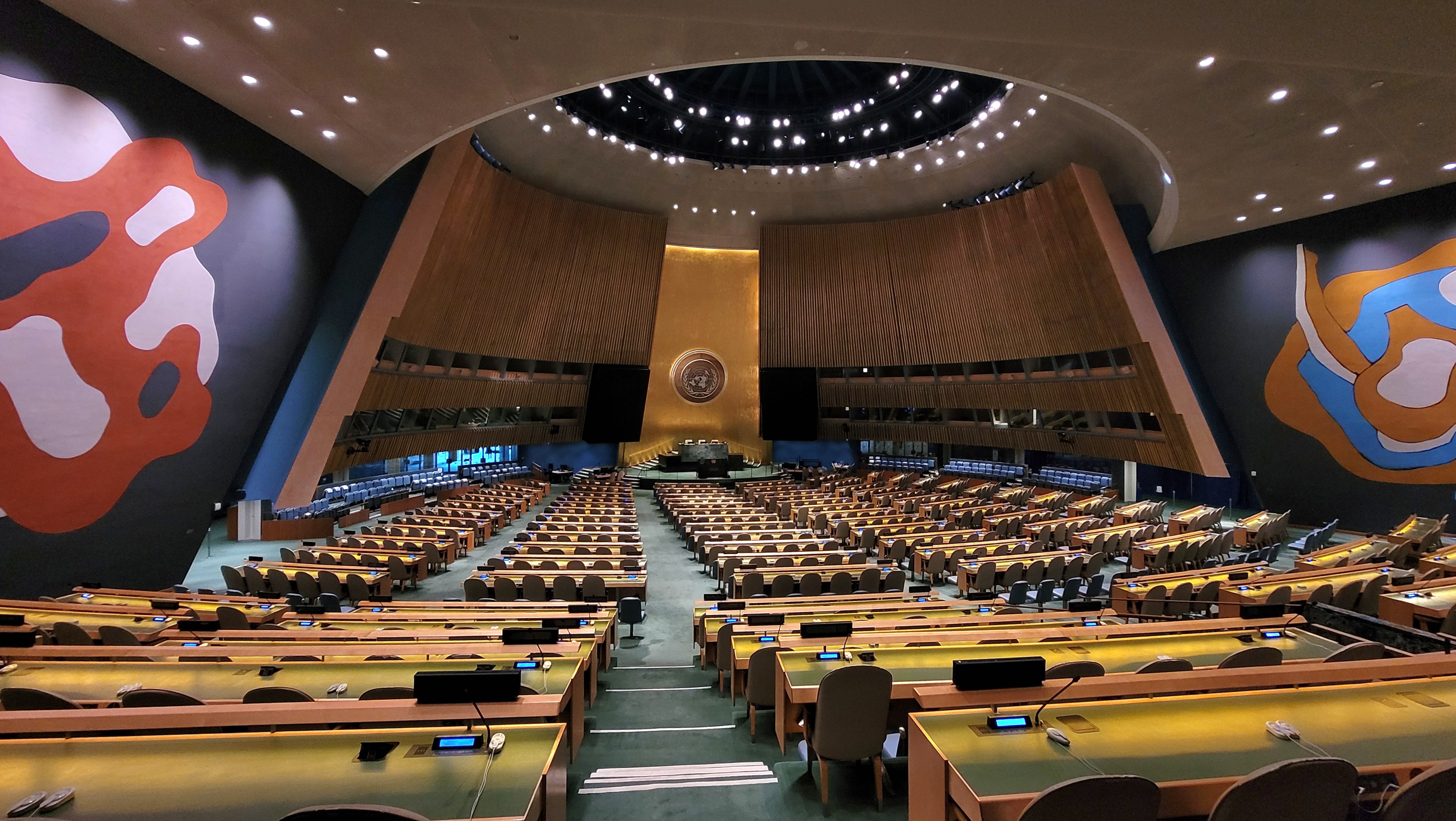
On Wednesday, the United Nations General Assembly (UNGA) adopted Ghana’s resolution declaring the transatlantic slave trade the gravest crime against humanity.
In total, 123 countries voted in favour and 52 abstained, including the entire EU, Canada, Australia, and Japan. Only three countries voted against the resolution: the United States, Israel, and Argentina.
Ghana spearheaded the resolution, which emphasizes that for 400 years, millions of people were stolen from Africa and forced to endure generations of exploitation with repercussions that continue to this day. The resolution reasons that the transatlantic slave trade constitutes the gravest crime against humanity, given “the definitive break in world history, scale, duration, systemic nature, brutality and enduring consequences that continue to structure the lives of all people through racialized regimes of labour, property and capital.”
President of Ghana, John Dramani Mahama, notified the UN that the country would bring forward the motion in September 2025. The resolution emphasizes that it was not simply cruel individuals at fault, but rather it was an institutionalized architecture of states. Ghana brought the resolution to a vote on March 25th, the International Day of Remembrance for the Victims of the Transatlantic Trafficking of Africans.
The resolution affirms the importance of addressing historical wrongs affecting Africans in the diaspora. The resolution supports reparations, calling them a concrete step towards a remedy. This comes following guidance released by the UN Human Rights Office, which released a report in 2023 on how states could address reparations for the descendants of formerly enslaved and colonized people.
Ambassador Dan Negrea, US representative to the UN Economic and Social Council (ECOSOC) called the resolution highly problematic. He argued that the UN was founded to maintain international peace and security, not “to advance narrow specific interests and agendas”. He affirmed that the United States does not recognize a legal right to reparations for historical wrongs which were not illegal at the time they occurred.
The vote comes in the context of an international landscape which increasingly acknowledges the historical crimes committed against the peoples of the Global South. In December, leaders from across Africa convened for the Conference on the Crimes of Colonialism in Africa, a step in the African Union’s plan for justice and reparations. In 2024, Human Rights Watch called on European governments to address colonial impacts on people of African descent.
Resolutions adopted by the UNGA are non-binding on member nations, but are persuasive and normally reflect the prevailing international consensus. According to article 18 of the UN Charter, each member state has one vote, and once a two-third majority of member states present and voting vote in favour of a resolution it becomes adopted by the UNGA.

