
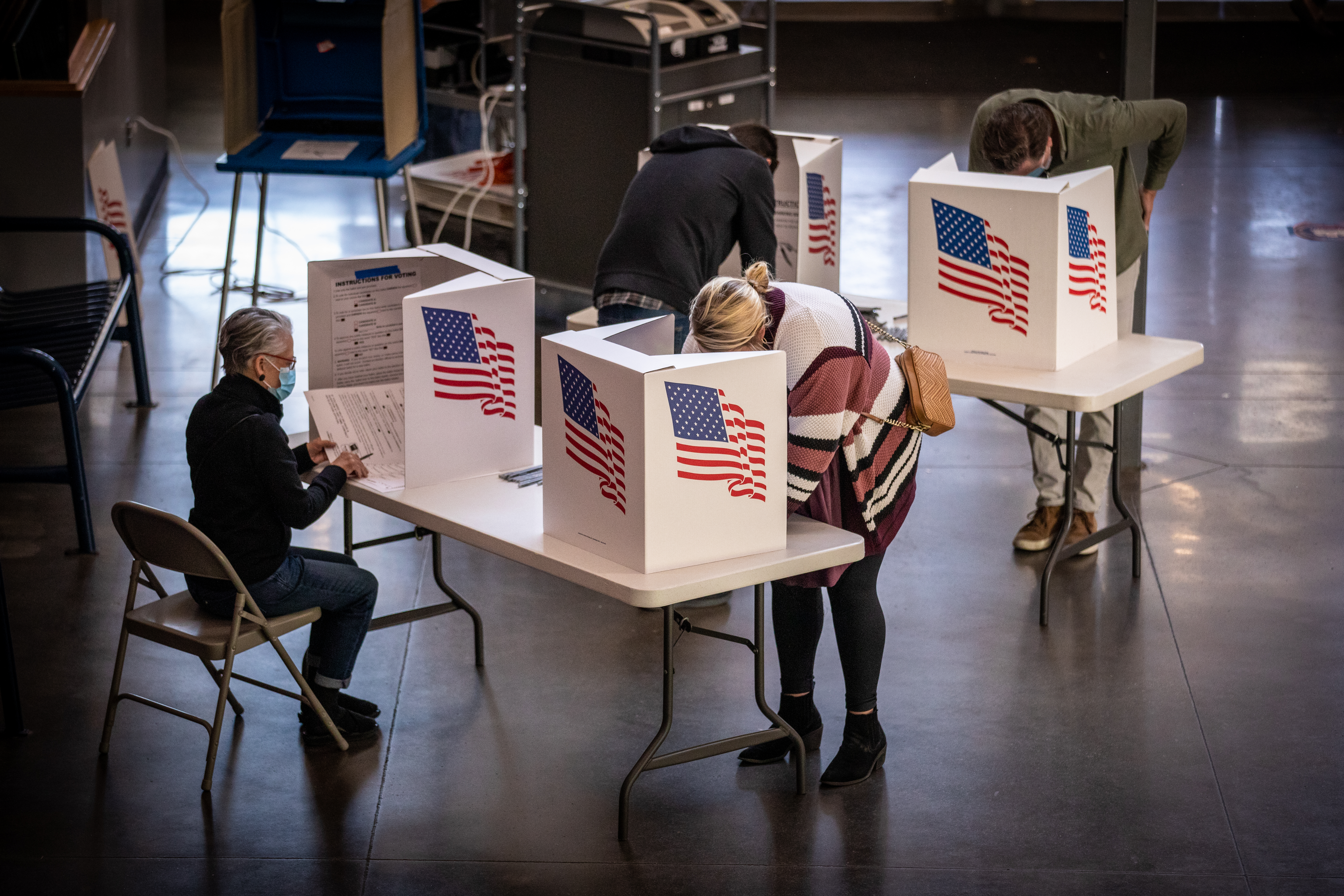
South Dakota Governor Larry Rhoden signed a bill on Thursday that requires new registered voters to prove that they are United States citizens in order to cast a ballot in state elections.
In the press release, Senate Bill 175 was explained to:
only appl[y] to state elections and only impacts new registrants. If a South Dakota resident is already registered to vote, there is nothing for that individual to do to maintain their registration. If a South Dakota resident is already registered to vote and needs to change their name, address, or other information, no proof of citizenship is necessary.
While SB 175 has been compared to the SAVE Act, there are a few differences. The SAVE Act applies to federal elections, whereas SB 175 applies only to South Dakota state elections. Additionally, the federal bill requires a birth certificate to be shown as proof of citizenship whereas a number of documents can be used under SB 175.
The bill provides a list of acceptable documents to prove US citizenship, including certain driver’s licenses or state IDs indicating citizenship verification, Tribal IDs, birth certificates, US passports, naturalization certificates, or similar federal documents. If someone does not provide proof of US citizenship or lists only a mailing address, they may vote only in federal races.
Senate Bill 175 took effect immediately after the governor signed it, due to an emergency clause. According to the press release, the Governor’s Office, the Secretary of State’s Office, and the five state agencies required to assist with voter registration have been working to implement these new legal requirements since the bill passed both legislative chambers.
There have been a few administrative updates in preparation for the bill. County auditors must now verify certain citizenship documents, election ballots are limited for federal voters, and related statutes are updated or repealed to align with the new rules.
