
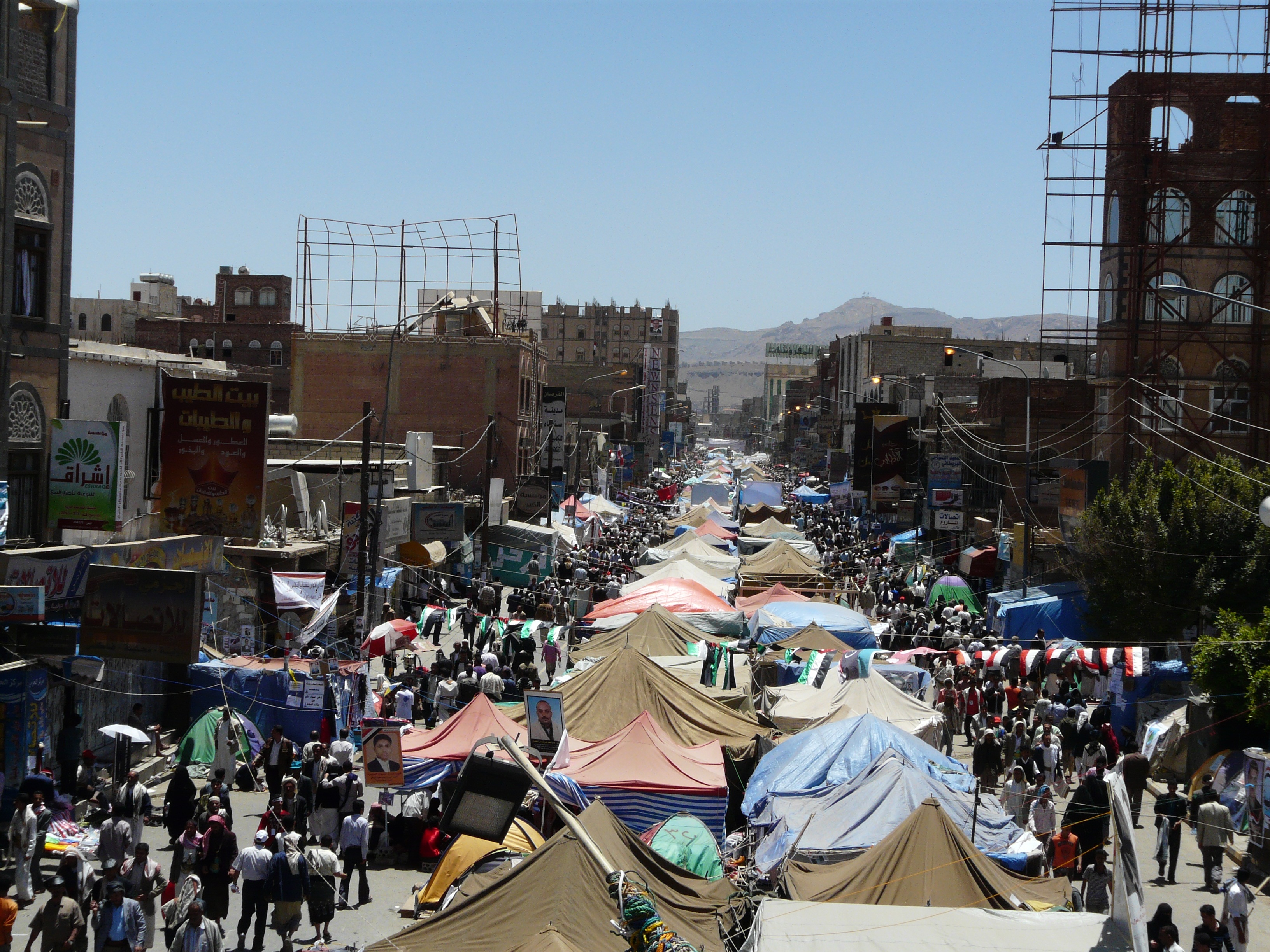
Human Rights Watch (HRW) published findings Thursday that Yemeni government-aligned forces appeared to have used excessive force and arbitrarily detained protestors in February.
HRW’s investigation focused on protests in three Yemen governorates (administrative divisions): Aden, Shabwa and Hadramout. In clashes with protestors in Aden and Shabwa, government forces allegedly killed at least six people and injured dozens. In Hadramout, forces detained several protestors.
Many detainees were held for over two weeks without being taken before a judge or charged. A father of a detained man described the lack of transparent procedure, saying:
The security forces in Ma’ashiq kept telling us that they would release [the detained protestors] tomorrow or the day after, but they didn’t and transferred them to the central prison in al-Mansora on February 26.
The report draws from 13 interviewees, including arrested protestors, witnesses, and Southern Transitional Council (STC) representatives. HRW researchers also verified numerous online images and videos showing deployed force on protestors, who were reportedly peaceful.
Niku Jafarnia, Yemen and Bahrain researcher for HRW, described the implications of the conduct for Yemeni governance, stating:
The Yemeni government has long purported to stand up for free expression, and yet their actions don’t match their words. The government should be ensuring that Yemenis’ rights are respected during this period, rather than violating their right to free expression.
HRW called on the Yemeni government to ensure a “speedy and effective investigation.” They contacted the administration on March 12 for comment but have not received a response. However, Yemen’s government-run news agency has reported on senior official statements calling the protests “acts of incitement.”
The protests were held in support of the STC, established in April 2017 as an umbrella organization for groups that seek to restore southern Yemen as an independent state.
The STC dissolved in January after a December 2025 military operation by STC forces in Hadramout and al-Mahra attempted to seize resources in Aden. This pushed out Saudi-aligned National Shield Forces, who have since regained control. The STC Secretary-General Abdulrahman Jalal al-Sebaihi said the operation was not approved by the council and “damaged relations with the Saudi-led coalition,” citing this as the reason to dismantle.
International law proscribes numerous legal protections for freedom of expression and peaceful assembly. Yemen is a party to the International Covenant on Civil and Political Rights (ICCPR), which mandates that no restrictions may be placed on the exercise of of the right to peaceful assembly aside from those necessary for purposes such as national security, public safety, or the rights of others. Domestically, Article 42 of the Yemeni Constitution recognizes the right to free speech and political participation.
These events form part of a long timeline of civil conflict in Yemen beginning in 2014. The country continues to face instability and humanitarian crises.

