
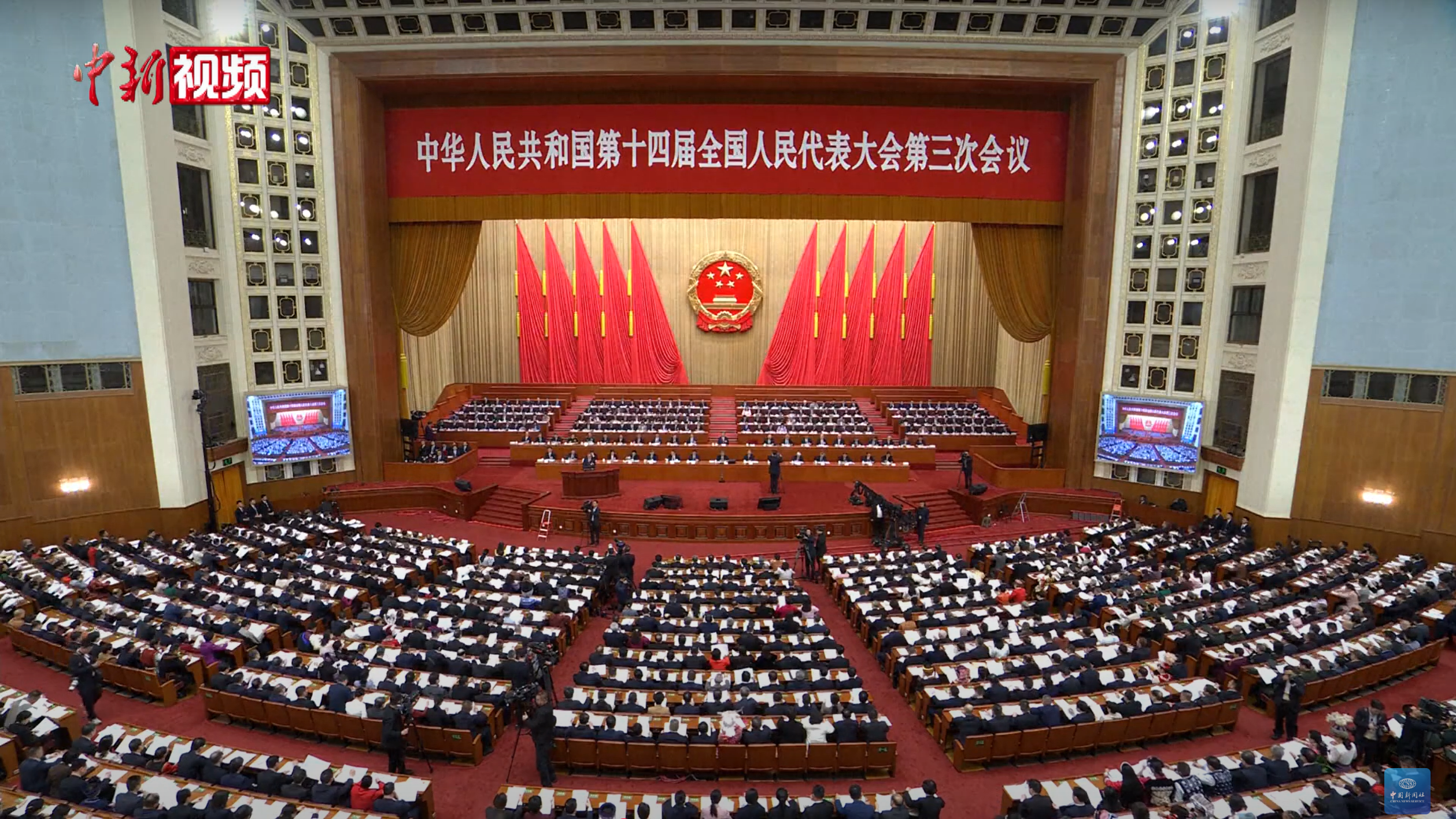
China’s National People’s Congress on Thursday adopted a new Law on Promoting Ethnic Unity and Progress, a measure state officials say will strengthen national cohesion but critics argue will further erode the cultural, linguistic and religious rights of ethnic minorities.
The law, which takes effect July 1, passed with 2,756 votes in favor, three against, and three abstentions.
The law requires government bodies, schools, enterprises and social organizations to promote what Beijing calls a “strong sense of community for the Chinese nation.”
The law states:
In accordance with the Constitution and laws, the country’s people of all ethnicities, all state organs and armed forces, all political parties and social groups, enterprises, institutions and organizations, should make forging a strong sense of the community of the Chinese people … their common mission.
It prioritizes Mandarin, China’s official language, in education, public life and official business, which the Chinese government claims will extend “ethnic unity and progress” across both public authorities and private entities.
Critics say the measure formalizes a years-long assimilation drive affecting the 55 recognized minority groups in China, including Uyghurs, Tibetans and Mongols. Han Chinese comprise approximately 90 percent of the population, while ethnic minorities account for about 10 percent.
In recent years, China has been accused of genocide and crimes against humanity against Uyghurs and other predominantly Muslim minorities in Xinjiang, while critics also allege long-running coercive assimilation and severe rights abuses affecting Tibetans.
Rayhan Asat, a Uyghur human rights lawyer, said the new law could give Chinese authorities a broader legal pretext to target minority communities. She cited the case of her brother, Ekpar Asat, a Uyghur entrepreneur detained after returning from a 2016 US exchange program and later sentenced to 15 years in prison, arguing that the measure must be read against the backdrop of what the US government has described as genocide and crimes against humanity against Uyghurs in Xinjiang.
Human Rights Watch warned when the bill was still in draft form that it would provide a broad legal framework to justify repression and forced assimilation, including by weakening minority language rights and expanding ideological controls.
NPC Observer similarly wrote that the legislation codifies Xi Jinping-era ethnic policy by embedding a Han-centric national identity and securitized approach to ethnic governance into law.
Chinese officials, however, have defended the law as promoting common prosperity, modernization, and lawful governance of ethnic affairs. The Chinese government announced that the measure would reinforce the legal foundation for “national cohesion” and “common prosperity” among China’s 55 recognized minority ethnic groups and the Han majority.
