
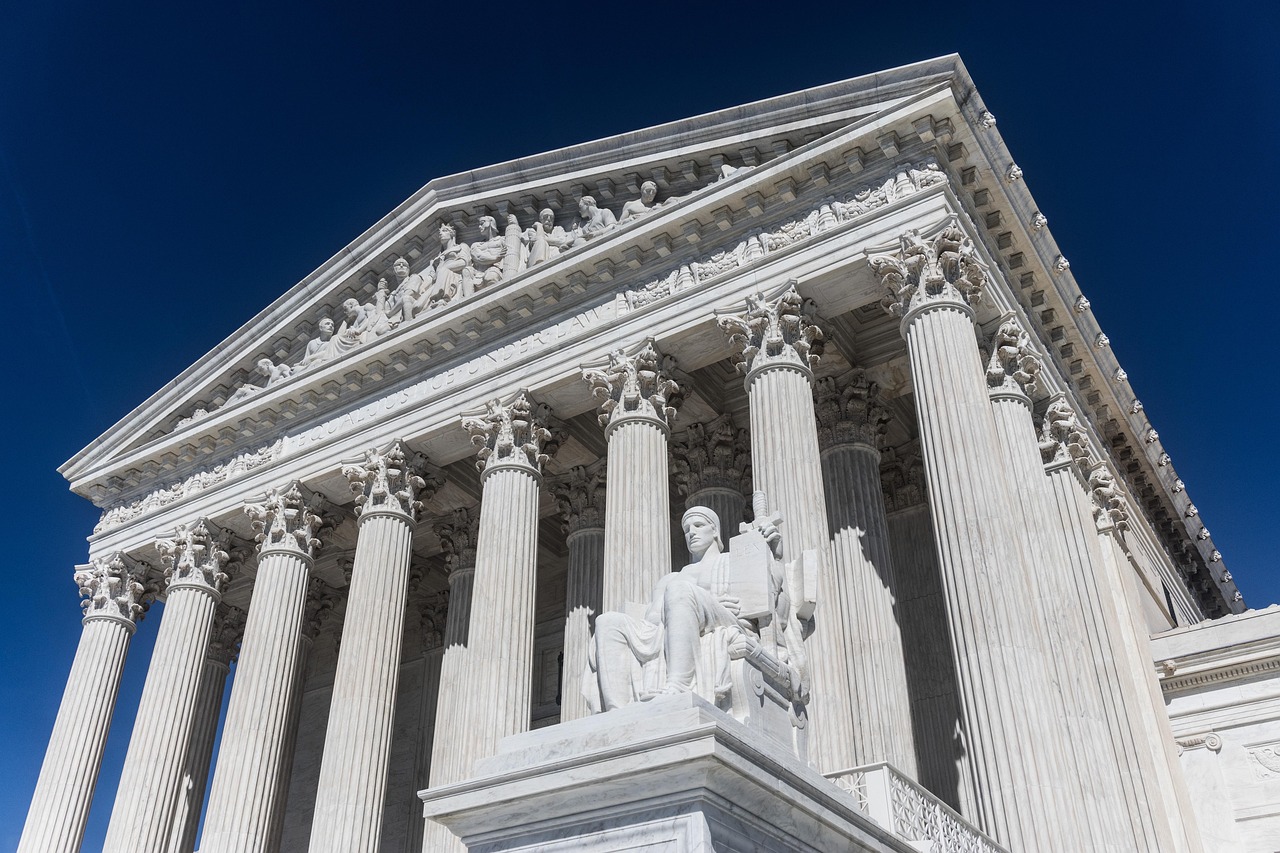
The US Supreme Court handed down its landmark decision Friday on the legality of President Donald Trump’s imposition of tariffs under the International Emergency Economic Powers Act (IEEPA). In a 6-3 decision, the Court held that the IEEPA does not authorize the president to impose tariffs.
The IEEPA was enacted in 1977 to address significant foreign threats to the US. To take action under the IEEPA, the president must identify an “unusual and extraordinary threat” to the country, with its origins mainly outside the US.
In early 2025, Trump, citing drug and human trafficking, illegal immigration, and gang activity, declared a national emergency. As to the drug trafficking tariffs, Trump imposed a 25 percent duty on most Canadian and Mexican imports and a 10 percent duty on most Chinese imports. He also imposed a duty “on all imports from all trading partners” of at least 10 percent. Dozens of nations faced higher rates notwithstanding current trade agreements.
Both the US District Court for the District of Columbia and the US Court of Appeals for the Federal Circuit ruled that the IEEPA does not authorize the president to impose tariffs. While the act allows the president to “regulate” imports during a national emergency, this power is distinct from Congress’s power to lay taxes.
During oral argument, the Court expressed skepticism of the tariffs. Focusing on the separation of powers, Chief Justice Roberts emphasized that the imposition of taxes has always been the province of Congress, not the executive branch. Moreover, Justice Gorsuch raised nondelegation concerns, asking what limits would remain if the president could impose tariffs whenever he declared an emergency.
Chief Justice John Roberts delivered the opinion of the court. Focusing on the words “regulate … importation” in § 1702(a)(1)(B) of the act, Trump asserted the independent power to impose tariffs on “imports from any country, of any product, at any rate, for any amount of time.” The court held that those words could not “bear such weight.”
The court applied the major questions doctrine to the case, which is a legal principle that mandates that Congress provide clear, explicit authorization before the executive branch takes action of vast political and economic significance. The court wrote that emergencies can afford a dangerous pretext for the “usurpation” of congressional power and that Congress would undoubtedly use “clear language to effectuate unbounded decisions.” At the end of the day, Trump could not show that he had clear congressional authorization to impose the tariffs.
Continuing on, the majority stated that the IEEPA authorizes the president to “investigate, block during the pendency of an investigation, regulate, direct and compel, nullify, void, prevent or prohibit … importation or exportation.” Neither tariffs nor duties were included in this lengthy list of powers. This draws on the canon of statutory interpretation of expressio unius est exclusio alterius: If Congress wanted to include the imposition of tariffs and duties as one of the presidential powers under the IEEPA, it would have done so. But it did not.
The majority conceded that taxes may accomplish regulatory ends, but “it does not follow that the power to regulate something includes the power to tax it as a means of regulation.” And “[w]hen Congress addresses both the power to regulate and the power to tax, it does so separately and expressly.” Importantly, the Court noted that Trump’s reading of the IEEPA were accepted would render part of the act unconstitutional since taxing exports is expressly forbidden by the Constitution.
Concurring in the judgment, Justice Neil Gorsuch highlighted the importance of the major questions doctrine:
The Constitution lodges the Nation’s lawmaking powers in Congress alone, and the major questions doctrine safeguards that assignment against executive encroachment. Under the doctrine’s terms, the President must identify clear statutory authority for the extraordinary delegated power he claims. And, as the principal opinion explains, that is a standard he cannot meet.
In a separate concurrence joined by Justices Sonia Sotomayor and Ketanji Brown-Jackson, Justice Elena Kagan wrote that the “ordinary tools of statutory interpretation” supported the outcome in the cases and that the invocation of the major questions doctrine was unnecessary: “[T]he meaning of ‘regulate,’ both in common parlance and as Congress uses the word, does not encompass taxing.” She brought up the the noscitur a sociis canon, which states that the meaning of an ambiguous word should be interpreted by considering the words surrounding it: “Combine the verbs and objects in all possible ways, and the statute authorizes 99 actions a President can take to address a foreign threat. And exactly none of the other 98 involves raising revenues.” Kagan has previously been suspicious of the major questions doctrine, stating that it has been used to alter, rather than to clarify, Congress’s intention in a statute.
Justices Clarence Thomas, Brett Kavanaugh, and Samuel Alito dissented in the judgment. Thomas stated that the authority to “regulate importation has been historically understood to include the authority to impose duties on imports.” Kavanaugh felt similarly: “Like quotas and embargoes, tariffs are a traditional and common tool to regulate importation.”
Friday’s decision does not limit the president’s ability to impose tariffs under a different source of law and is limited to Trump’s invocation of the IEEPA.
Following the ruling, Trump told governors that the decision was “a disgrace.” Senate Minority Leader Chuck Schumer celebrated the decision, arguing, “This is a win for the wallets of every American consumer.” Trump is expected to brief reporters this afternoon.
