
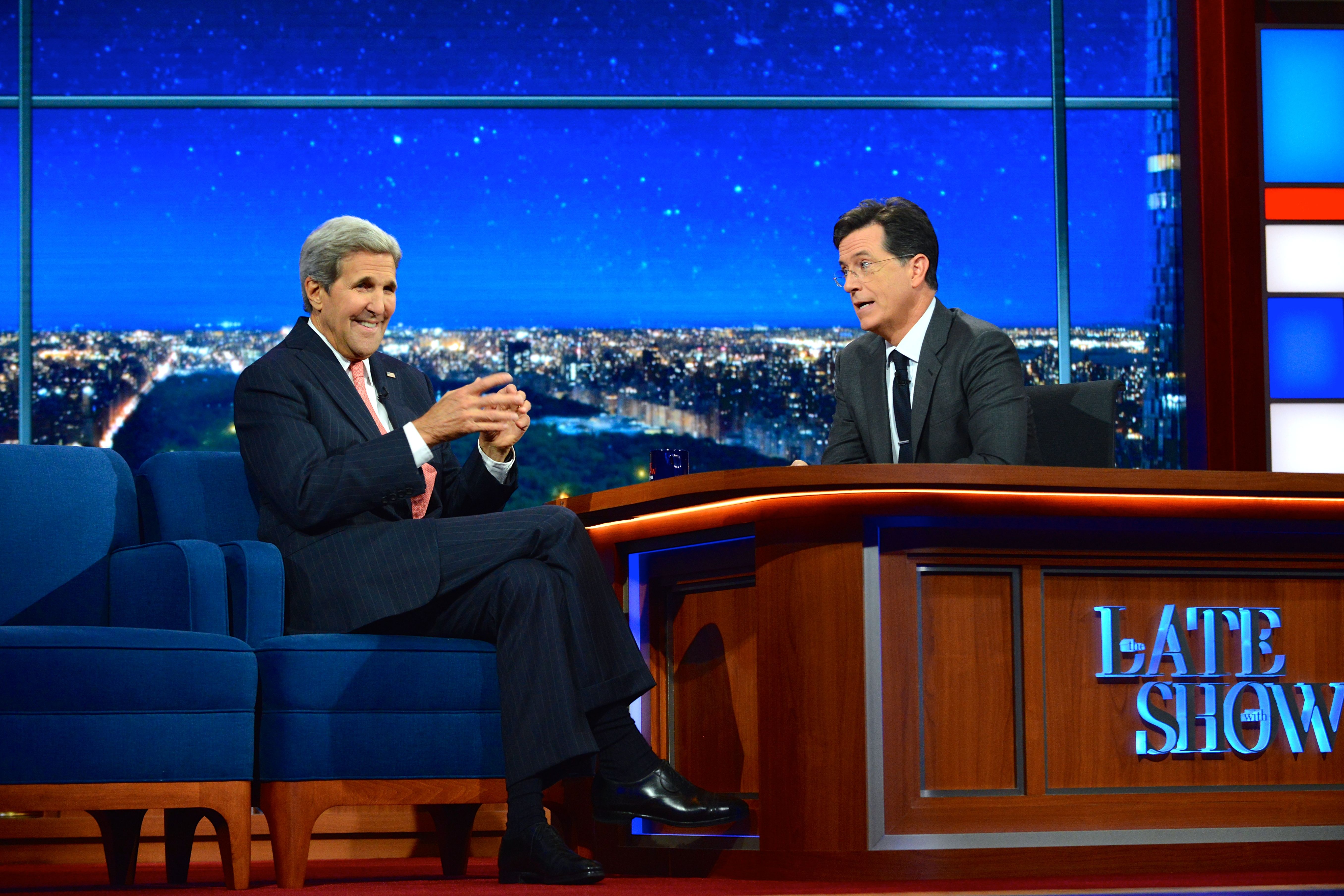
The landscape of American late-night television is undergoing significant change amid tensions between TV networks, program producers and federal regulators, fueling debate over the future of political satire on broadcast television. In recent months, several high-profile shifts have occurred across the industry, including ABC’s temporary removal of Jimmy Kimmel from TV show Jimmy Kimmel Live! and CBS’s announcement that The Late Show with Stephen Colbert will conclude in May 2026.
This friction between network leadership and on-air talent became public during the February 16 broadcast. According to Colbert, CBS attorneys blocked him from airing a pre-recorded interview with Texas state representative and Senate candidate James Talarico just one day before early voting began in the Texas primary. Colbert revealed the decision on-air, claiming that network lawyers prohibited the segment over concerns it could implicate the Federal Communications Commission (FCC) “equal-time” rule. While the network ultimately shifted the 15-minute interview to YouTube—where it has since garnered over 8 million views and a roughly $2.5 million fundraising surge for Talarico—the decision has ignited a debate over corporate self-censorship and the reach of federal influence on political speech.
The controversy stems from Section 315 of the Communications Act of 1934 (47 U.S.C. § 315), commonly known as the “equal-time” rule. The statute requires broadcast licensees to afford “equal opportunities” to all legally qualified candidates for the same office if they permit one candidate to use their airwaves. While news programs and certain interview-based programs have traditionally qualified for exemptions under FCC precedent, recent statements by FCC leadership have emphasized that exemption eligibility depends on the program’s editorial independence and format. FCC Chairman Brendan Carr has argued that programs “motivated by partisan purposes” do not qualify for news exemptions, potentially requiring shows like Colbert’s to provide comparable airtime to rival candidates—such as Representative Jasmine Crockett, Talarico’s opponent in the Senate race—if the program does not qualify for a news exemption and airs a legally qualified candidate.
In a statement issued February 17, CBS denied that it had prohibited the interview, asserting that its attorneys merely provided “legal guidance” about the risks of triggering the FCC rule. The network maintained that the decision to shift the content to a digital platform was a strategic choice to avoid the administrative burden of providing equal airtime to Talarico’s opponents. This pivot to YouTube was possible because the FCC’s equal-time jurisdiction is strictly limited to the public airwaves used by broadcast television and radio, which require FCC licenses to use public airwaves. Streaming services and social media platforms are not currently governed by Section 315, allowing CBS to distribute the interview online without the legal obligation to host Talarico’s rivals.
Colbert strongly disputed the network’s characterization of the event during the February 17 broadcast, brandishing a printed copy of the CBS statement and describing it as a “surprisingly small piece of paper, considering how many butts it’s trying to cover.” Colbert countered that the network’s lawyers had called him “directly” and told him in “no uncertain terms” that he could not air the interview or even mention its cancellation. He noted that the same lawyers had already approved every word of his script before suddenly calling him backstage for more notes. Expressing disappointment that a “giant global corporation would not stand up to these bullies,” Colbert concluded his segment by crumpling the network’s statement into a dog waste bag and tossing it away.
From a legal perspective, the dispute illustrates a potential shift in how the FCC interprets the “bona fide news” exemption. For decades, the commission has afforded broad deference to talk shows, recognizing that political satire and interview-based programming play a meaningful role in public discourse. A narrower interpretation of these exceptions, combined with the FCC’s licensing authority over broadcast networks, raises the possibility of a chilling effect on political content as broadcasters may avoid airing lawful speech to minimize regulatory risk.
Critics of the FCC’s recent posture, including Commissioner Anna Gomez, have characterized such investigations as “government intimidation” and warned that regulatory authority could be used in ways that discourage editorial independence. Legal observers have further questioned the consistency of this new approach, noting that the agency scrutiny has targeted liberal-leaning television programs while leaving conservative-leaning broadcast shows—which operate under the same statutory requirements—largely unreviewed. This environment is further complicated by the fact that CBS’s parent company, media conglomerate Paramount Global, currently has significant regulatory matters pending before federal authorities, including its proposed merger with Skydance Media. As Gomez noted in her dissenting statement, corporate interests may be driving “capitulation” and self-censorship to avoid regulatory retaliation.
These developments raise a broader First Amendment question: does the government’s interest in enforcing equal-time requirements justify regulatory pressure that may discourage political commentary and entertainment programming that has long served as a cornerstone of American political discourse?
The fallout from the Talarico-Colbert interview is likely to trigger further constitutional scrutiny of the FCC’s oversight of talk shows. On February 18, Carr confirmed the agency has launched a formal investigation into ABC’s “The View” over similar equal-time concerns, in addition to an interview with Talarico, suggesting broader regulatory scrutiny of daytime and late-night content.
With the Texas primary approaching on March 3, legal observers are watching to see if CBS will continue to pivot its political content toward non-broadcast platforms or if the courts will be forced to intervene to define the limits of the FCC’s authority in real time.

.jpg)