
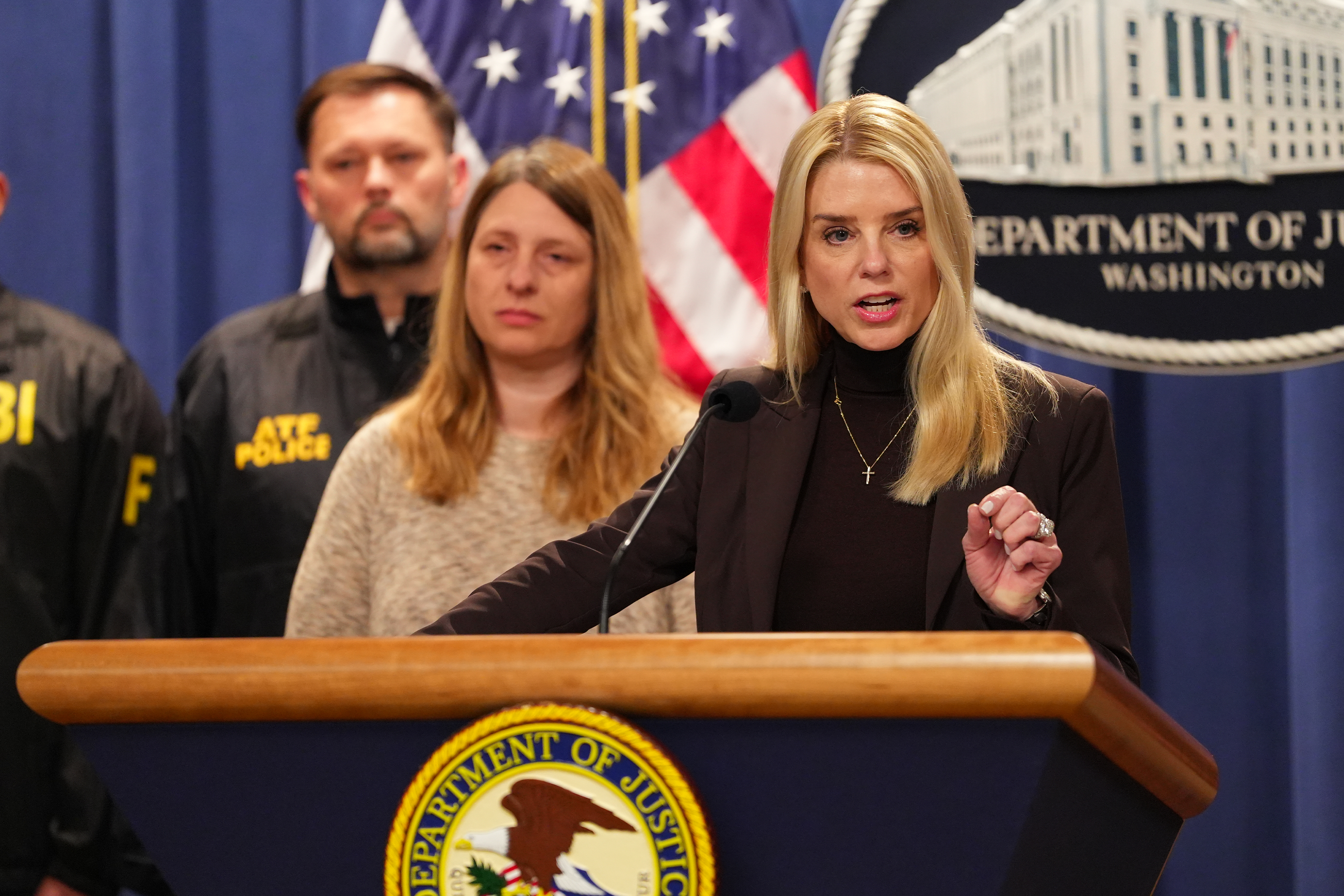
On the morning of February 11, Attorney General Pam Bondi faced a divided House Judiciary Committee, defending recent actions of the Department of Justice (DOJ) in a hearing primarily anchored in the Department’s compliance with the Epstein Files Transparency Act (H.R. 4405). Signed into law on November 19, 2025, following a near-unanimous 427-1 vote in the US House of Representatives, the statute mandated the public disclosure of all investigative records related to Jeffrey Epstein’s global sex-trafficking network within a strict 30-day window.
Despite this congressional directive—a legally binding instruction from the legislature to the executive branch—committee members pointed to an estimated three million pages that remain withheld by the DOJ, in addition to significant redaction errors that protected perpetrators and inadvertently exposed the identities of survivors—several of whom were present in the hearing room during the testimony.
The human cost of this procedural friction was made visible when Representative Pramila Jayapal asked the survivors in the gallery to stand and raise their hands if they had been unable to secure a meeting with the DOJ to discuss her cases. In a stark rebuttal to Bondi’s claims of victim-centered leadership, every survivor present raised their hand, contradicting Bondi’s assertion that the DOJ had been working in close connection with the Epstein victims. When Jayapal challenged Bondi to turn to face the victims and apologize for the DOJ’s failure to protect their privacy in the recent document dump, she declined, characterizing the request as “theatrics” and citing the department’s ongoing efforts to “follow the law and the Act with maximum transparency.”
This defense was sharply challenged by Representative Thomas Massie, a lead co-sponsor of the very Act at the center of the dispute. In a notable bipartisan moment, Massie characterized the department’s performance as a “massive failure,” citing the initial redaction of billionaire Les Wexner’s name from a 2019 FBI document where he was explicitly labeled an Epstein co-conspirator. Massie argued that while the DOJ was quick to redact the names of powerful associates, it simultaneously released a list of victim names that were intended to remain private—an act he described as “literally the worst thing you could do to the survivors.” Characterizing the handling of the files as “bigger than Watergate,” Massie’s accusations were met with a direct personal rebuke from Bondi, who labeled the congressman a “political joke” suffering from “Trump Derangement Syndrome.”
The scrutiny then shifted to the department’s broader investigative priorities, including the fatal federal shootings of Renée Nicole Good and Alex Jeffrey Pretti in Minneapolis, Minnestoa. Good, a 37-year-old mother, was killed on January 7 by an Immigration Customs Enforcement (ICE) officer—an account supported by bystander video that appeared to contradict initial DOJ claims of self-defense. This incident served as the catalyst for the January 13 resignation of six senior career prosecutors in the Minnesota US Attorney’s Office, including former acting US Attorney Joe Thompson and Criminal Division Chief Harry Jacobs. The prosecutors reportedly resigned in protest after being pressured to investigate Good’s spouse, along with other local activists, while the department simultaneously declined to open a civil rights inquiry into the shooting itself.
Seventeen days later, Pretti, a Veterans Affairs hospital nurse, was fatally shot by two federal agents—one from Customs and Border Protection and one from Border Patrol. Witness footage depicted a federal agent clapping in the immediate aftermath, a detail Ranking Member Jamie Raskin cited while accusing Bondi of turning the DOJ into an “instrument of revenge” and fostering what he characterized as a culture of “absolute immunity, impunity, and violent domination” among federal agents.
The contentious hearing reached a turning point when Representative Jared Moskowitz identified a binder used by Bondi as a “burn book” of opposition research on the committee members. Media photographs of the binder revealed a printout labeled “Jayapal Pramila Search History,” listing specific documents the lawmaker had reviewed at a Department of Justice annex just days prior. Representative Raskin characterized the monitoring of lawmakers’ digital search queries as “the perfect setup for DOJ to spy on members’ review,” and has formally requested that the DOJ Inspector General investigate the surveillance as an “outrageous abuse of power” and a violation of the separation of powers. The allegation of executive monitoring of lawmakers’ review activity raises significant separation of powers concerns and could trigger further constitutional scrutiny.
The fallout from the February 11 hearing is already shifting toward formal sanctions and the federal courts. The House Judiciary Committee has signaled that contempt of Congress proceedings—a formal process to hold executive officials accountable for defying congressional authority—remain a viable option if the DOJ continues to withhold the estimated three million pages it has deemed “duplicative.”
With the February 13 deadline for the next major document release just hours away, legal observers are watching to see if the DOJ will address the discrepancy, or if the committee will escalate its pursuit of a contempt vote on the House floor. For the survivors in the gallery and the families in Minnesota, the conclusion of Bondi’s testimony marks not the end of the inquiry, but the start of a protracted legal struggle over transparency and the application of justice.

