
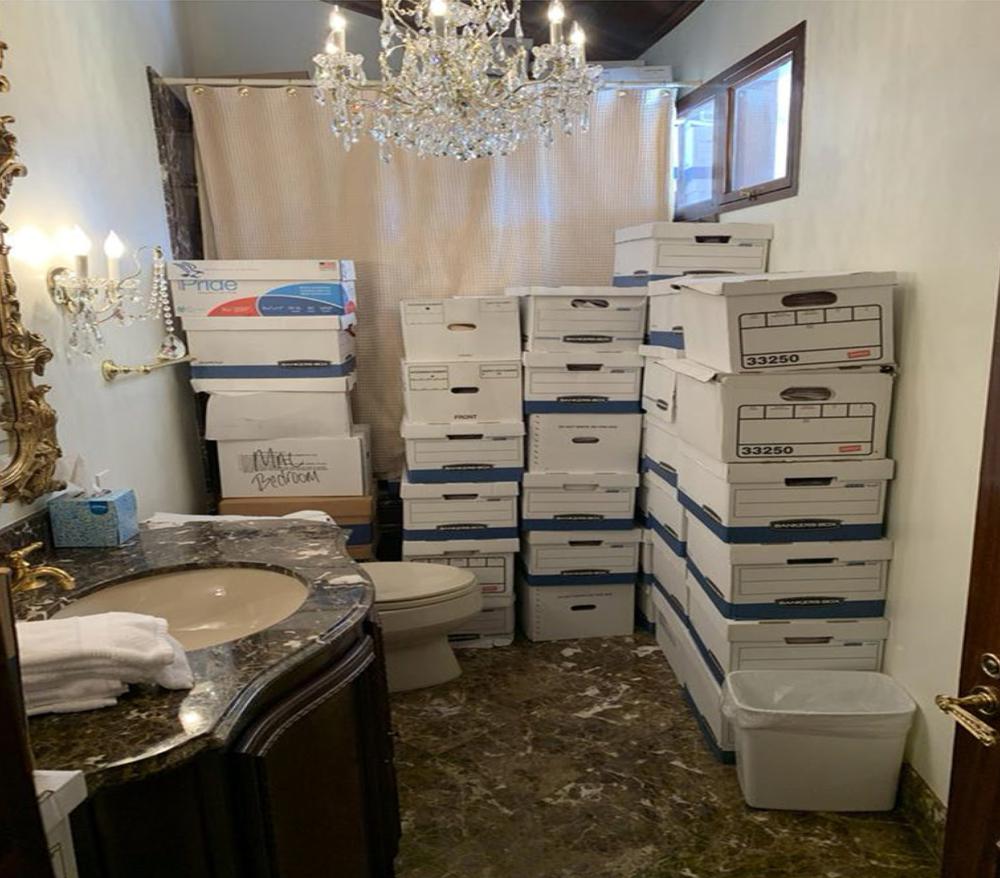
A US federal judge on Monday granted President Donald Trump’s motion to prohibit public release of prosecutorial findings in a dropped case against the president that involved classified documents found at Mar-a-Lago.
The court ruled that Special Counsel Jack Smith’s continued work on the case functionally breached previous court orders, federal discovery rules, grand jury proceedings, and attorney-client privilege, thereby protecting the report from disclosure. The court also held that release of the report would result in unfair prejudice against “former defendants [who] still enjoy the presumption of innocence held sacrosanct in our constitutional order.”
In 2022, then-attorney general Merrick Garland tapped Smith to independently investigate Trump’s alleged attempts to interfere with the 2020 election and store classified documents at his Florida residence following his departure from office. The following year, Smith’s investigations led the Justice Department (DOJ) to indict Trump for both cases.
In July 2024, the District Court for the Southern District of Florida held that Smith’s appointment violated the Constitution’s Appointments Clause. As a result, the court held that “all of Special Counsel Smith’s actions in connection with [the] proceeding were [beyond his authority] and must be set aside” and issued an order dismissing the indictment.
Following Trump’s reelection in 2024, the DOJ dropped charges for both cases due to constitutional concerns tied to prosecuting a sitting president. Despite dropping charges, prosecutors nevertheless sought to release findings. In early 2025, a federal judge allowed the release of reports related to Trump’s alleged election interference, known as “Volume One.” The court reasoned that the information found in Volume One did not overly prejudice the defendants.
Smith had recently sought to release a set of findings in the classified documents case, or “Volume Two,” to select members of Congress. Trump filed a motion to prohibit disclosure of the report, and on January 21, Judge Aileen Cannon issued a temporary block on its release.
Monday’s order permanently blocks Volume Two’s release, notwithstanding future reversal. The court reasoned that, having dismissed the case, Smith breached “the spirit of the Dismissal Order” by continuing to prepare Volume Two for release using discovery generated in the case and without seeking a stay on the order.
The court also ruled that disclosure would run afoul of a protective order issued under Federal Rule of Criminal Procedure Rule 16, which allows courts to “for good cause, deny, restrict, or defer” information uncovered during discovery. Similarly, the court held that disclosure would risk violating attorney-client privilege and federal rules for disclosing grand jury information. Finally, the court determined that the public nature of the case raised particular risks of “manifest injustice” to defendants, given that there is no adjudication of guilt.
The court supported its reasoning with underlying notions of judicial plenary authority, which includes “powers to remedy violations of recognized rights, to protect the integrity of the federal courts, and to deter illegal conduct by government officials.” Explaining its position, the court wrote:
[Our] inherent authority must be exercised with restraint, but it extends to a court’s enforcement of the Federal Rules of Criminal Procedure and to its own local rules, orders, and judgments, subject to contrary [constitutional or statutory] law… It also encompasses the power… to restrict access to discovery materials generated in connection with the proceeding and to enforce protective orders.
The case has raised questions and concerns over executive authority and presidential prosecution. Shortly following the DOJ indictments against Trump, the Supreme Court held that the president is immune from prosecution for “official acts.” Following the decision, experts have continued to wrestle with the extent of the immunity and the ability to hold the president accountable for criminal acts.

