
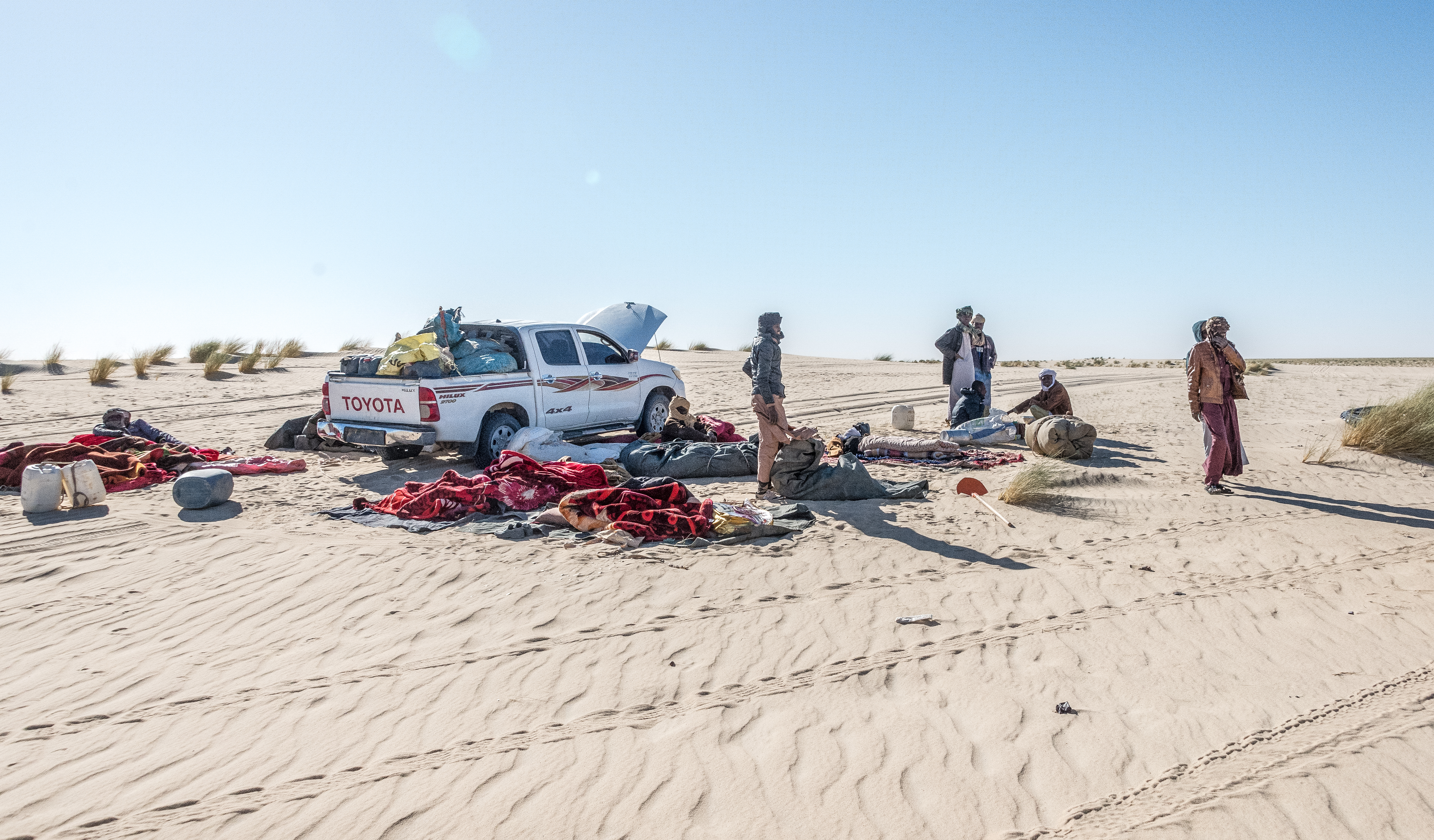
The UN Human Rights Office (OHCHR) and the UN Support Mission in Libya published a report on Tuesday detailing the systematic human rights violations and abuses suffered by migrants, refugees, and asylum seekers in Libya. The report detailed four human rights challenges that these individuals tend to face: (1) illegal and dangerous interceptions at sea, and abuses following disembarkation in Libya; (2) violence at borders, collective expulsions, and refoulement; (3) human trafficking, slavery, forced labor, exploitation, and sexual and gender-based violence; and (4) arbitrary arrest and detention, enforced disappearance, torture or ill-treatment, and discrimination.
After a 2020 ceasefire ended Libya’s six-year civil war, a UN-supported process led to the formation of a Government of National Unity (GNU), which aims to guide the country toward national elections. As of 2026, the GNU remains the internationally recognized government in Libya. However, in Eastern Libya, the House of Representatives created a rival Government of National Stability (GNS), which is backed by the Libyan National Army. The GNS controls most of the country’s land mass along with the bulk of Libya’s oil-producing areas. Renewed political violence has proliferated in the country.
Certain parts of northeastern Libya remain hubs for human trafficking, and Libyan authorities announced the discovery of a mass grave containing migrant remains just last month. Based on interviews with almost 100 migrants, asylum seekers, and refugees from 16 countries between January 2024 and November 2025, there exists an “exploitative model” preying on vulnerable individuals.
An Eritrean woman said she “wish[ed] [she had] died.” She related: “Different men raped me many times. Girls as young as 14 were raped daily.” Moreover, migrant men held in unofficial and illegal detention centers witnessed the rape and sexual exploitation of both men and children. Another Eritrean woman, who had previously been subjected to female genital mutilation, described how she and her friend were forcibly cut open by traffickers and subsequently raped.
According to a 2024 report published by the International Commission of Jurists, there has been an increasing prevalence of violence against women. Women are subjected to domestic violence, forced marriage, sexual violence, and targeted online harassment. Some women have even been abducted and killed as a result of their political activism.
UN High Commissioner for Human Rights Volker Türk decried the violence happening in Libya: “There are no words to describe the never-ending nightmare these people are forced into, only to feed the mounting greed of traffickers and those in power profiting from a system of exploitation.”
The UN, appealing to the European Union (EU), underscored the need for life-saving search and rescue operations at sea, and the suspension of interceptions and returns to Libya, among other remedial directives.

