
 News
NewsIn a public letter issued on Tuesday, the Canadian Bar Association urged the country’s Senate not to pass Bill C-12. The group said the bill would deprive asylum seekers of their right to procedural fairness and disproportionately impact vulnerable groups.
In the statement, the Bar Association argued that diverting asylum seekers from the Immigration and Refugee Board (IRB) to a Pre Removal Risk Assessment deprives claimants of procedural safeguards and increases the risk of further litigation. The bill would bar individuals from making refugee claims before the IRB if they fail to make it within one year after their first entry into Canada. If they enter Canada through part of the Canada-United States land border that is not a port of entry, they must make their claims within 14 days after their entry.
The group also criticized the bill for granting the Governor in Council a vague but expansive power to cancel or change conditions on immigration documents if it is in the “public interest.” The bill deems any orders seeking to “address matters such as administrative errors, fraud, public health, public safety or national security” to be consistent with the public interest.
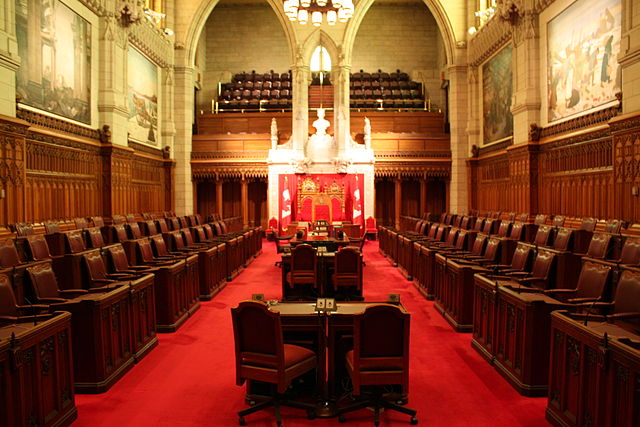
The statement comes after the Senate completed its second reading on February 5 and the Standing Senate Committee on Social Affairs, Science and Technology recommended that the Senate remove these provisions on February 20. Other recommendations include removing provisions that allow the immigration minister to share personal information of asylum seekers with other government departments.
However, the Standing Senate Committee on National Security, Defence and Veterans Affairs returned its report without amendment on Wednesday.
In 1985, the Supreme Court of Canada held that Section 7 of the Canadian Charter of Rights and Freedoms protects the right to life, liberty, and security of everyone physically present in Canada. This right entails that a refugee, defined by the 1951 UN Refugee Convention, in Canada will not be deported to a country where their life or freedom would be threatened. This right also entails that refugee claimants must be afforded an adequate opportunity to state their case and know the full case they have to meet. The UN convention, which Canada is a party to, also enshrined the principle of non-refoulement, prohibiting party states from returning refugees to a country where they would face torture or other inhuman treatment.
In October 2025, a wide array of civil liberties organizations similarly criticized the bill for providing insufficient procedural safeguards to refugee claimants and disproportionately impacting the LGBT+ community, survivors of gender-based violence, women, and children, who most need protection from their home country.
