
 Dispatches
On January 3, 2026, the US military captured Venezuelan president Nicolás Maduro and his wife, First Lady Cilia Flores, at his compound in Caracas. The operation came after months of mounting pressures by US President Donald Trump, including a series of controversial boat strikes in the Caribbean and Pacific. US Attorney General Pamela Bondi announced that Maduro and Flores are facing charges including narco-terrorism conspiracy, and possession of machine guns and destructive devices, amongst others.
The operation has sparked international controversy, with UN Secretary-General Antonio Guterres calling it a “dangerous precedent” and several US allies condemning the action at an emergency UN Security Council meeting. Congress is considering War Powers resolutions that would direct President Trump to terminate military operations in Venezuela without congressional authorization.
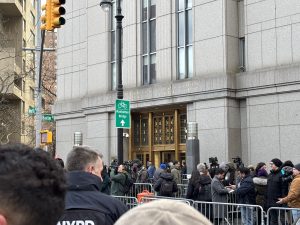
Photo captured by Samara Baboolal.
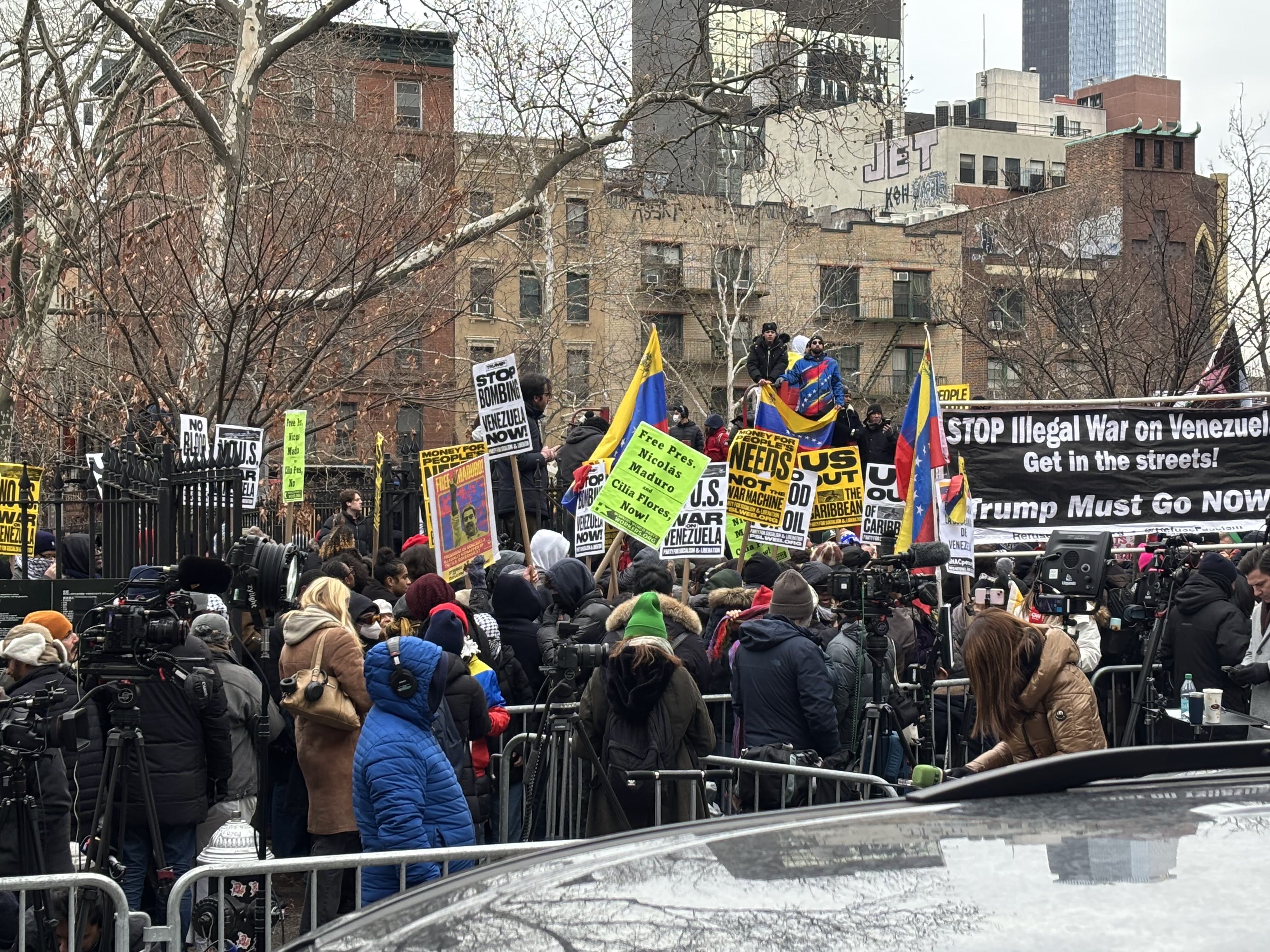
On January 5, Maduro and his wife were transported from the Brooklyn prison, where they are currently being held, and taken to the US District Court for the Southern District of New York for arraignment. A wall of press lined the courthouse, flanked by observers to the right, and crowds of protesters to the left. The protesters could be heard from a half-block away, with Trump supporters’ chants of “Libertad!” mixing into cries of opposition of US intervention in Venezuela and the Caribbean. While Maduro was discreetly taken into the court, discourse took place outside.
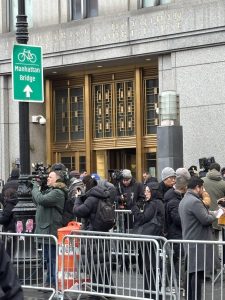
Photo captured by Samara Baboolal.
Anti-imperialist protesters held placards that read, “Hands off Venezuela’s oil,” “Stop illegal war on Venezuela,” “No blood for oil,” and “US out of the Caribbean.” Some protesters held up Palestinian flags.
Some attendees were asked whether they supported Maduro’s capture, and why. One man next to me explained that he was relieved that the president had been ousted. Speaking in Spanish, he told an interviewer that his family had no food and could not eat. “We had to leave, and it took many years to leave Venezuela,” he explained.
One Venezuelan woman gave an emotional account of the poor living conditions and human rights situation in the country living under Maduro. Expressing relief at Maduro’s capture, she explained that she and her family were forced to flee Venezuela to America.
A man said he was from China, and held a placard calling for other dictatorships and communist regimes to fall.
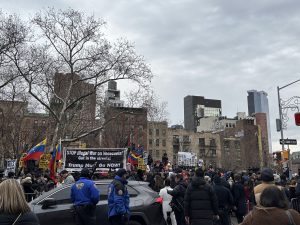
Photo captured by Samara Baboolal.
Other protesters disagreed. One man expressed his belief that America did not have the right to intervene in another country’s politics in this way, and many expressed the view that US President Donald Trump’s actions were illegal and imperialist. Many protesters stated their beliefs that the president’s move was little more than a bid to access Venezuelan oil.
Inside the courtroom, Maduro and his wife pleaded not guilty. Maduro told the District Court judge that he was kidnapped, and thus a prisoner of war. The next hearing is scheduled for March 17, 2026.
