
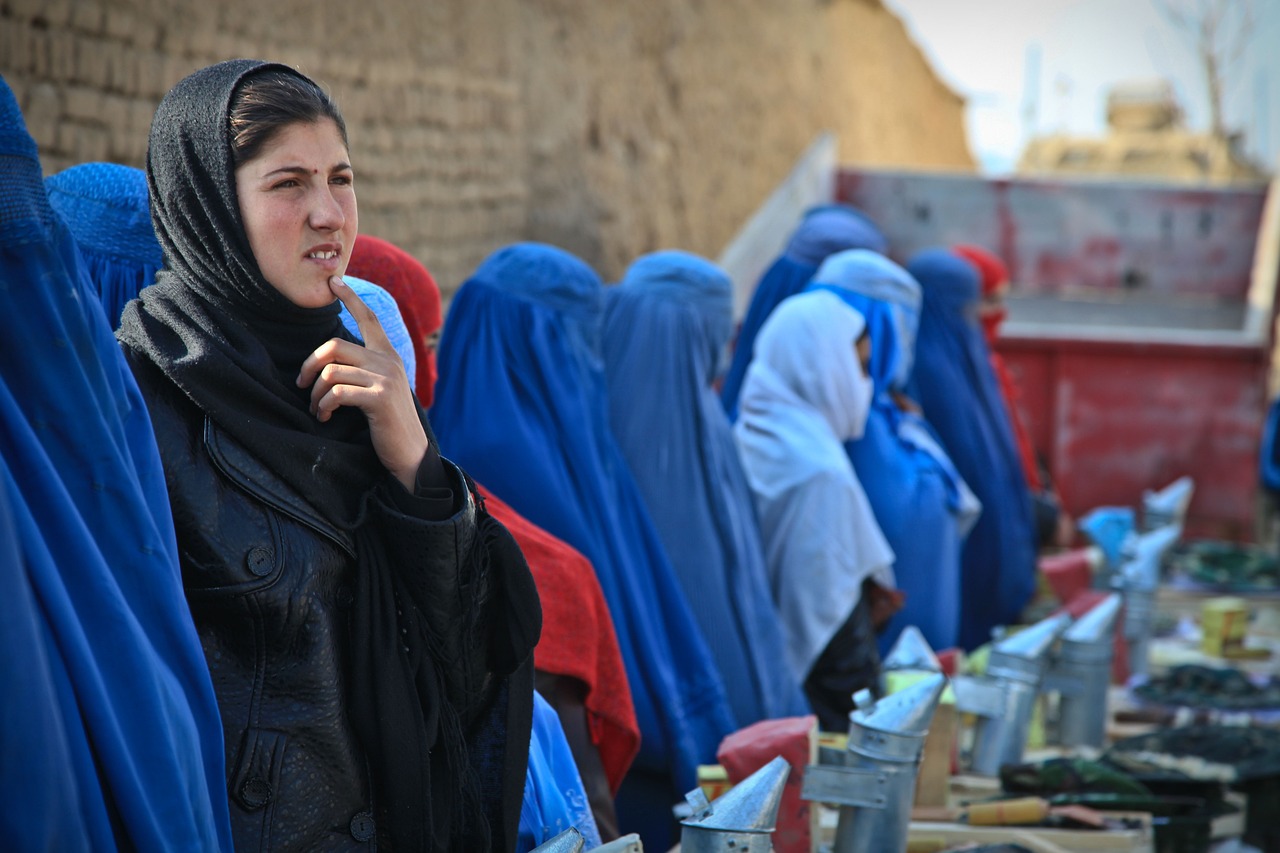
UN experts on Monday called on member states to include gender apartheid in the drafting of the treaty on the Prevention and Punishment of Crimes Against Humanity. The experts particularly referred to the situation in Afghanistan, urging states to ensure meaningful women’s participation in the drafting process.
The Working Group on discrimination against women and girls urged UN member states to consider the lived reality of Afghan women. With the Taliban depriving Afghan women and girls of their rights to education and to work, and erasing their public existence, the Working Group contended that including gender apartheid in the treaty is necessary to ensure accountability for these violations under international law. Richard Bennett, the special rapporteur on the situation of human rights in Afghanistan, also endorsed the appeal.
Earlier, in May 2024, the Working Group recommended that the UN Human Rights Council recognize gender apartheid as a distinct crime against humanity, in addition to gender persecution. Currently, gender persecution is defined as the “intentional and severe deprivation of fundamental rights contrary to international law by reason of sex characteristics.” The group contended that it does not go far enough to capture the widespread or systematic nature of human rights violations. The group also claimed that even though most human rights treaties explicitly provide for gender equality, women’s inequality and discriminatory regimes persist. Thus, the group argued that recognizing gender apartheid is necessary to tackle institutionalized gender-based oppression.
Relatedly, in December 2025, Human Rights Watch (HRW) proposed the inclusion of gender apartheid and other gender-specific provisions to the draft treaty, including reproductive violence and forced marriage.
According to international human rights lawyers Akila Radhakrishnan and Alyssa Yamamoto, 10 states expressed openness to exploring the codification of gender apartheid in the draft treaty as of May 2024. In an October 2025 press release, the European Parliament also stated that the EU would support recognizing gender apartheid as a crime against humanity and deplored the Taliban regime for its human rights violations against women and girls.
Since the 2021 Taliban takeover, rights groups and international bodies have started investigating and recording the human rights violations in Afghanistan. In 2023, HRW voiced its opinion that the widespread or systematic gender persecution perpetrated by the Taliban regime has constituted a crime against humanity under the Rome Statute. Subsequently, in January 2025, 26 countries urged the Taliban regime to cease all violations under the UN Convention on the Elimination of All Forms of Discrimination against Women.
The UN International Law Commission recognized the prohibition of crimes against humanity as a peremptory norm in 2019. The draft treaty represents a significant step towards ensuring accountability for crimes against humanity. For instance, draft article 7 codifies the principle of universal jurisdiction, allowing member states to prosecute individuals who allegedly committed a crime against humanity when they present themselves in the member state’s territory, even though they are not a citizen or the alleged crime did not take place in their territory.
