
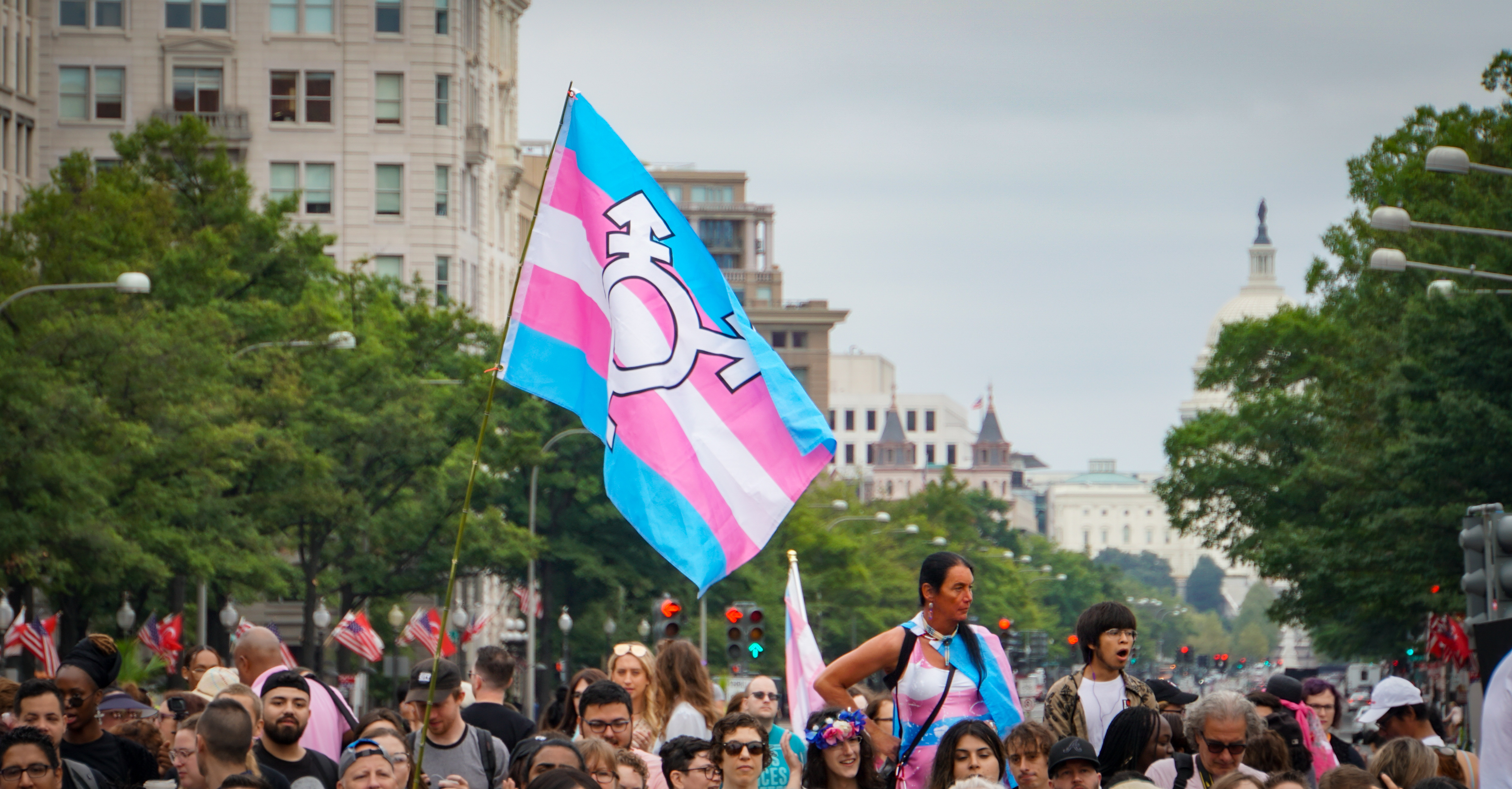
Twelve states’ attorneys general sued the US Department of Health and Human Services (HHS) Tuesday for conditioning its funding of health programs on compliance with the Trump administration’s policy of recognizing the existence of only two genders.
The new HHS condition comes from its new Grants Policy Statement, among other similar policy changes, which sets forth conditions for recipients of HHS grants. The policy statement continues its usual requirement that recipients of HHS funding certify that they are complying with Title IX, the federal statute prohibiting discrimination on the basis of sex in education. However, the Grants Policy Statement now considers compliance with Title IX to include compliance with President Trump’s Executive Order 14168, which defines sex based on one’s biological sex and prohibits federal spending to promote “gender ideology.”
The lawsuit alleges that HHS’s conditioning of funds is a violation of the Administrative Procedure Act (APA) and the Spending Clause of the US Constitution. The APA prohibits federal agency actions that are arbitrary and capricious. The states allege that, under case law, the new condition violates that provision because it fails to explain the change in policy and does not consider important aspects of the problem, like the existence of transgender people. Additionally, the Spending Clause gives Congress the power to spend money for the general welfare. The states argue that by imposing this restriction on receiving funds based on an executive order rather than statute, HHS has violated Congress’s authority to spend.
The attorneys general assert that states rely on this threatened funding for critical disease prevention, medical personnel training, and research. New York Attorney General Letitia James said the condition “threatens health care for families, life-saving research, and education programs that help young people thrive in favor of denying the dignity and existence of transgender people.” The Rhode Island Attorney General’s Office issued a similar statement arguing the policy “will have far-reaching consequences across healthcare and social services.”
The states argue that they cannot comply with the executive order as it would violate various state laws prohibiting discrimination against people who are transgender. However, the new HHS condition makes falsely certifying compliance with the executive order subject to the False Claims Act and 18 U.S.C. § 1001, which both impose financial penalties for making a fraudulent statement; the latter also imposes criminal liability. States that certify compliance with Title IX outside of the executive order’s interpretation risk such penalties.
The lawsuit asks the court to declare the condition unlawful and prevent the Trump administration from enforcing it.

.jpg)