
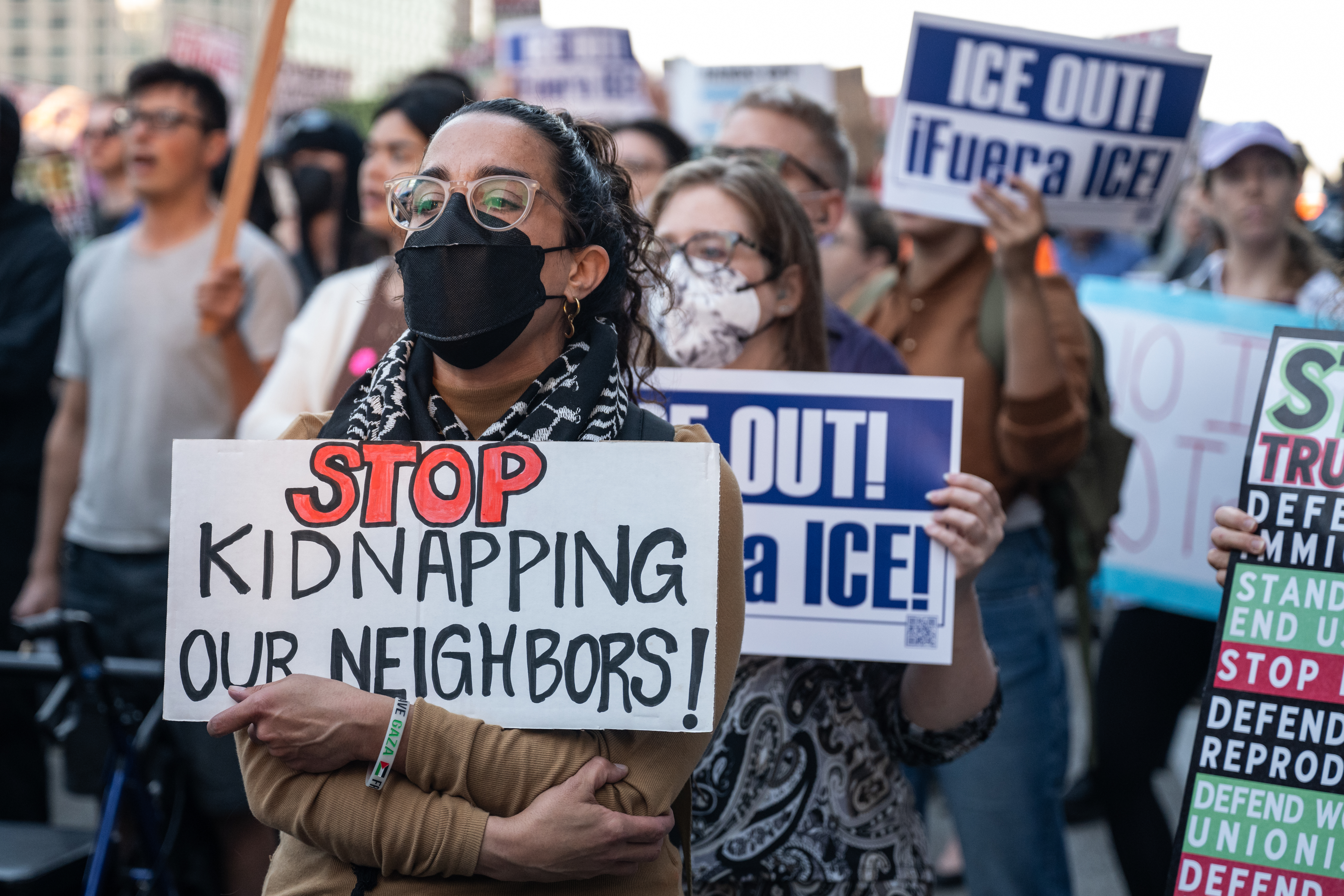
Amnesty International published a report on Tuesday, warning of rising authoritarianism in the US and detailing numerous ways in which the rule of law and basic rights are being threatened.
The report, entitled Ringing the Alarm Bells: Rising Authoritarian Practices and Erosion of Human Rights in the United States, ties these areas of concern largely to the policies of President Donald Trump. They range from threats to freedom of speech and protest, to the erosion of anti-discrimination protections. The report finds that a key test of democratic resilience will be the federal midterm elections of November 2026, with many early signals pointing to mounting threats to the right to vote.
Limitations on press freedom include the removal of the credentials of the Associated Press for White House events, after the agency refused to call the Gulf of Mexico the “Gulf of America,” as well as the removal of press passes for reporters at the Pentagon who refused to comply with policies mandating the publishing of only approved materials. The courts have now restored the Associated Press’ credentials, but Pentagon reporters have since turned in their press passes and not returned.
The report notes other areas of concern for free speech, including the detention of Mahmoud Khalil, a Palestinian activist who federal agents arrested and attempted to deport. The Trump administration maintains that Khalil’s visa was granted as a result of fraud and misrepresentation. The case has generated a series of court decisions and is still ongoing.
The report also discusses the moment that President Trump federalized the California National Guard to deploy to Los Angeles to support police operations against protests in response to US Immigration and Customs Enforcement (ICE) raids, and later sent in 300 US Marines to curb the protests.
The report identifies militarization in domestic law enforcement as an area of concern, arguing that military forces “are not appropriate tools for domestic law enforcement.” Amnesty International believes the use of military in such situations leads to excessive force and suppression of free speech. A primary example of this mentioned to be, once again, the Trump administration’s deployment of the national guard to US cities, including in Los Angeles and Washington DC—both of which municipal governments objected to the National Guard presence. Trump asserts these operations are necessary to protect federal immigration operations and combat crime. As of now, he ended the National Guard deployment in some cities but stated they may return if necessary.
A final alarm bell the report raises is a decrease in anti-discrimination protections, noting the Trump administration’s executive actions against transgender people. Amnesty International called Trump’s actions an attempted “erasure” of transgender identity. The report notes different Trump actions like the administration’s removal of the specific LGBTQ+ option in the Suicide & Crisis Lifeline and cuts to funding of institutions based on transgender policies.
Amnesty International USA executive director Paul O’Brien stated that these US actions “mirror the global pattern Amnesty has seen and warned about for decades.” The report concludes with recommendations for different entities, from state governments to technology companies, to scrutinize policies and enact greater human rights protections within their capacity.
Beyond US borders, Trump withdrew the United States from participation in and funding of 66 international organizations last month, including UN climate bodies, revealing decreased commitment to international collaboration and human rights.

